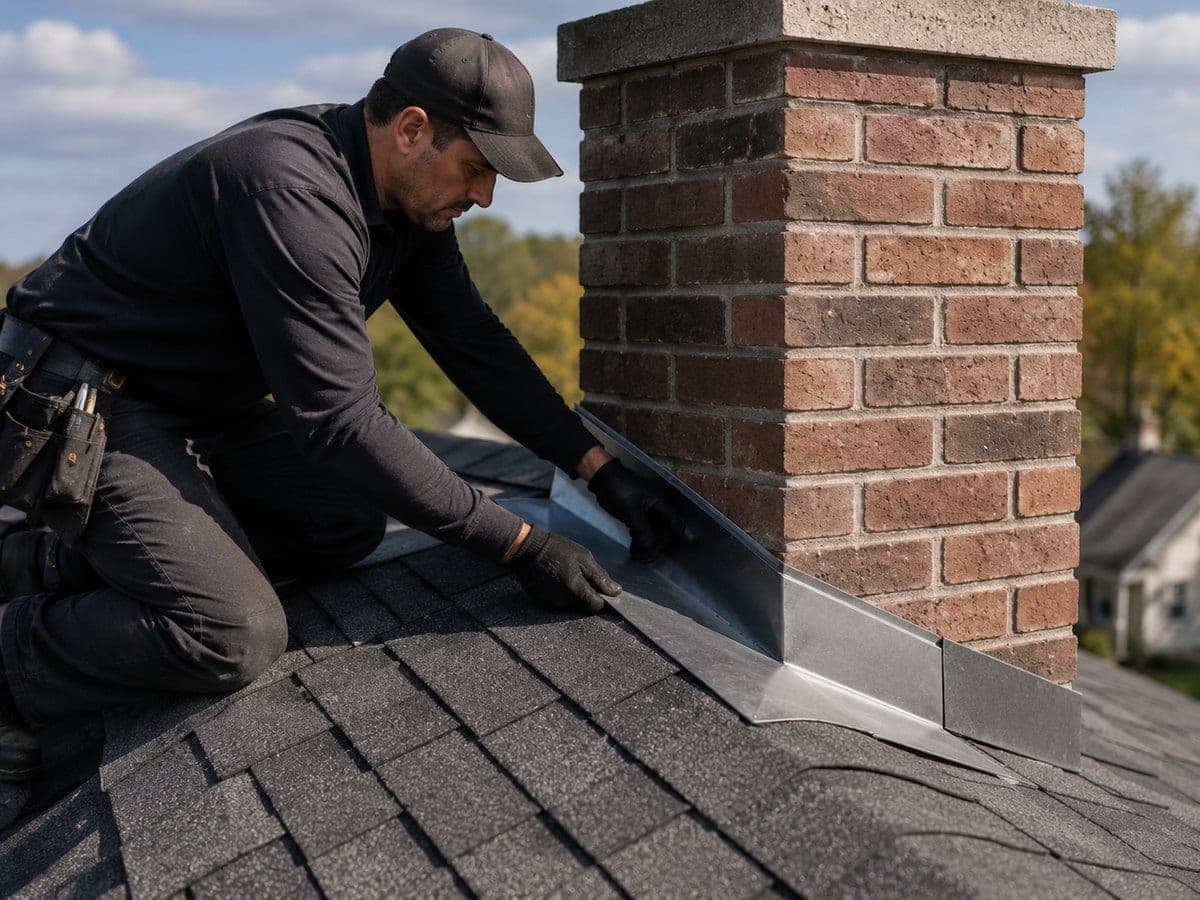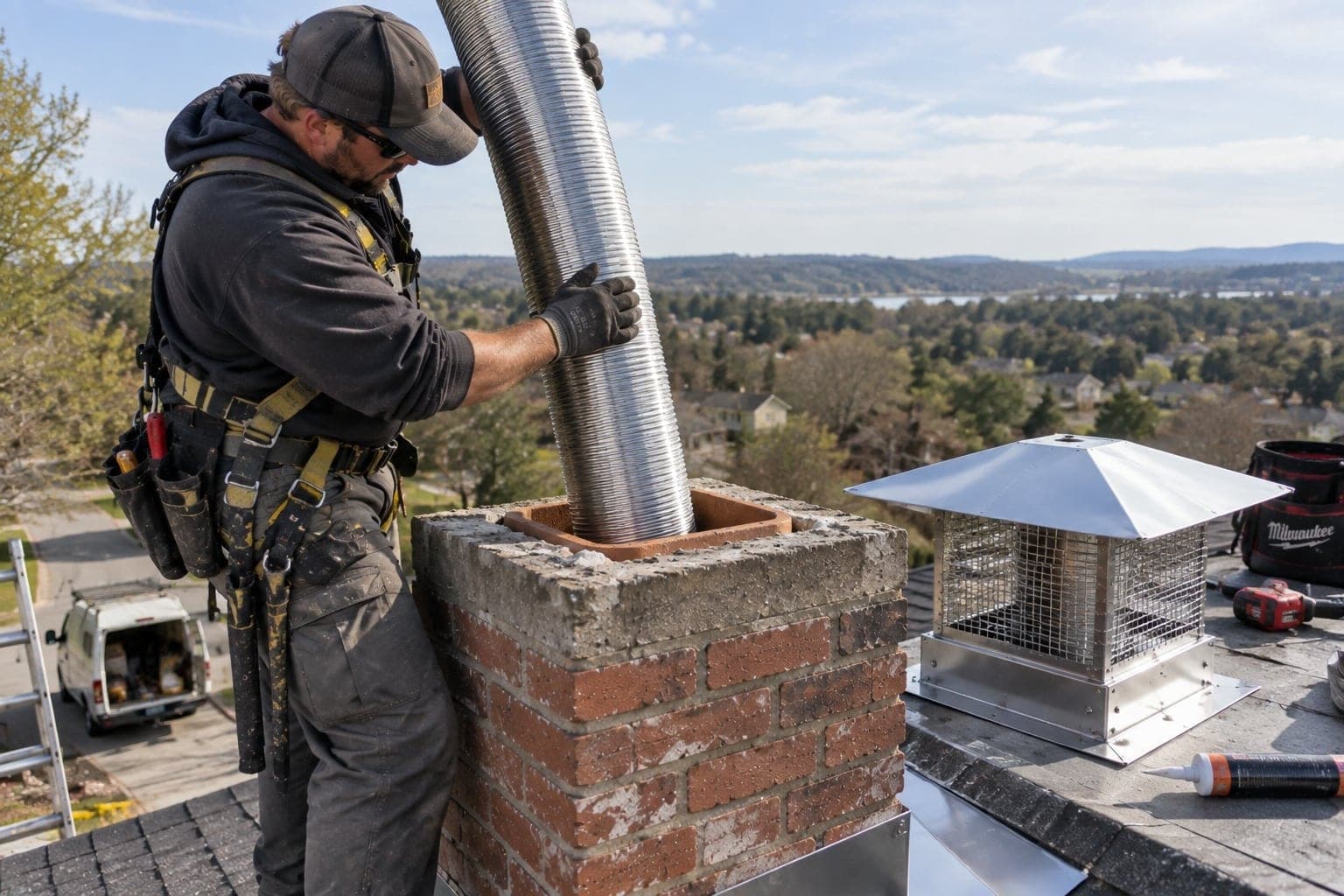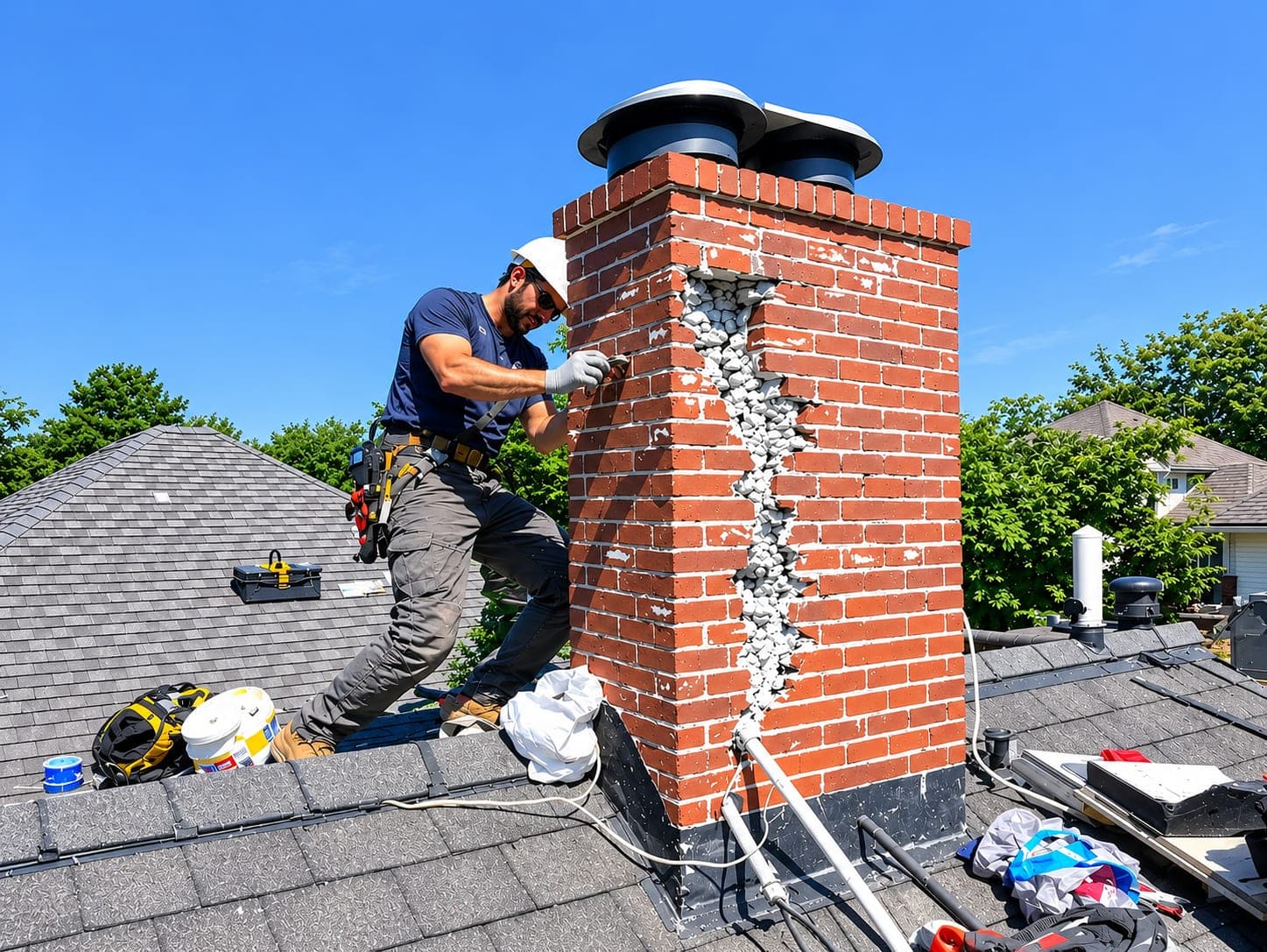
What expert chimney crack repair looks like
The right repair depends entirely on where a crack is and how wide it has gotten. A crack in the crown, one in a mortar joint and one running through the bricks themselves each have different causes and different fixes.
| Location | What it often means | Usual repair |
|---|---|---|
| Crown, hairline | Normal shrinkage and weathering of the top slab | Cleaned and sealed with a flexible crown sealant |
| Crown, wide or broken | Water has been getting into or under the slab | Crown rebuilt, ideally with an overhang and drip edge |
| Mortar joints | Mortar has eroded or shrunk away from the brick | Tuckpointing: old mortar ground out and replaced |
| Brick faces | Moisture in the brick has frozen and expanded | Damaged bricks cut out and replaced |
| Long cracks through several courses | Possible movement or settling | Inspection first, then repair or partial rebuild |
| Flue tiles | Heat stress or a past chimney fire | Liner repair or a new liner |
Exterior masonry work is handled through our brick chimney repair service. Cracks inside the flue are a different matter, since the liner is what keeps heat and gases contained; this guide to chimney liners covers the basics.
Fix chimney crown cracks before they spread
The crown is the concrete or mortar slab that seals the brickwork around the flue. It takes the full force of rain and snow, and because it's nearly flat, water sits on it. Once a crack opens, water seeps in, freezes, expands and pushes the crack wider. That's why it pays to fix chimney crown cracks before they reach the brick below. A sealed crown is a small job, while water running down inside the chimney walls leads to the damage described on our chimney leak troubleshooting page.
Frequently asked questions about chimney crown cracks
- Is the crown the same as the chimney cap? No. The crown is part of the masonry; the cap is the metal hood and screen over the flue opening. Damaged caps are covered on the chimney cap screen page.
- Why did my crown crack so soon? Many crowns are built with ordinary mortar, poured too thin, or made without an overhang, so they crack early and shed water poorly from the start.
- Can a crown be sealed more than once? Sealant can be renewed, but if the slab is crumbling or loose, rebuilding it is the lasting fix.
If cracks have reached the firebox, damper area or smoke chamber, those are handled as part of our chimney and fireplace repair work.
What happens during the visit
A damaged liner or firebox lets heat reach parts of the house it shouldn't. Water that gets into a chimney widens cracks every season and can rot nearby framing.
Inspect
Masonry, crown, flashing, cap and the inside of the flue are checked.
Trace the cause
The repair targets what is actually failing, not just the symptom.
Agree the scope
Nothing starts until you've approved what will be done.
Fix and finish
The work is completed and the area left clean.
Signs to watch for
- Pieces of flue tile in the firebox
- Crumbling or sandy mortar joints
- A cracked or crumbling crown
- Cracked, flaking or spalling brick
- A cap that is loose, rusted or missing
What the technician checks
- Flashing seal at the roof
- Firebox walls and floor
- Mortar joints and brick faces
- Cap, screen and chase cover
- Crown cracks and pooling water
Stay off the roof
Looking from the ground or with binoculars is safe. Climbing a steep or wet roof to inspect a chimney is not — leave that to someone with the right equipment.