Don't ignore cracked chimney bricks
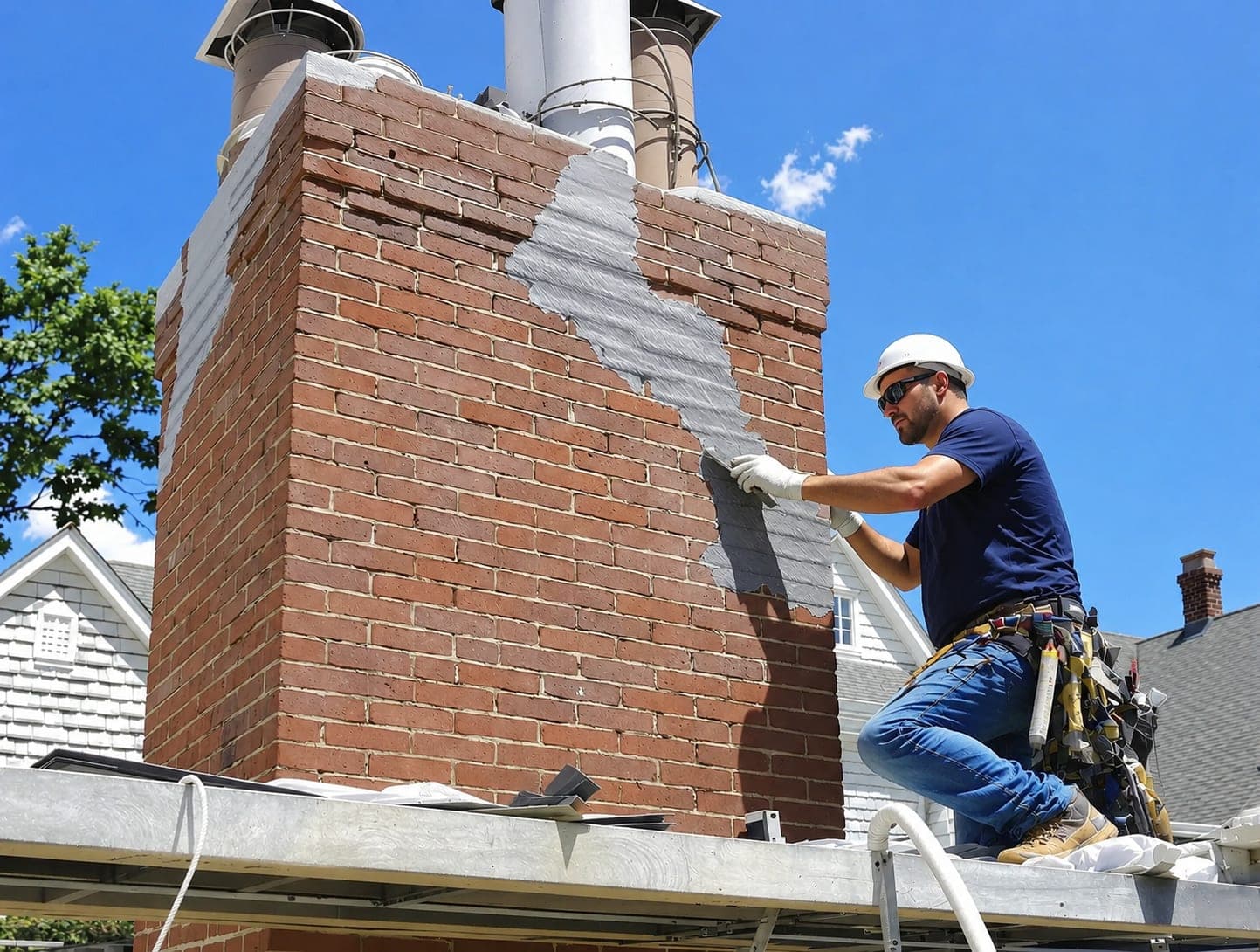
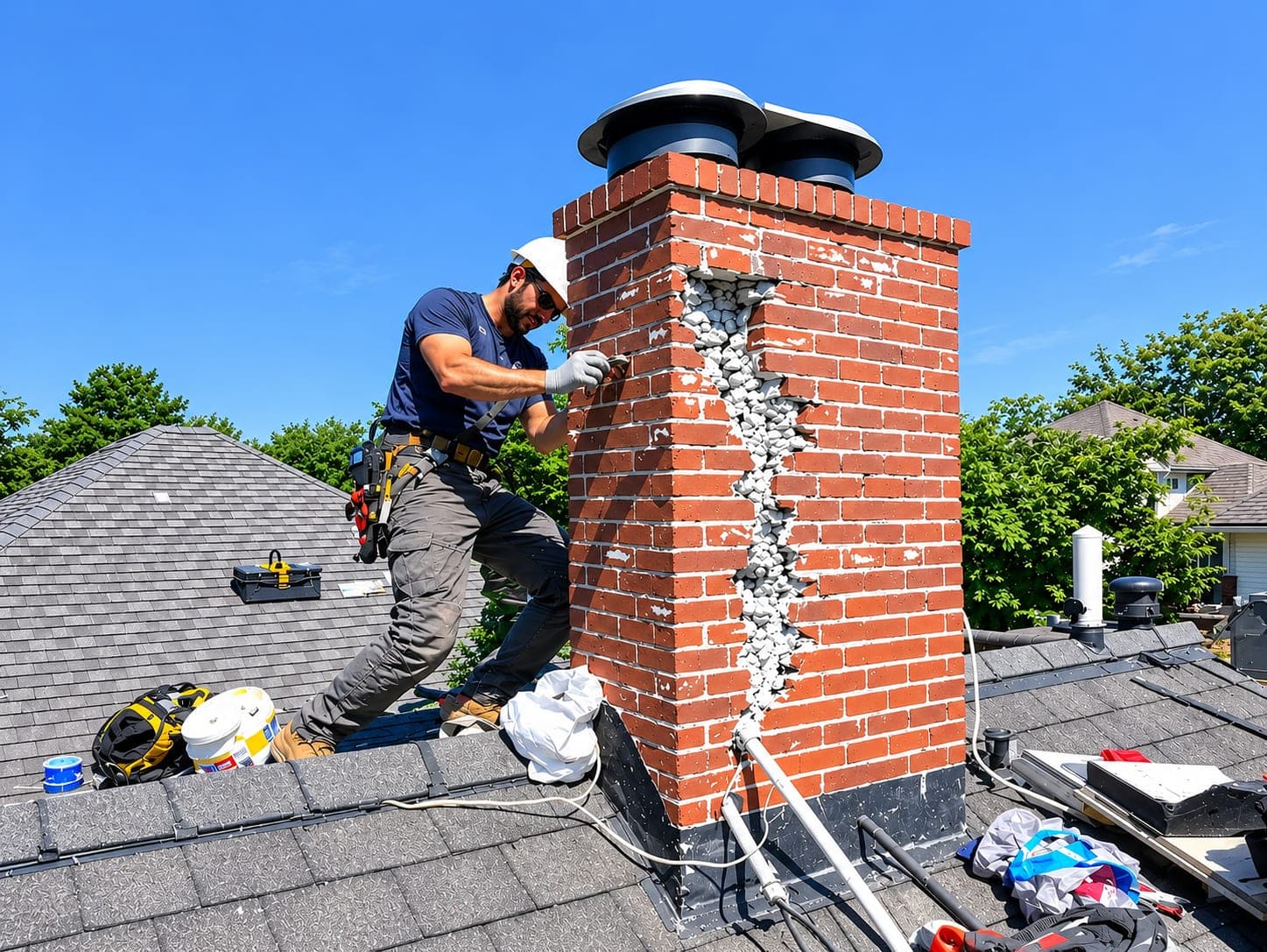
Brick is the chimney's weather shell. Once it cracks, rain soaks deeper with every storm. In cold weather that trapped water freezes and expands, which pushes off brick faces (called spalling) and loosens the mortar around them. The damage grows a little each season, and so does the size of the eventual repair.
4 cracked or spalling brick signs: schedule chimney repair
- Flaking or popped faces: chips of brick on the roof, in the gutters or on the ground below
- Cracks that travel: cracks running through several bricks, or stair-stepping through the mortar
- White staining or damp patches: powdery deposits that mean water is moving through the masonry
- Soft mortar: joints you can scrape out with a key or screwdriver
When cracking reaches the crown or runs the full height of the stack, our page on cracks across the whole chimney explains the bigger picture.
Which bricks are cracked? Concrete, exterior and fire bricks
Cracked concrete chimney bricks service
Some chimneys are built from concrete block or concrete brick, and nearly all have a concrete crown on top. Concrete cracks from water, settling and temperature swings much like clay brick does, but it is repaired with different materials. Damaged units are cut out and replaced, crown cracks are repaired or the crown is rebuilt, and the sound masonry can then be waterproofed with a breathable product.
Cracked fire chimney bricks service
Firebrick lines the firebox and takes the direct heat of the fire. Fine surface cracks are common. Open joints, missing pieces or bricks that move when pressed are not, because they let heat reach the structure behind the firebox. Firebox repair replaces the damaged firebrick using heat-rated mortar. Prefab fireplaces get new refractory panels instead. See cracks inside the fireplace firebox for more detail.
Cracked chimney bricks repair cost: what drives it
There's no honest flat price for brick repair, because no two chimneys need the same amount of work. Once we've seen the chimney, the free estimate lays out the scope. These factors shape it most:
| Factor | Why it matters |
|---|---|
| Number of damaged bricks | A few replaced bricks is a much smaller job than a whole face |
| Location | Work above the roofline needs safe roof access |
| Mortar condition | Worn joints may need tuckpointing along with the brick replacement |
| Active water source | A cracked crown or bad flashing must be fixed too, or the bricks will crack again |
| Extent of damage | Widespread spalling can point to a partial rebuild |
Small repairs usually fall under brick chimney repair and tuckpointing. Chimneys with widespread weathering may be better suited to restoring worn chimney brick.
How the visit works
Spalling brick is a sign water is freezing or soaking inside the masonry. Mortar harder than the brick can make the brick itself crack.
Assess the masonry
Joints, brick faces, the crown and the stack's alignment are checked.
Match the materials
Mortar is chosen to suit the existing brick, so the repair doesn't cause new cracks.
Repair
Failed joints are cut out and repointed; damaged brick is replaced; the crown is sealed or rebuilt.
Finish
The work is cleaned up and you're shown what was done.
What we look at
- Mortar joint depth and condition
- Efflorescence and water staining
- Brick faces for spalling
- Stack alignment and loose courses
- Flashing where masonry meets the roof
- Crown cracks and overhang
Stay off the roof
Looking from the ground or with binoculars is safe. Climbing a steep or wet roof to inspect a chimney is not — leave that to someone with the right equipment.
Signs it's time for cracked chimney brick repair
- A leaning or cracked stack
- White efflorescence staining on the chimney
- A crown with cracks or missing pieces
- Mortar that is sandy, recessed or falling out of the joints