On this page
What brick masonry repairs on a chimney cover
A chimney is the most exposed brickwork on most houses. It stands above the roof in wind and rain, and it takes heat and moisture from inside. Brick and masonry repairs usually come down to a few kinds of work:
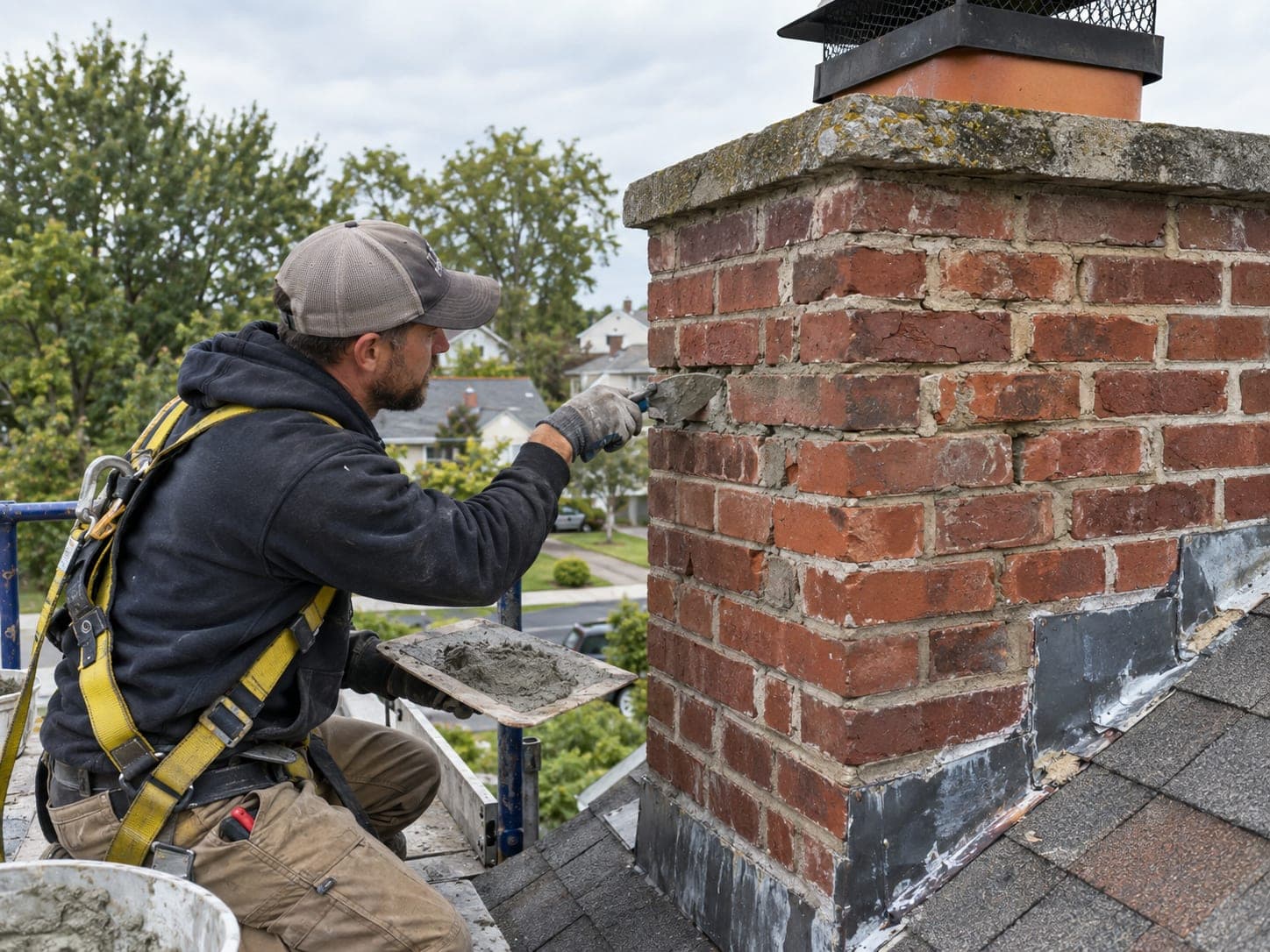
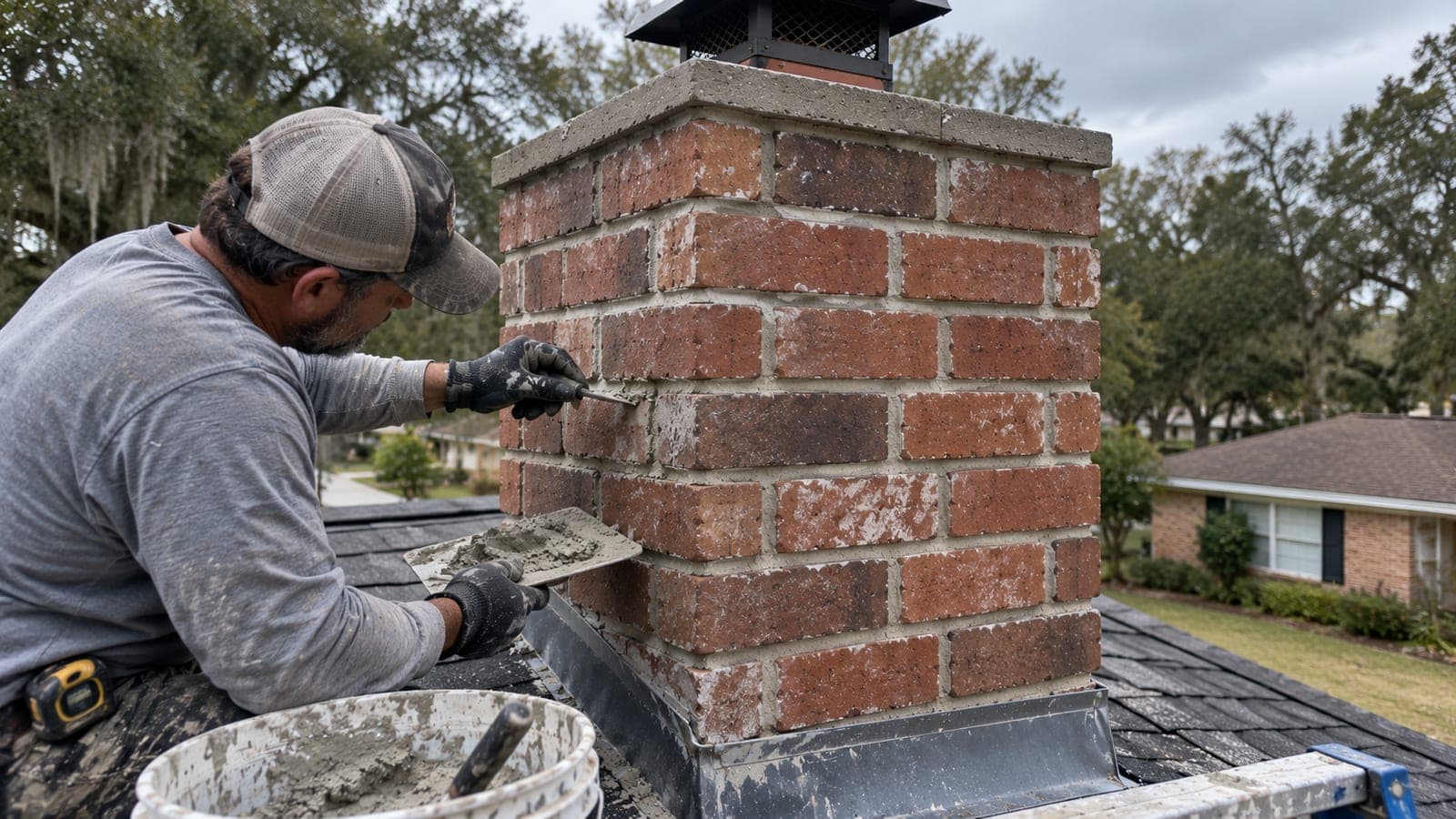
- Repointing (tuckpointing): removing eroded mortar and packing fresh mortar into the joints
- Brick replacement: swapping out bricks whose faces have flaked off (spalled) or cracked through
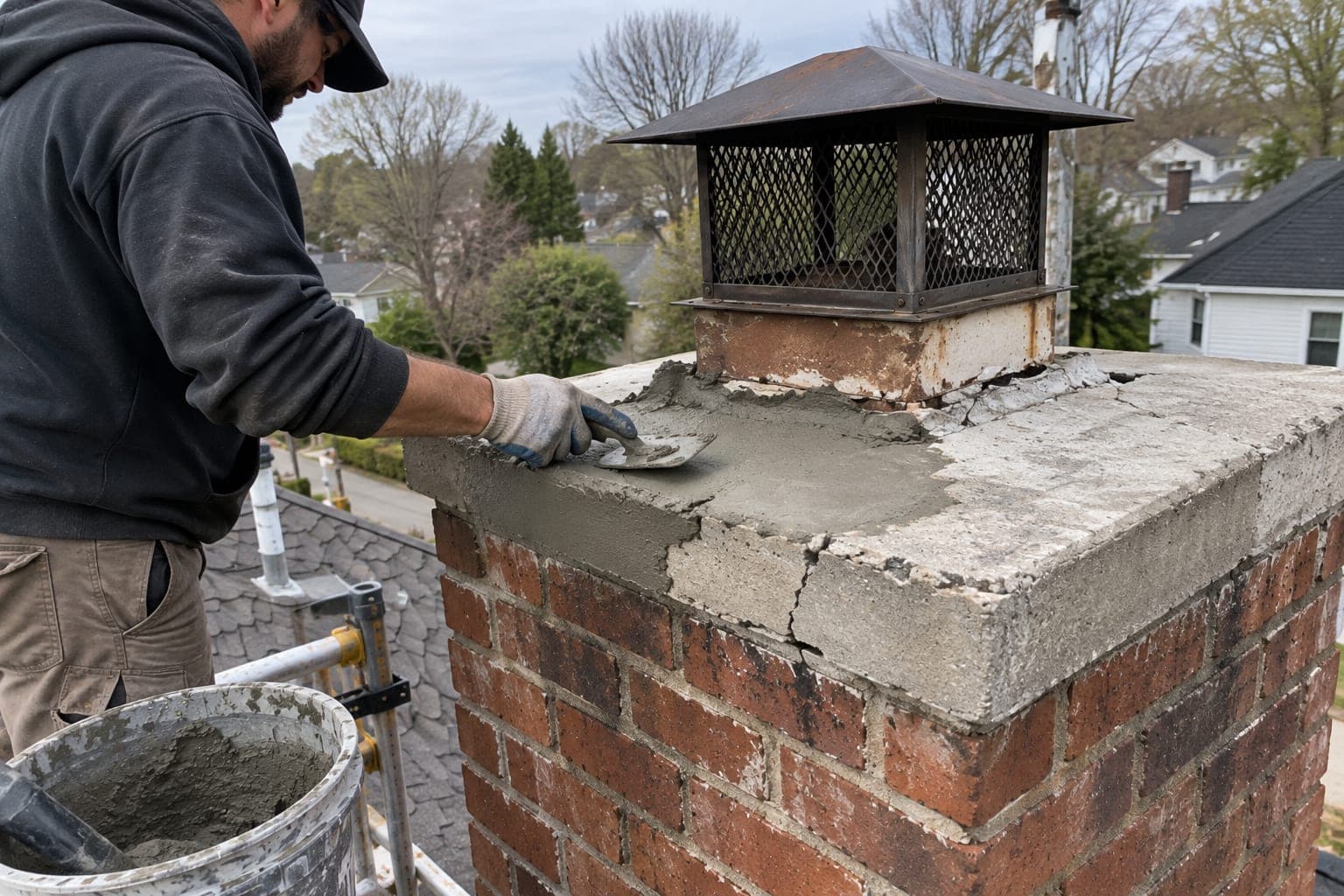
- Crown repair: fixing the concrete or mortar cap at the top that sheds water away from the brick
- Top-course rebuilding: relaying loose bricks near the top of the stack
- Firebox brick: repairing cracked or loose firebrick inside the fireplace
Some problems look like damage but aren't. Dark staining on interior brick is often buildup rather than deterioration, and why creosote stains brick and how it comes off is a separate issue with a different fix. For work focused on the stack itself, see our brick chimney repair service.
Brick and concrete masonry: different materials, different repairs
Most chimneys aren't brick alone. The crown is typically concrete or a mortar mix, and the firebox uses firebrick and heat-resistant mortar. A brick concrete masonry repair contractor working on a chimney needs to handle each material correctly, because each one fails differently.
| Component | Usual material | Common failure |
|---|---|---|
| Crown | Concrete or mortar mix | Cracks that channel water down into the brick |
| Chimney stack | Brick and mortar | Eroded joints, spalled brick faces |
| Firebox | Firebrick and refractory mortar | Cracked or loose firebrick, open joints |
Mortar choice matters too. Mortar that is harder than the surrounding brick can push the damage into the brick itself. Repairs should use a mix that suits the existing masonry.
Brick masonry in Torrington and across Connecticut
Whether you're searching for brick masonry in Torrington, CT, or anywhere else in Connecticut, tell us your town when you get in touch so we can confirm scheduling. Wherever you live, these questions are worth asking any mason:
Questions to ask before brick repair
- Is the water source, such as the crown, cap or flashing, being fixed along with the brick?
- What mortar will be used, and how will it be matched to the existing joints?
- Which bricks will be replaced, and which can stay?
- Is the damage limited enough to repair, or does part of the stack need larger-scale masonry construction?
How masonry work is done
Mortar harder than the brick can make the brick itself crack. Mortar wears faster than brick; once joints open, water gets into the stack.
Assess the masonry
Joints, brick faces, the crown and the stack's alignment are checked.
Match the materials
Mortar is chosen to suit the existing brick, so the repair doesn't cause new cracks.
Repair
Failed joints are cut out and repointed; damaged brick is replaced; the crown is sealed or rebuilt.
Finish
The work is cleaned up and you're shown what was done.
Getting ready for the visit
- Make sure the technician can reach the roof or attic access if it's needed.
- Clear a few feet of space in front of the hearth or appliance.
- Note the make and model of any insert, stove or gas unit if you have it.
- Let the fireplace or stove cool completely — ideally no fire for 24 hours before the visit.
Stay off the roof
Looking from the ground or with binoculars is safe. Climbing a steep or wet roof to inspect a chimney is not — leave that to someone with the right equipment.
What gets checked
- Efflorescence and water staining
- Crown cracks and overhang
- Stack alignment and loose courses
- Brick faces for spalling
- Mortar joint depth and condition
- Flashing where masonry meets the roof
Signs it's time for chimney masonry repair
- Bricks with faces flaking or popping off
- White efflorescence staining on the chimney
- A leaning or cracked stack
- A crown with cracks or missing pieces
- Loose bricks at the top of the chimney