First steps when an animal is in your chimney
Do this now
- Close the damper and any glass doors so the animal can't get into the room. Only close it once the fireplace is completely cold and no stove, furnace or water heater vents into that flue.
- Don't light a fire or use smoke to drive it out. It can harm trapped animals, ignite nest material and push smoke into the house.
- Keep pets and children away from the fireplace.
- Don't reach into the flue. Frightened animals bite and scratch, and some carry disease.
- Note what you hear and when, such as chirping, scratching at dusk or daytime movement. It helps identify the animal.
If an animal has already gotten into the house, or you can't close the damper, treat it as urgent. Emergency calls are accepted, help is available 24 hours, Sunday through Friday, and same-day service is offered where the schedule allows.
What the visit covers
Without a cap or screen, the next animal finds the same way in. Animals in the flue carry mites, droppings and odor into the chimney.
Find out what's there
What animal it is and where it is in the flue or smoke chamber.
Remove it safely
The animal is removed or allowed to leave, following state wildlife rules for that species.
Clean out
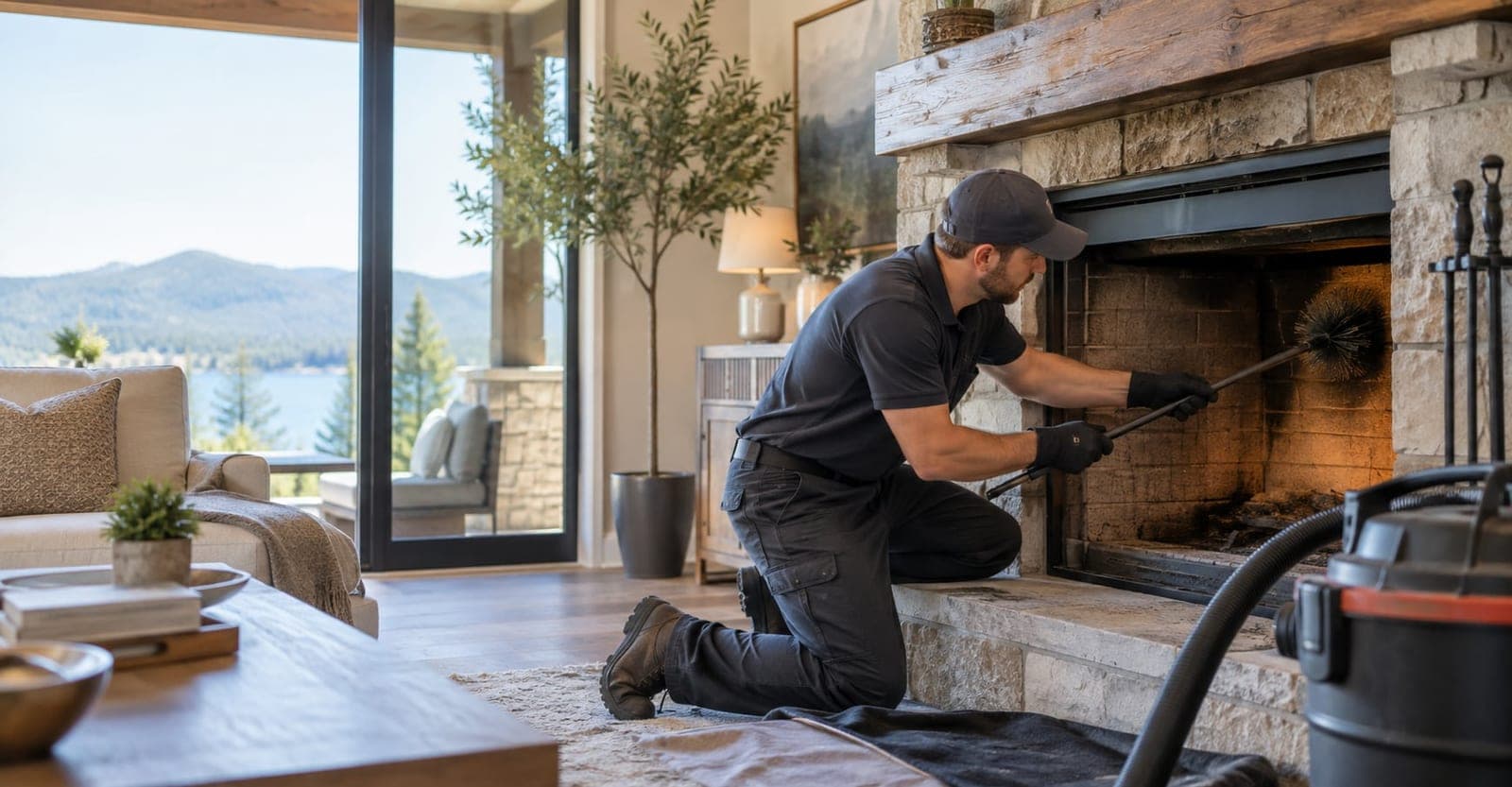
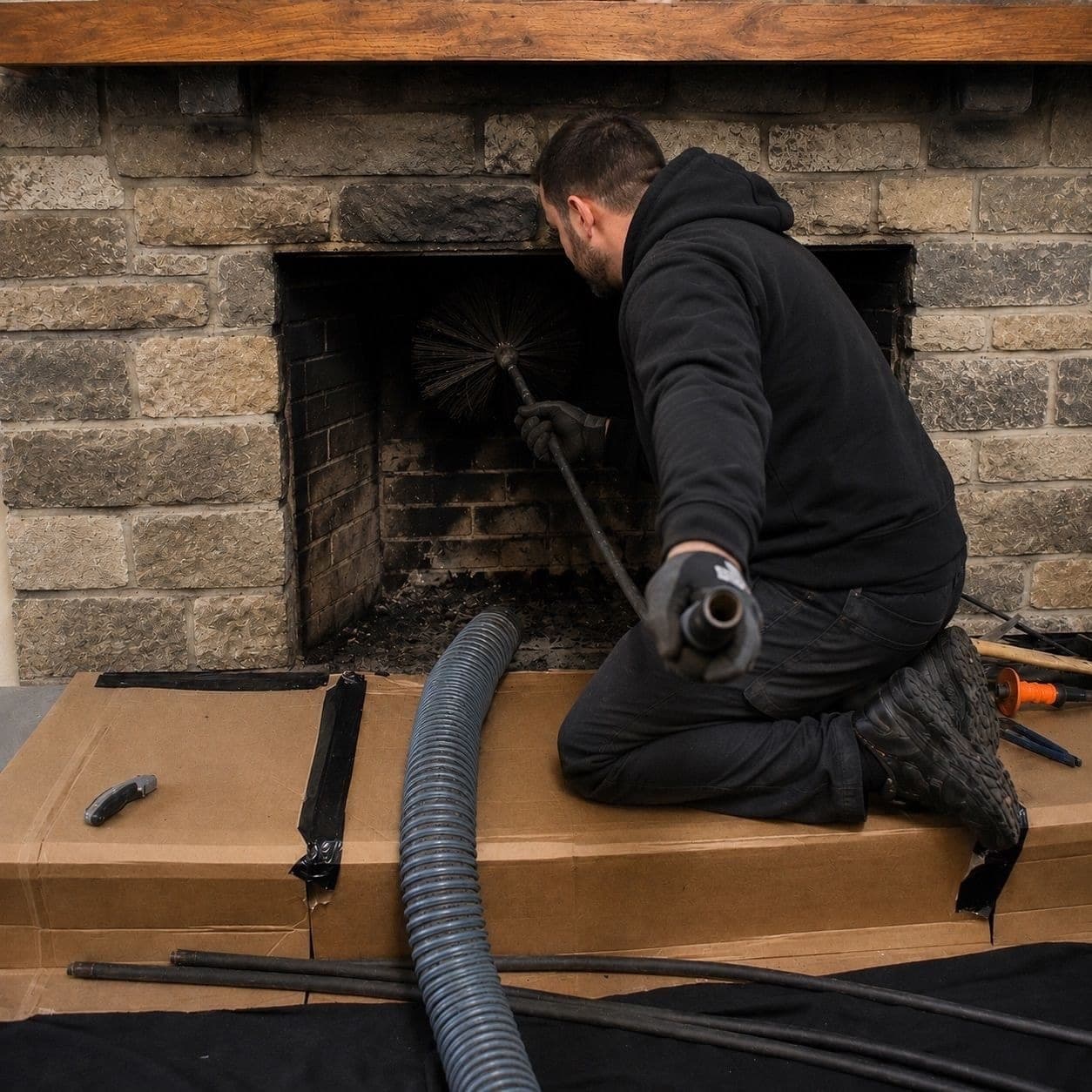
Nests, debris and droppings are cleared and the flue is checked for damage.
Close the way in
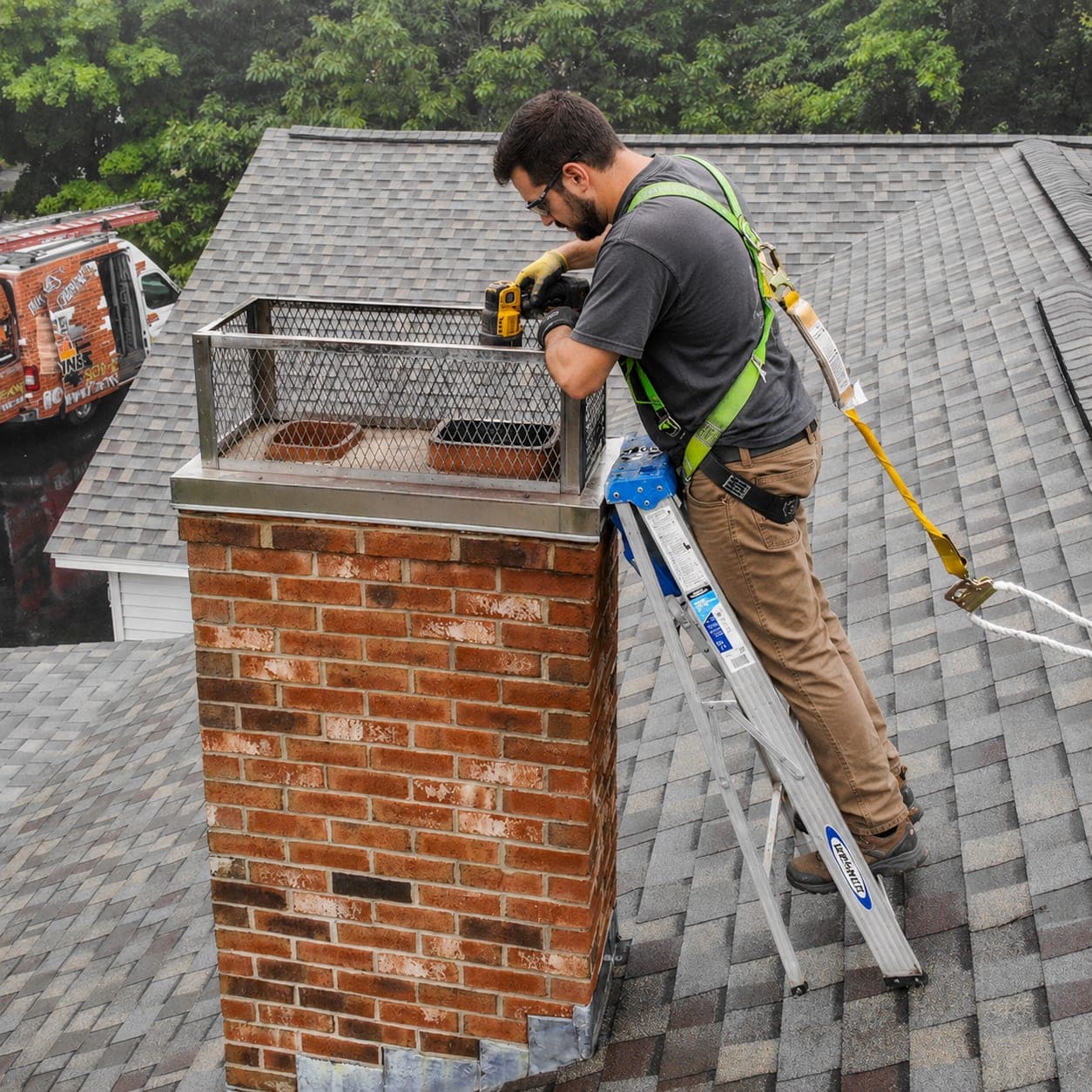
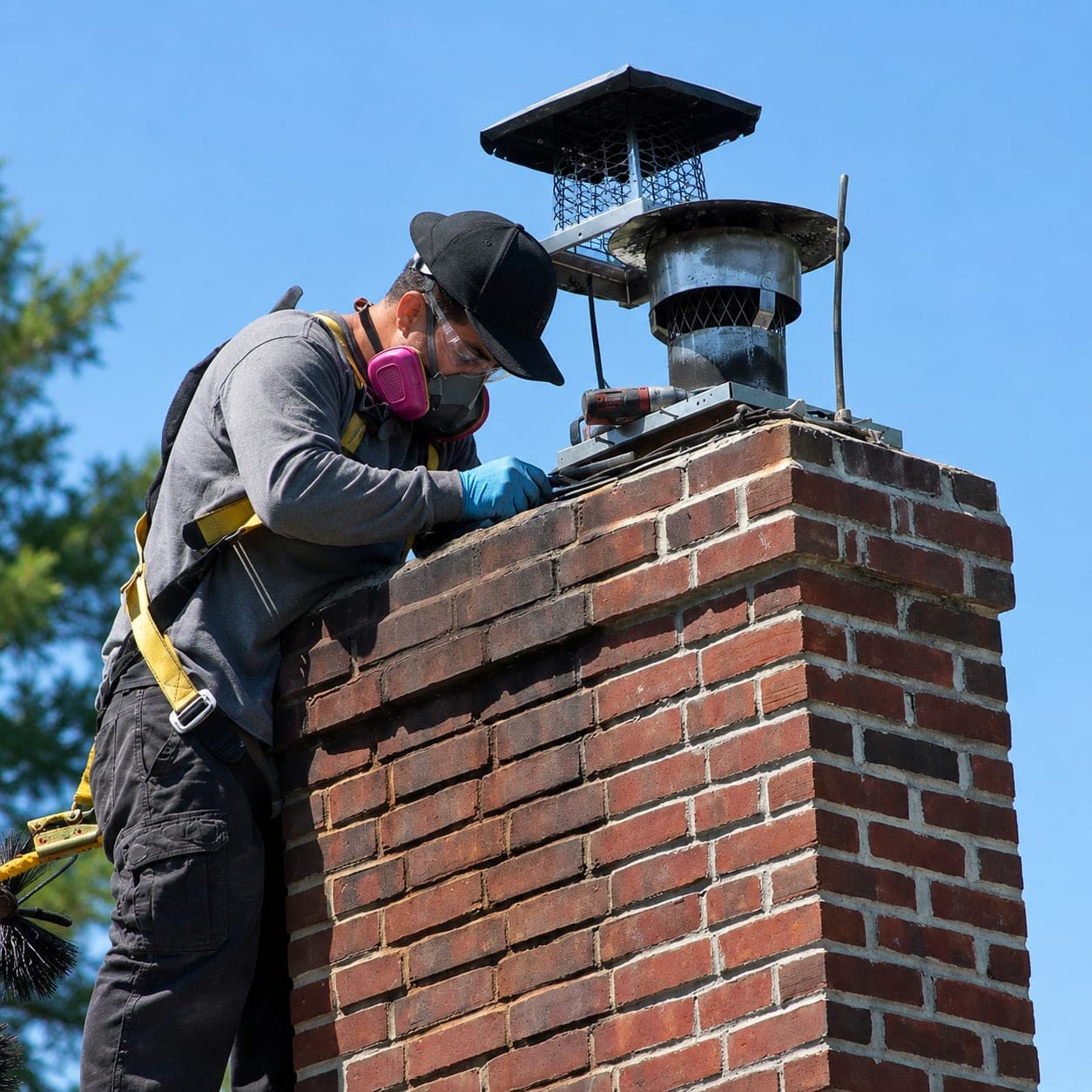
A cap or screen sized to the flue keeps animals out.
When to book animal removal from chimney
- A strong smell from the fireplace
- Nesting material, leaves or droppings in the firebox
- A missing or damaged chimney cap
- Smoke that won't go up the flue
- Scratching, chirping or movement in the chimney
Don't smoke it out
Never light a fire to drive an animal out — it can trap the animal, block the flue and start a fire in the nest.
What the technician checks
- Damper condition
- Nest material in the flue and smoke chamber
- Odor and debris
- Cap and screen
- What animal and where
- Gaps around the crown and chase
Humane chimney animal removal methods
The goal is to get the animal out alive, clear what it left behind, and close the entry for good. The method depends on what's living there:
- Birds. Some chimney-nesting birds are protected species, so an active nest with young may have to stay until they leave. The nest is cleared once the flue is empty.
- Raccoons. Often a mother with young on the smoke shelf. Removing her without the young isn't humane, so the family should leave together.
- Squirrels and other small animals. They often fall in and can't climb back out. Giving them a way out or removing them gently usually works.
Once the animal is gone, nesting material, droppings and debris are cleared from the flue, because they block airflow and hold odors. A full chimney inspection after removal confirms nothing was left behind and that the liner wasn't damaged. Our guide to safe chimney animal removal explains what homeowners should and shouldn't try.
What our team offers for chimney animal removal
- Animal and nest removal from the flue and smoke shelf
- Cleanup of nesting debris, plus creosote removal if buildup is found
- Odor removal when droppings or a dead animal have left a smell
- Chimney cap installation, cap replacement or animal screens to block re-entry
- Damper repair if the animal got past a damaged damper
- Free estimates
Calling a chimney animal removal master instead of going it alone
DIY attempts often go wrong in predictable ways. Animals get pushed deeper into the flue, nests catch fire, or the new cap is the wrong size. Calling someone who works on chimneys means removal, cleanup and prevention happen together, and the chimney is checked for whatever let the animal in. For other chimney issues often found with nests, see our overview.
Schedule chimney animal removal before nesting season
Many animals look for sheltered spots to raise young in spring, and an uncapped chimney is an easy target. If you've had animals before, or your cap is missing or damaged, have the chimney cleared and capped before nesting begins. That's easier than dealing with a family later or waiting out a protected bird nest.