On this page
Sick of the same Old fireplace appearance?
Homeowners who are tired of the same old fireplace appearance are usually reacting to several things at once: soot-darkened brick, a gaping black opening that pulls warm air out of the room, cloudy or sagging doors, and a fire that's more hassle than it's worth. Some of that is cosmetic. Much of it is functional, and a new surround alone just hides those problems behind a fresh finish.
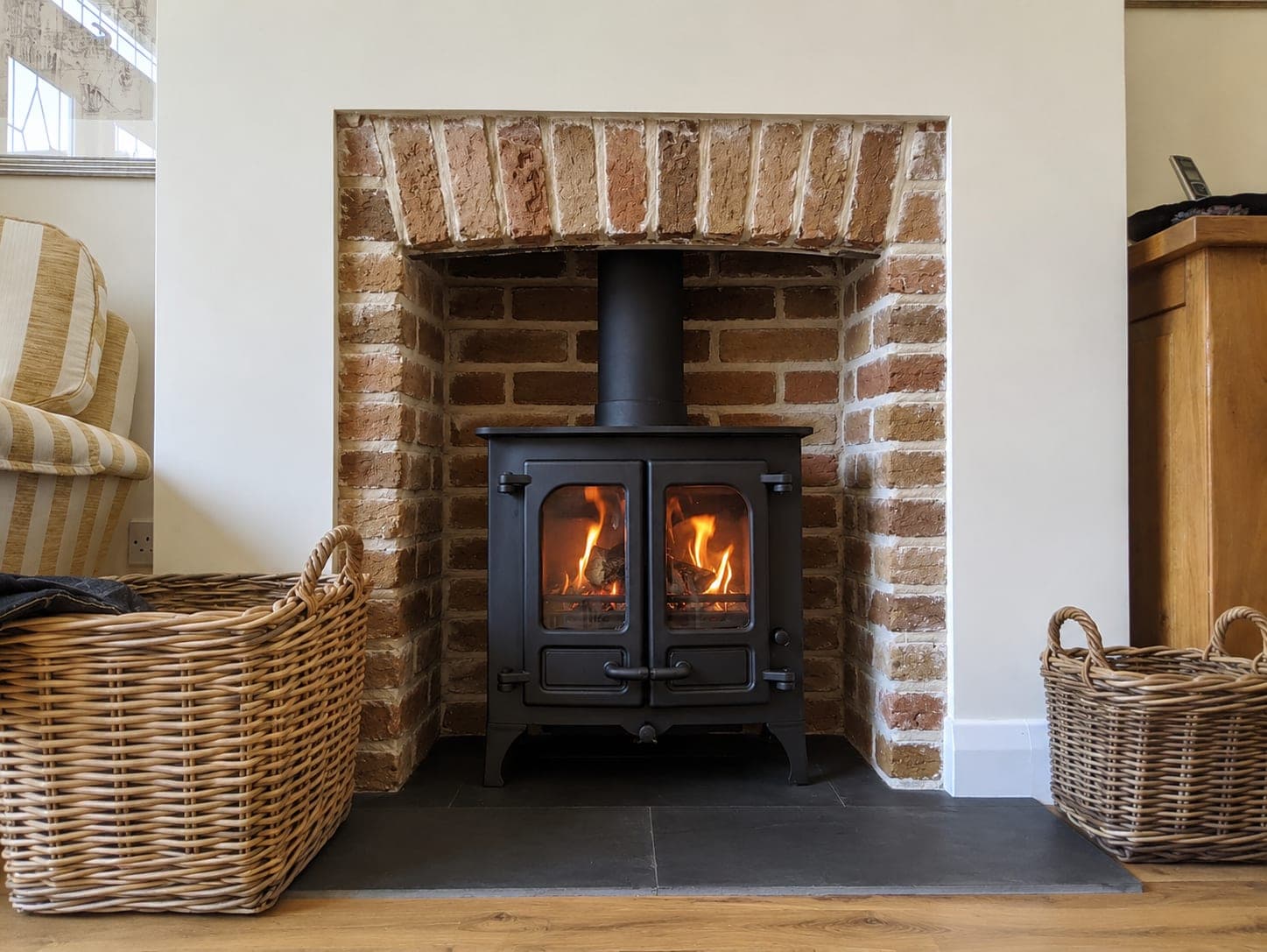
Our redesign work focuses on what sits inside the opening and how it vents:
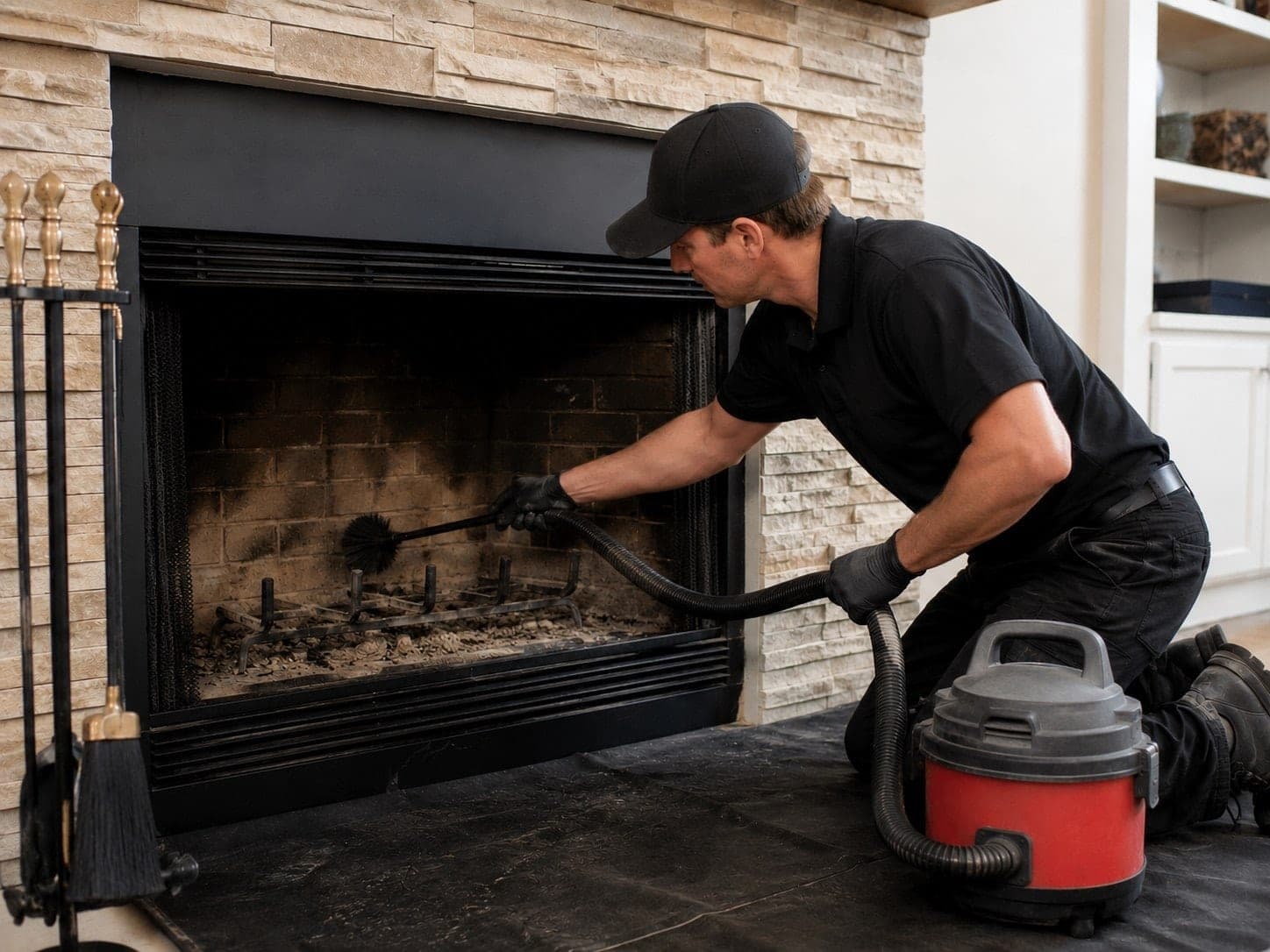
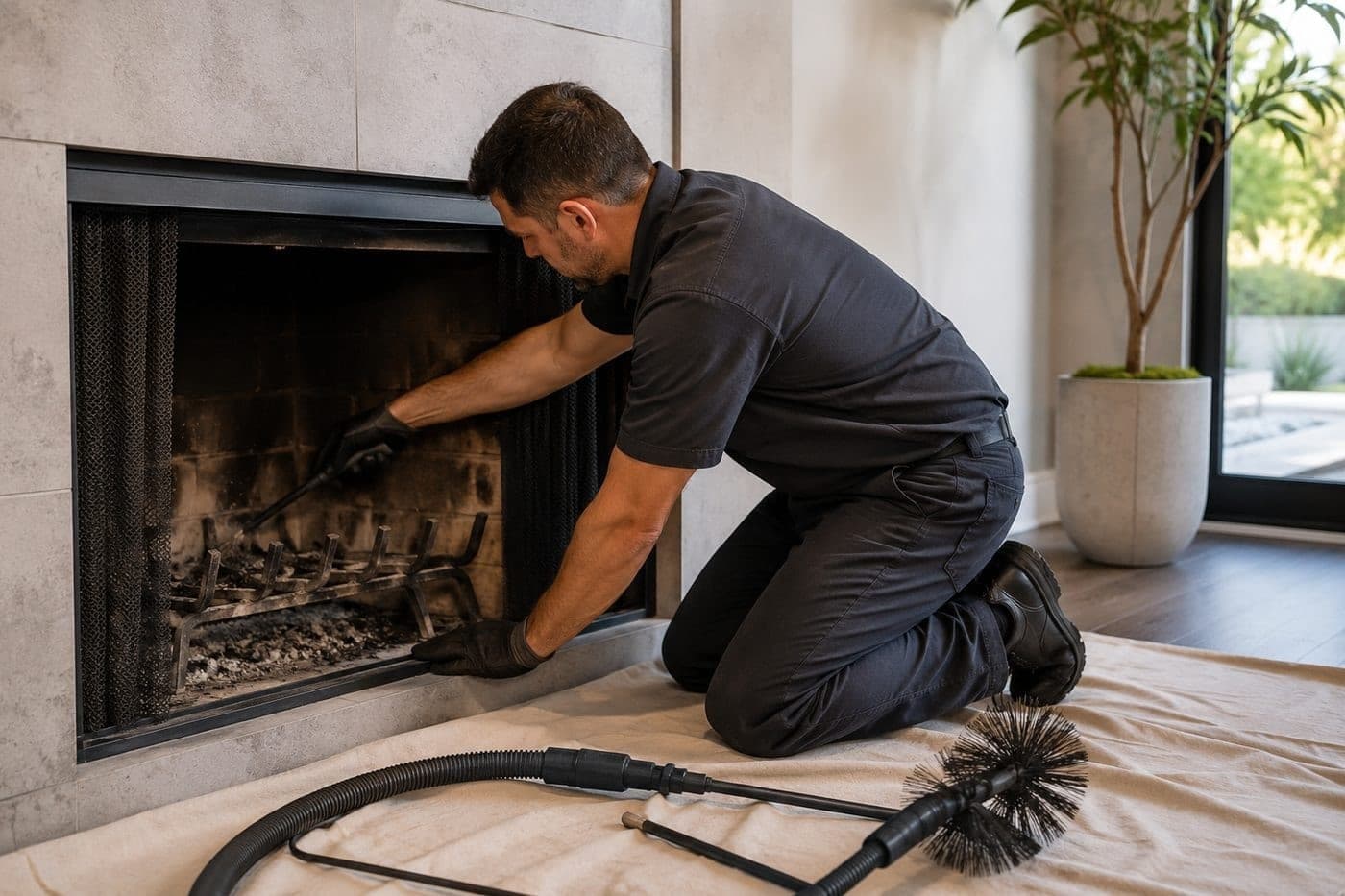
- Deep cleaning of a soot-stained firebox and brick face, often the simplest first step toward a fireplace that looks cared for.
- New glass doors, or replacement glass and repaired hinges on the doors you have.
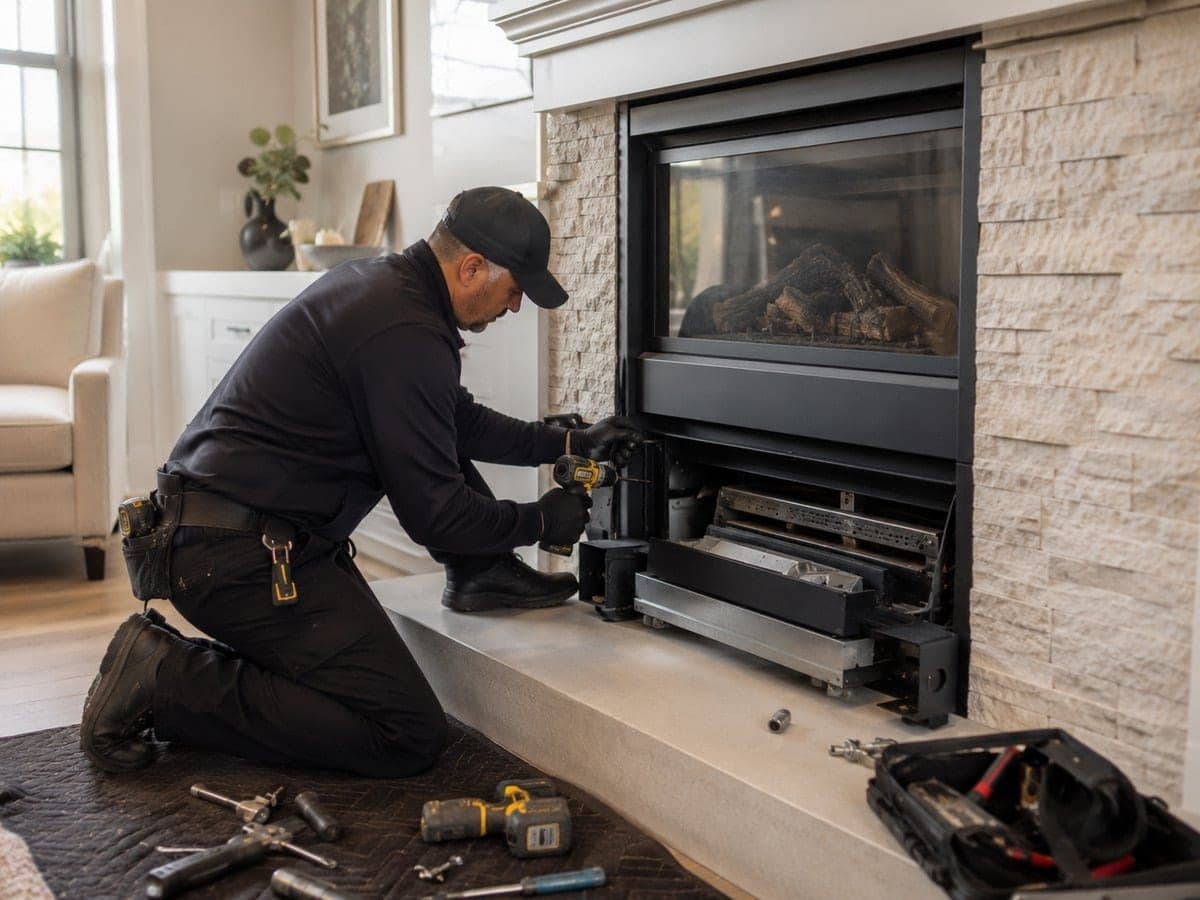
- A fireplace insert that closes off the open hearth and turns it into a real heat source.
- A wood-to-gas conversion or a set of gas logs for flame at the turn of a knob.
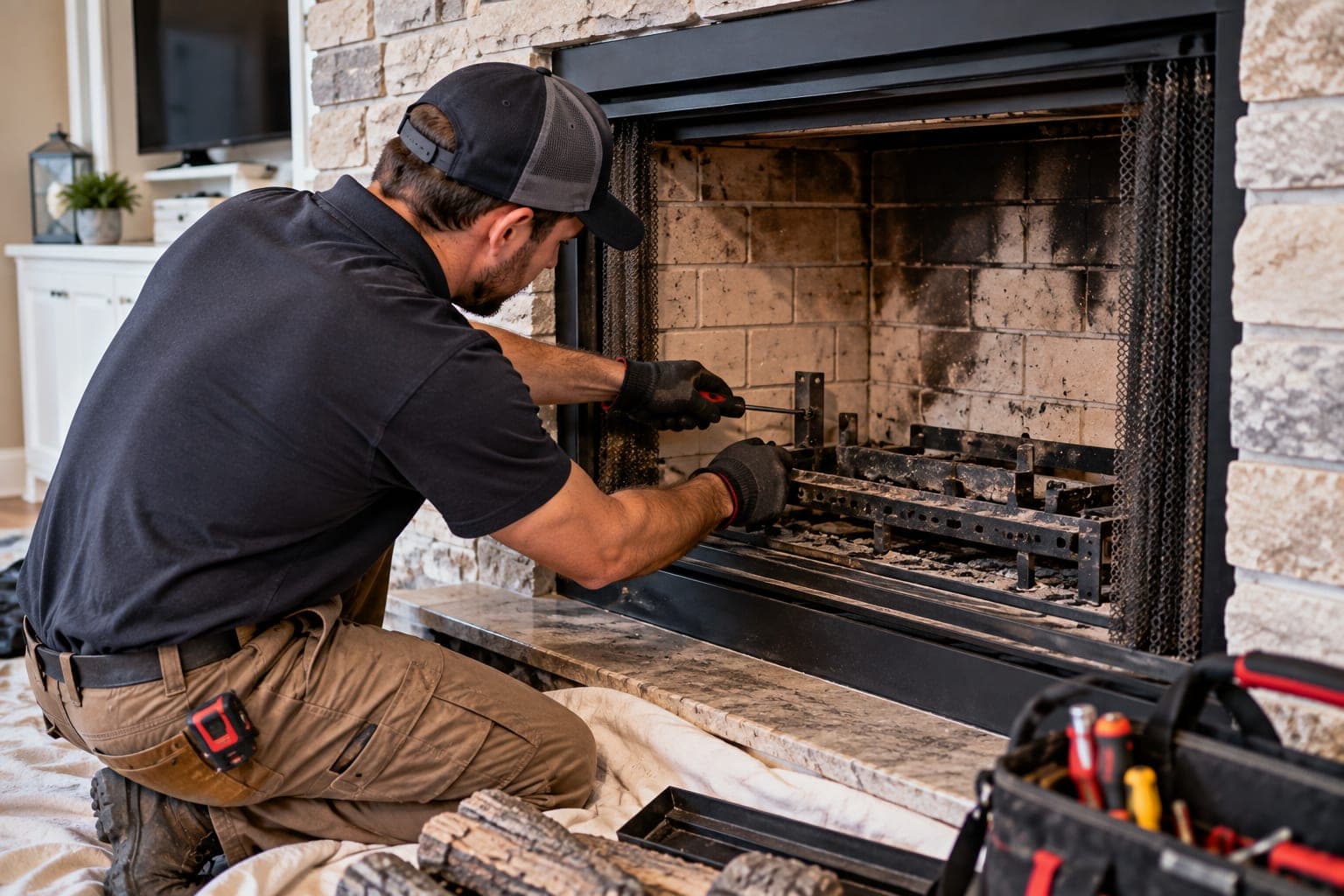
- Refractory panel replacement or firebox repair when the interior is cracked, crumbling or stained beyond cleaning.
If your goal leans toward reshaping the whole wall around the opening, the custom fireplace design page covers that side, and stone-faced hearths are discussed under classic marble fireplace renovation.
From Century-Old brick fireplaces to newer masonry
Older brick fireplaces have character worth keeping, but they were built for a different way of heating a home. Over decades, mortar joints in the firebox wash out, the smoke chamber stays rough and drafts poorly, dampers rust stuck, and clay flue liners crack or were never installed at all. A redesign that ignores these issues ends up with a beautiful fireplace nobody can safely use.
That's why redesign starts with a chimney and fireplace inspection, using a camera when the flue needs a closer look. From there, the options include Firebox Repair, Smoke Chamber Repair, Fireplace Restoration that preserves the original brick, and Chimney Liner Installation when a new insert needs a properly sized flue. Our guide to common chimney problems explains what turns up most often.
Inserts and liners go together
Most inserts vent through a liner run up the existing chimney. The inspection tells us whether your flue can take one and what size it needs to be.
Changeout of an Old Factory-Built fireplace
An old factory-built fireplace is a metal unit tested and listed as a system with its own chimney pipe. Its parts wear out: fireboxes warp, refractory panels crack, glass breaks and chase tops rust through. Some of that is fixable with Refractory Panel Replacement, Prefab Chimney & Chase Repair or Chase Cover Replacement. When the firebox itself is failing or parts are no longer made, a changeout through Prefab Fireplace Replacement is the cleaner path, because mixing components from different systems isn't how these units are designed to work.
| Feature | Repair | Changeout |
|---|---|---|
| Firebox shell | Sound, no warping or burn-through | Warped, cracked or rusted through |
| Parts | Listed parts still available | Discontinued or unavailable |
| Your goal | Keep the current look and fuel | New look, new fuel or better heat |
Firebox shell
- Repair
- Sound, no warping or burn-through
- Changeout
- Warped, cracked or rusted through
Parts
- Repair
- Listed parts still available
- Changeout
- Discontinued or unavailable
Your goal
- Repair
- Keep the current look and fuel
- Changeout
- New look, new fuel or better heat
If heat output matters as much as looks, our efficient fireplace guide compares the options, and you can see how old fireplace redesign works when you hire us to do it.
What the visit covers
Cracks in the firebox let heat reach the framing behind it. Worn gaskets and glass on inserts and gas units waste heat and can leak exhaust.
Find the cause
The firebox, damper, smoke chamber and any doors, glass or panels are checked.
Confirm the type
Masonry or factory-built — the repair has to suit the system.
Explain the fix
You hear the options and what each involves before work starts.
Repair and test
The work is done and the fireplace is checked before you use it.
If smoke comes into the room
Stop adding fuel, open a window and don't relight the fire until the chimney has been checked. If the smoke is heavy, an alarm sounds or you suspect a chimney fire, get everyone outside and call 911.
What gets checked
- Draft from the opening
- Damper operation
- Mortar joints inside the firebox
- Doors, glass and gaskets
- Firebrick or refractory panels
- Smoke chamber and smoke shelf
Getting ready for the visit
- Let the fireplace or stove cool completely — ideally no fire for 24 hours before the visit.
- Write down what you've noticed and when it happens — smells, smoke, sounds or stains.
- Clear a few feet of space in front of the hearth or appliance.
- Make sure the technician can reach the roof or attic access if it's needed.
When to book old fireplace redesign
- Cracked or missing firebrick or refractory panels
- A damper that won't open or close
- Doors or glass that are cracked or don't seal
- A fireplace that is hard to light or won't stay lit
- Rust or warping inside the firebox