Cause and cure: understanding cracked chimney flue tiles
| Cause | What happens | Usual cure |
|---|---|---|
| Chimney fire | Burning creosote heats the liner far beyond normal and tiles split | Full inspection, then relining if cracks are widespread |
| Thermal shock | A hot fire in a cold flue heats the tile's inner face faster than its outer face | Repair or reline, then build fires up gradually |
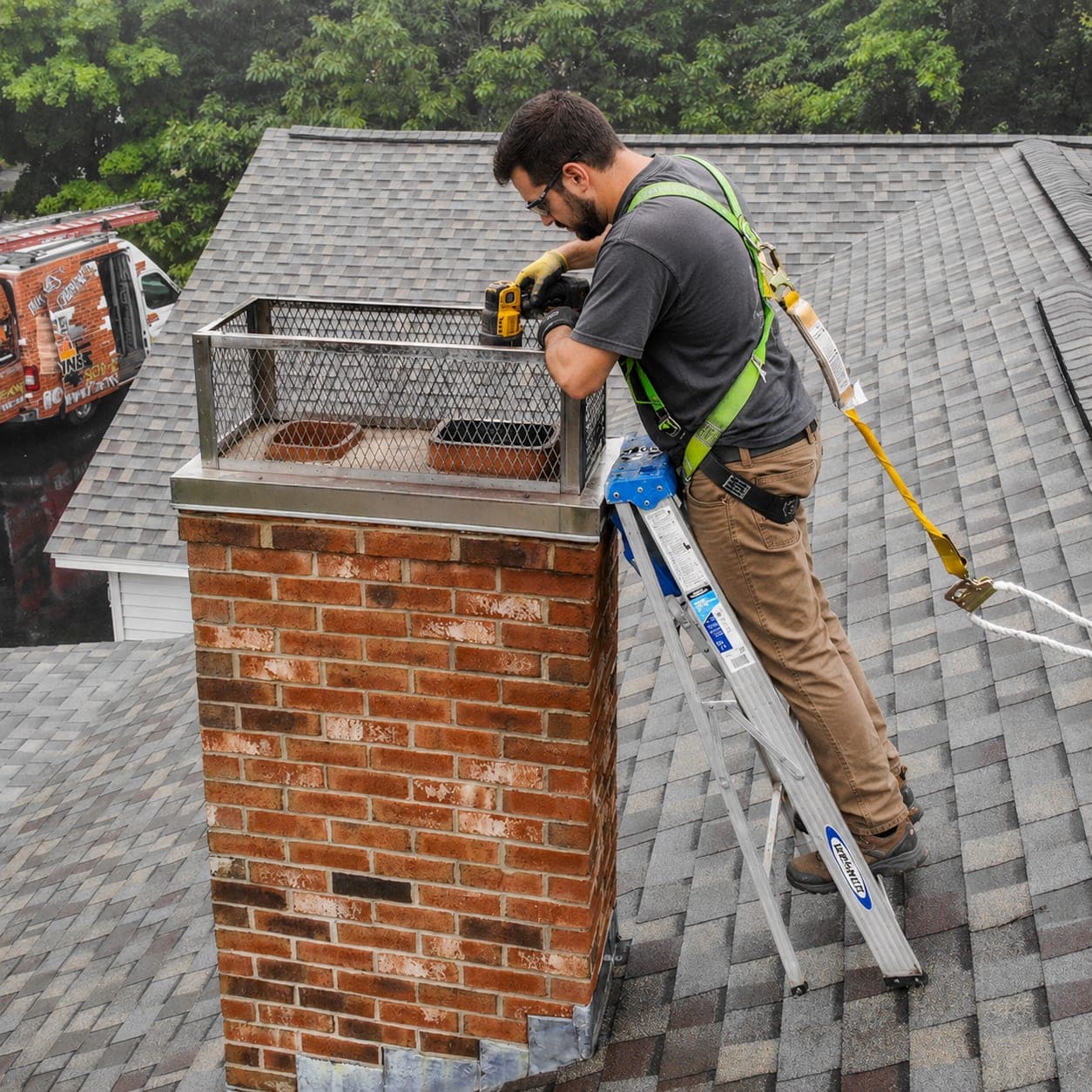
| Water and freeze-thaw | Rain gets past a cracked crown or missing cap, soaks in and freezes | Crown repair and a cap, then liner repair |
| Settling | Movement in the chimney shifts tiles and opens joints | Liner repair or relining, plus masonry repair if the stack moved |
| Poor original installation | Tiles set without room to expand crack under heat | Relining is usually the lasting fix |
The cause matters as much as the crack. Relining without fixing a leaking crown, or without dealing with the creosote that fed a fire, leaves the new liner facing the same problem. That's why regular flue cleaning is part of the cure, not an extra. Damage inside often comes with damage outside, so also check for what causes cracked chimney brick.
Can a liner be installed in any chimney flue?
Not in exactly the same way. A stainless steel liner suits most masonry flues, but it must be sized for the fireplace, insert, stove or furnace it serves, and some appliances call for an insulated liner. Sharp offsets or very small flues limit the options. No single liner fits any chimney flue, so the right one is chosen for your chimney and appliance.
What happens during the visit
An appliance needs a liner sized to its outlet to draft properly and limit buildup. A cracked or separated liner lets heat reach the masonry and nearby framing, and exhaust can leak through.
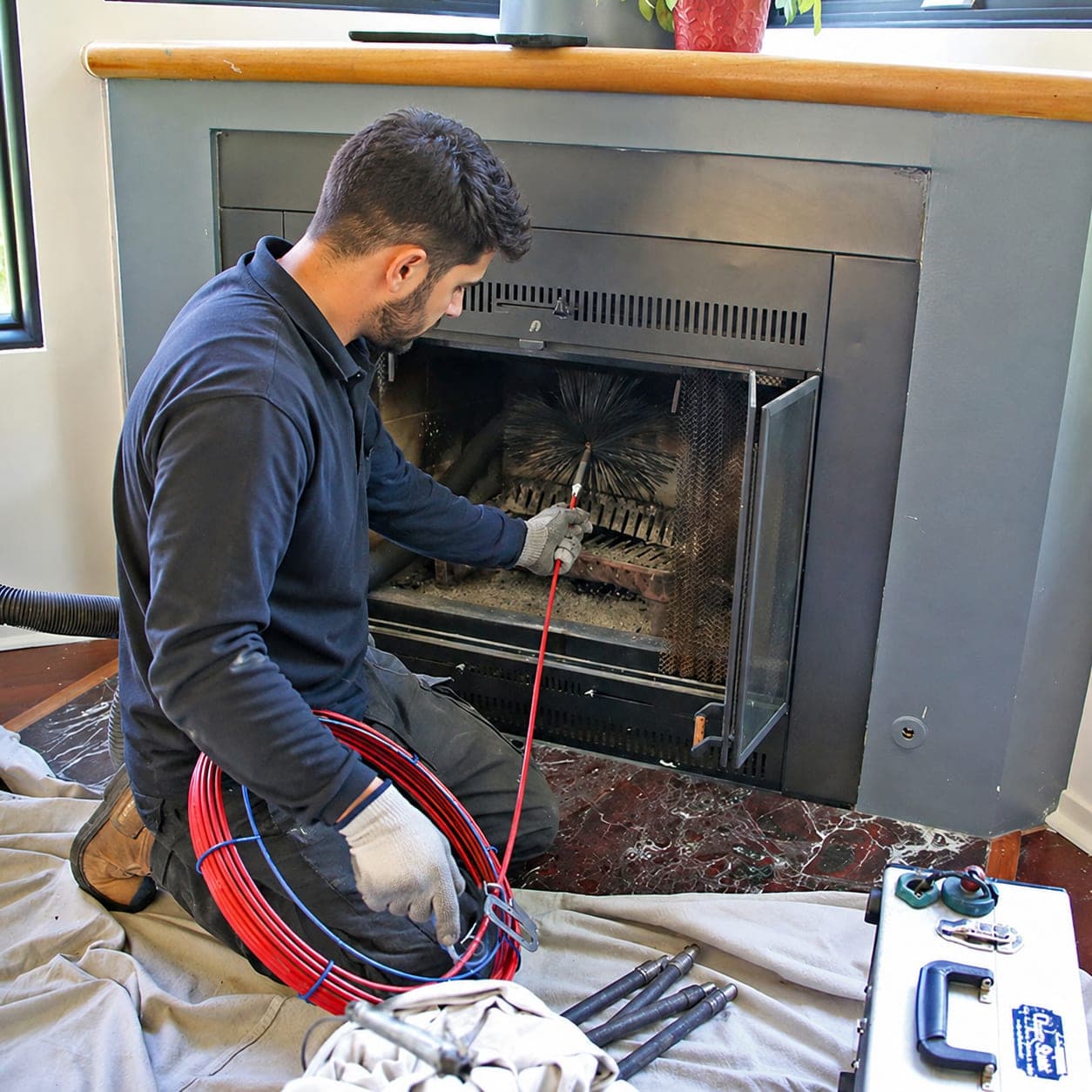
Scan the flue
A camera shows cracks, gaps and missing sections along the full length.
Size the liner
The appliance and the flue decide the liner type and diameter.
Install
The liner is fed from the top, connected at the bottom, and capped and sealed at the top.
Confirm
Draft is checked and you're shown the scan and the finished work.
Signs it's time for cracked chimney flue tile
- Smoke or a smell in rooms next to the chimney
- A new insert or stove that needs a matched liner
- Pieces of clay tile in the firebox or at the bottom of the flue
- A chimney fire in the past
- Cracks or open joints seen in a camera scan
What we look at
- Tile cracks and joint gaps
- Liner size against the appliance
- Signs of a past chimney fire
- Missing or displaced sections
- Top plate, cap and seal
- Connection at the appliance or smoke chamber
Carbon monoxide
A damaged liner can let exhaust into the home. If a carbon monoxide alarm sounds or anyone feels dizzy or sick, get everyone outside and call 911.
Check your chimney flue in minutes
A quick look you can do yourself
Make sure it's cold
Wait until the fireplace and ashes have fully cooled after the last fire.
Open the damper and look up
Use a bright flashlight and eye protection. You'll usually see only the smoke chamber and the bottom of the flue.
Check the smoke shelf and firebox floor
Curved pieces of clay tile or mortar chunks mixed in with ash are a red flag.
Look from outside
From the ground, use binoculars to check the crown and the top tile for cracks, gaps or a missing cap.
What a quick check can't tell you
Most of the flue is out of sight from both ends, so finding nothing doesn't prove the liner is sound. A full chimney inspection with a camera is how cracks along the length of the flue are confirmed.
Can you claim chimney flue damage on insurance?
Whether a cracked flue is covered depends entirely on your policy and the cause. Damage from a sudden event, such as a chimney fire or a storm, is often treated differently from gradual wear, so ask your insurer rather than assuming either way. Clear documentation helps any claim, meaning inspection findings and camera footage showing the damage and its likely cause. If weather is suspected, a storm damage chimney inspection is available.
To recognize the symptoms, see cracked flue tile warning signs. For wider context, read our guide to common chimney issues and the companion piece on typical chimney problems.