On this page
Advantages of installing fireplace glass doors
An open masonry fireplace is a hole in the house. When the fire is out and the damper doesn't seal tightly, warm room air keeps drifting up the flue. Well-fitted fireplace glass doors close that gap and change how the fireplace behaves day to day.
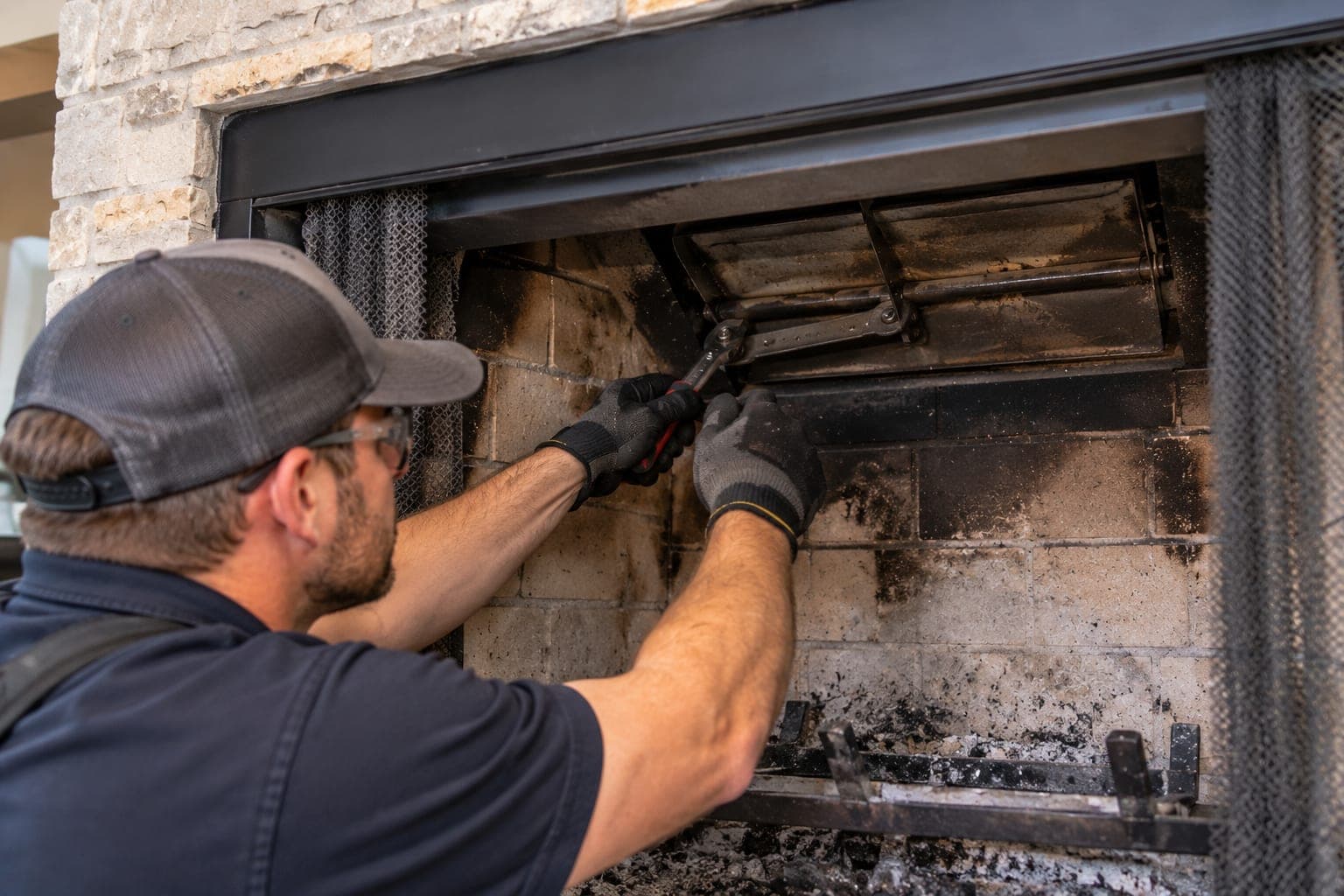
- Less heat loss between fires. Closed doors slow the flow of heated room air up the chimney, especially overnight while the embers die.
- Sparks stay in the firebox. Popping wood can throw embers past a screen. Glass stops them before they reach rugs or flooring.
- A barrier for kids and pets. The glass still gets hot, but it keeps hands and paws out of the fire itself.
- A cleaner look when the fireplace is idle. Doors hide a sooty firebox and keep ash dust and chimney odors out of the room.
Glass doors won't turn a traditional fireplace into a high-output heater. Anyone who promises that is overselling them. If warmth is your goal, our guide to efficient fireplace explains where doors fit alongside inserts and other upgrades.
Add glass doors to your fireplace
Homeowners who add glass doors to an existing opening are often surprised by how much the fit matters. Masonry openings are rarely perfectly square. A door that rocks or leaves gaps loses most of its benefit.
What we check before you add a fireplace door
Fit and compatibility
- Width, height and depth of the opening, measured at several points
- Whether the face is brick, stone or tile, and how the frame will mount to it
- Tempered or ceramic glass, based on how hot your fires run
- Access to the damper handle and gas key with the doors closed
- For factory-built units, whether a door is listed for that specific model
Prefab fireplaces are the big exception. Only doors approved by the manufacturer belong on them, because the wrong door can trap heat inside the unit. You can read how fireplace glass installation works, or see our fireplace door installation service if you want brand-new doors. If you already have doors with cracked glass, warped frames or loose hinges, our fireplace door service covers the repair side.
Keeping fireplace door glass clear
Choosing a fireplace glass cleaner
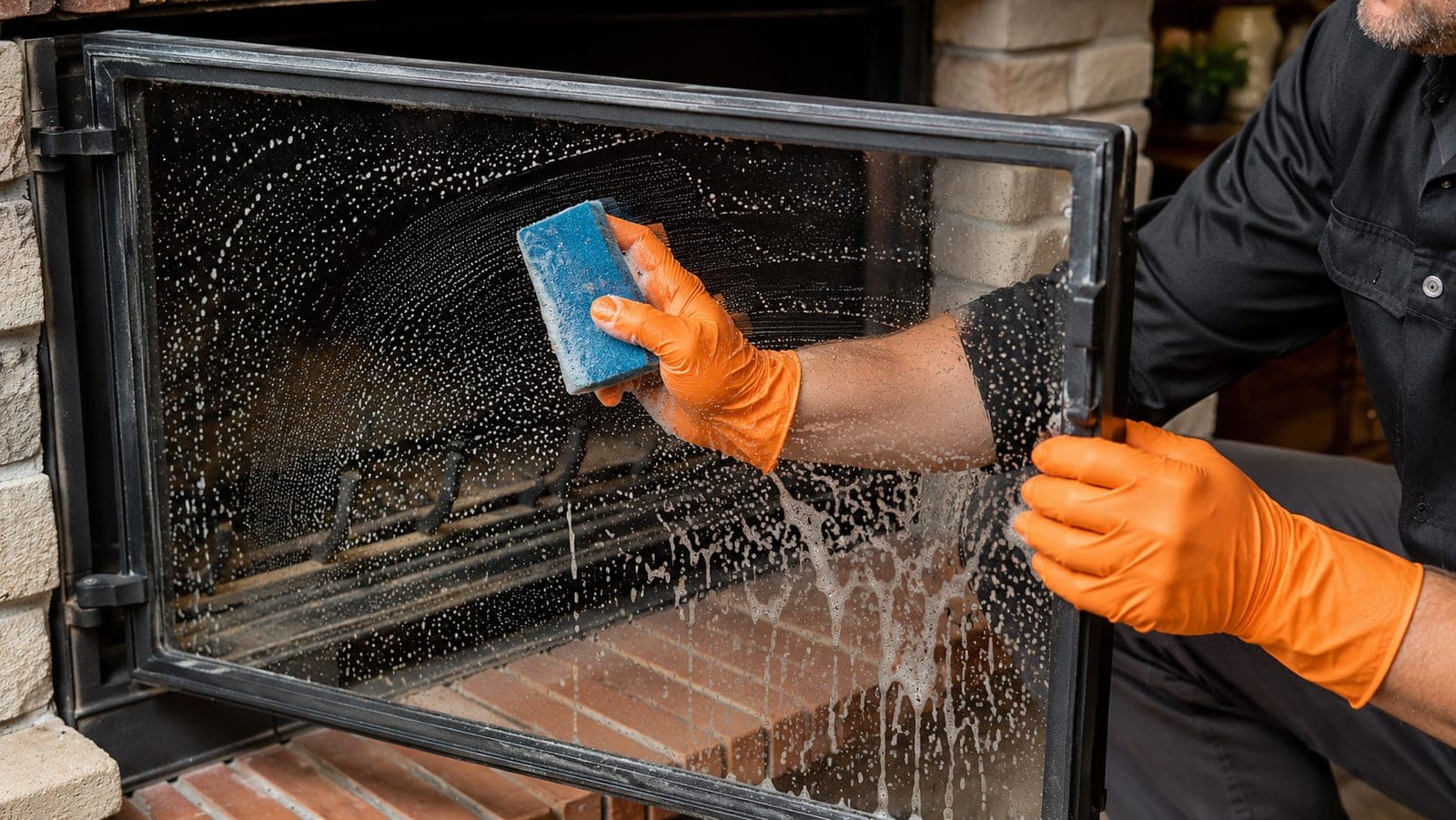
Haze on fireplace door glass is usually soot and creosote from smoldering fires. Use a fireplace glass cleaner made for the job, and only when the glass is fully cool. Skip steel wool and scouring powders, which scratch the surface so it clouds faster next time. If the haze returns after every fire, the wood or the draft is often the real cause.
Modern fireplace glass crystals behind the doors
Tempered fire glass crystals have become a popular modern alternative to logs in gas fireplaces. They aren't a simple swap. The crystals have to suit your burner, be laid at the depth the manufacturer allows, and never go in a wood-burning firebox. If you're weighing crystals along with new doors, we can talk it through during gas fireplace service so the doors, burner and media work together. Our fireplace anatomy guide shows how those parts relate.
How the visit works
A damaged smoke chamber is a common cause of smoke spilling into the room. Worn gaskets and glass on inserts and gas units waste heat and can leak exhaust.
Diagnosis
What is failing and why.
Options
Repair, replace a part, or reline — explained plainly.
Work
Done once you approve the scope.
Check
Draft and operation are tested afterwards.
What gets checked
- Draft from the opening
- Firebrick or refractory panels
- Damper operation
- Doors, glass and gaskets
- Smoke chamber and smoke shelf
If smoke comes into the room
Stop adding fuel, open a window and don't relight the fire until the chimney has been checked. If the smoke is heavy, an alarm sounds or you suspect a chimney fire, get everyone outside and call 911.
Signs to watch for
- Doors or glass that are cracked or don't seal
- Smoke coming into the room
- Cracked or missing firebrick or refractory panels
- Rust or warping inside the firebox
- A fireplace that is hard to light or won't stay lit
Getting ready for the visit
- Let the fireplace or stove cool completely — ideally no fire for 24 hours before the visit.
- Write down what you've noticed and when it happens — smells, smoke, sounds or stains.
- Clear a few feet of space in front of the hearth or appliance.
- Keep pets in another room while the work area is open.