On this page
Tempered vs. Ceramic glass
Two kinds of glass handle most fireplace work, and they aren't interchangeable. Tempered glass tolerates moderate heat and is common in bifold doors on open masonry fireplaces. Ceramic glass withstands much higher temperatures, so it's used where the glass stays closed against the fire, as in inserts, many gas fireplaces and doors designed to remain shut while burning.
| Feature | Tempered glass | Ceramic glass |
|---|---|---|
| Heat tolerance | Moderate | High |
| Typical use | Doors on open masonry fireplaces | Inserts, gas fronts, doors kept closed during a fire |
| When it fails | Shatters into small pieces | Usually cracks rather than shatters |
| Look | Very clear | Clear, sometimes with a slight tint |
Heat tolerance
- Tempered glass
- Moderate
- Ceramic glass
- High
Typical use
- Tempered glass
- Doors on open masonry fireplaces
- Ceramic glass
- Inserts, gas fronts, doors kept closed during a fire
When it fails
- Tempered glass
- Shatters into small pieces
- Ceramic glass
- Usually cracks rather than shatters
Look
- Tempered glass
- Very clear
- Ceramic glass
- Clear, sometimes with a slight tint
The right choice comes from the unit's instructions and how you actually use the fireplace. If you burn with the doors closed, the glass has to be rated for it.
How an installation runs
Clearances to combustibles are set by the manufacturer and the building code. Venting must match the appliance's listing or it won't draft or pass inspection.
Measure
Opening, clearances and the vent route.
Plan
Permits, venting parts and any electrical or gas work are lined up.
Fit
Unit, liner or vent, surround and hearth.
Start up
Test fire, draft check and a walk-through.
Signs it's time for fireplace installation
- A remodel that adds or moves a fireplace
- A damaged factory-built unit past repair
- A switch from wood to gas or electric
- An open fireplace that sends most of its heat up the chimney
- A worn-out insert or stove
Carbon monoxide
A blocked or damaged flue can push carbon monoxide into the home. If an alarm sounds or anyone feels dizzy or sick near the fireplace, get everyone outside and call 911.
Before the technician arrives
- Keep pets in another room while the work area is open.
- Let the fireplace or stove cool completely — ideally no fire for 24 hours before the visit.
- Move rugs, photos and anything fragile away from the work area.
- Clear a few feet of space in front of the hearth or appliance.
What the technician checks
- Required clearances to combustibles
- Opening or framing dimensions
- Vent or liner route and length
- Gas supply or electrical needs
- Hearth extension and protection
- Permit requirements
Where fireplace glass gets installed
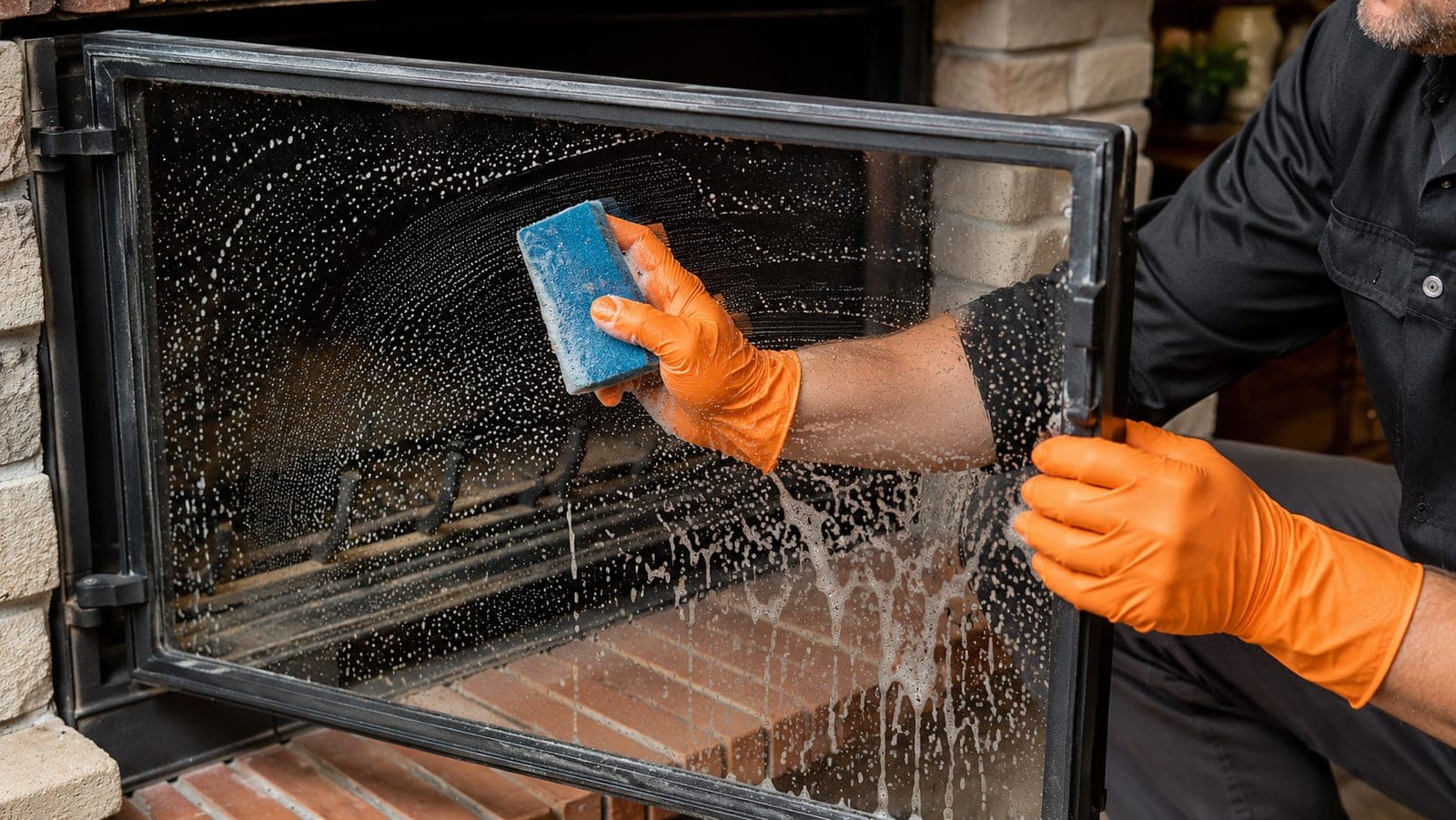
Glass doors on masonry fireplaces
Doors cut down on drafts and help keep sparks inside the firebox. When a frame is in good shape, we replace a cracked panel. When it isn't, or there was never a door, new fireplace door installation is the better route. Closed doors are one piece of a more efficient fireplace, but they don't seal the flue. If cold air still comes down the chimney, have the damper above the firebox checked as well.
Gas fireplace and insert fronts
On a sealed gas fireplace, the glass front is part of the combustion system, not just a window. It separates the fire and its exhaust from the room. The gasket behind it matters as much as the glass, so we refit or replace both to the manufacturer's specifications. To see how the glass relates to the firebox and venting, read about how a fireplace is put together.
Electric fireplace viewing glass
Glass on an electric unit is decorative and doesn't hold back heat or exhaust, so replacement is simpler. If you're planning a new electric unit, see how electric fireplace installation works.
Cracked glass on a gas fireplace
Turn the unit off and leave it off until the glass is replaced. On a sealed unit, cracked glass can let combustion gases into the room. More on this in our fireplace safety guide.