On this page
Choosing what to install
Every fireplace needs three things to line up: a unit you like, a fuel you can supply and a safe way to get exhaust out of the house. If one of those doesn't work, the other two don't matter. This quick comparison covers the options most homeowners weigh.
| Option | What it needs | Worth knowing |
|---|---|---|
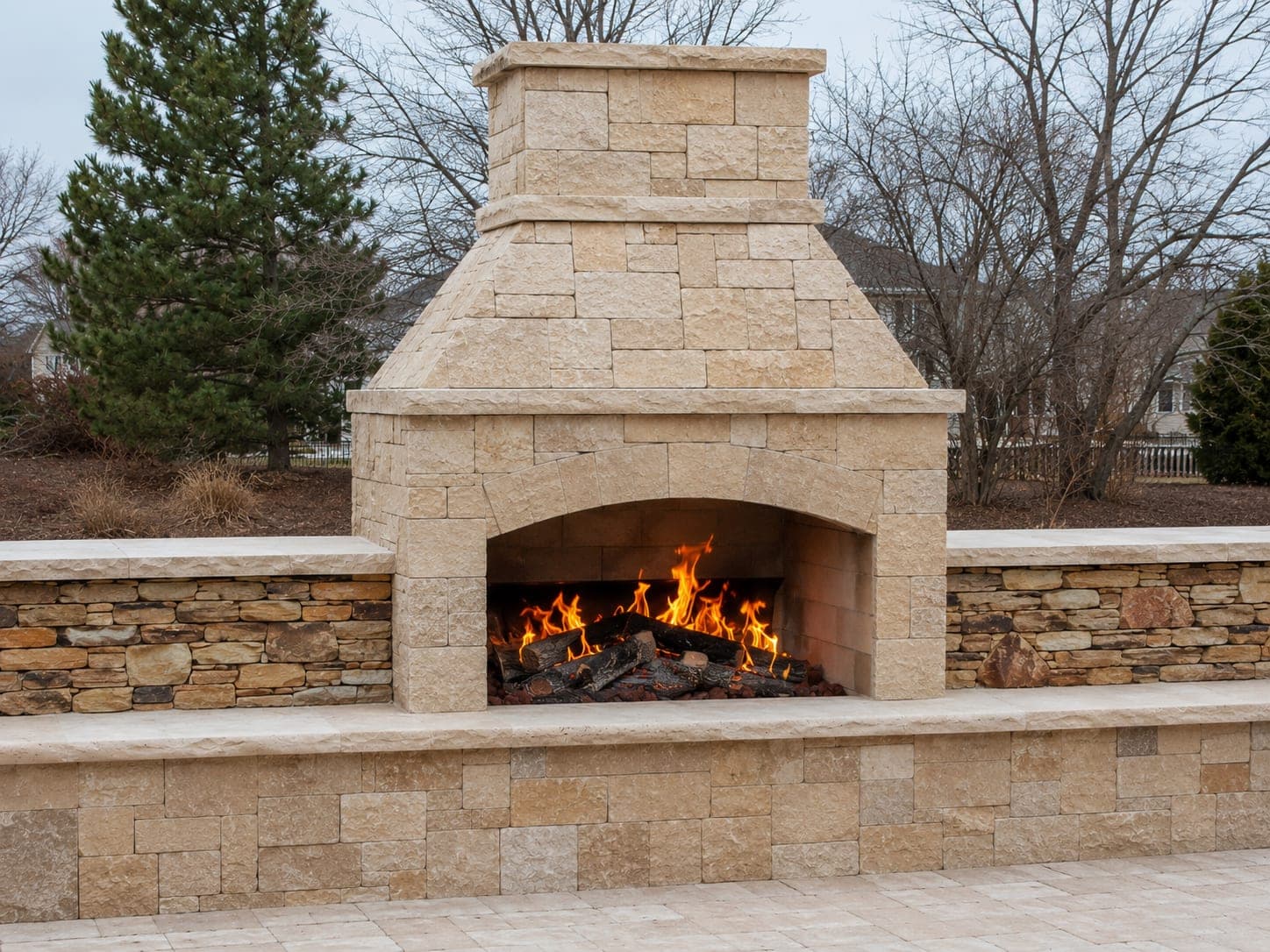
| Factory-built wood fireplace | A listed chimney system and a route for it | Real fire and wood heat; the most venting work |
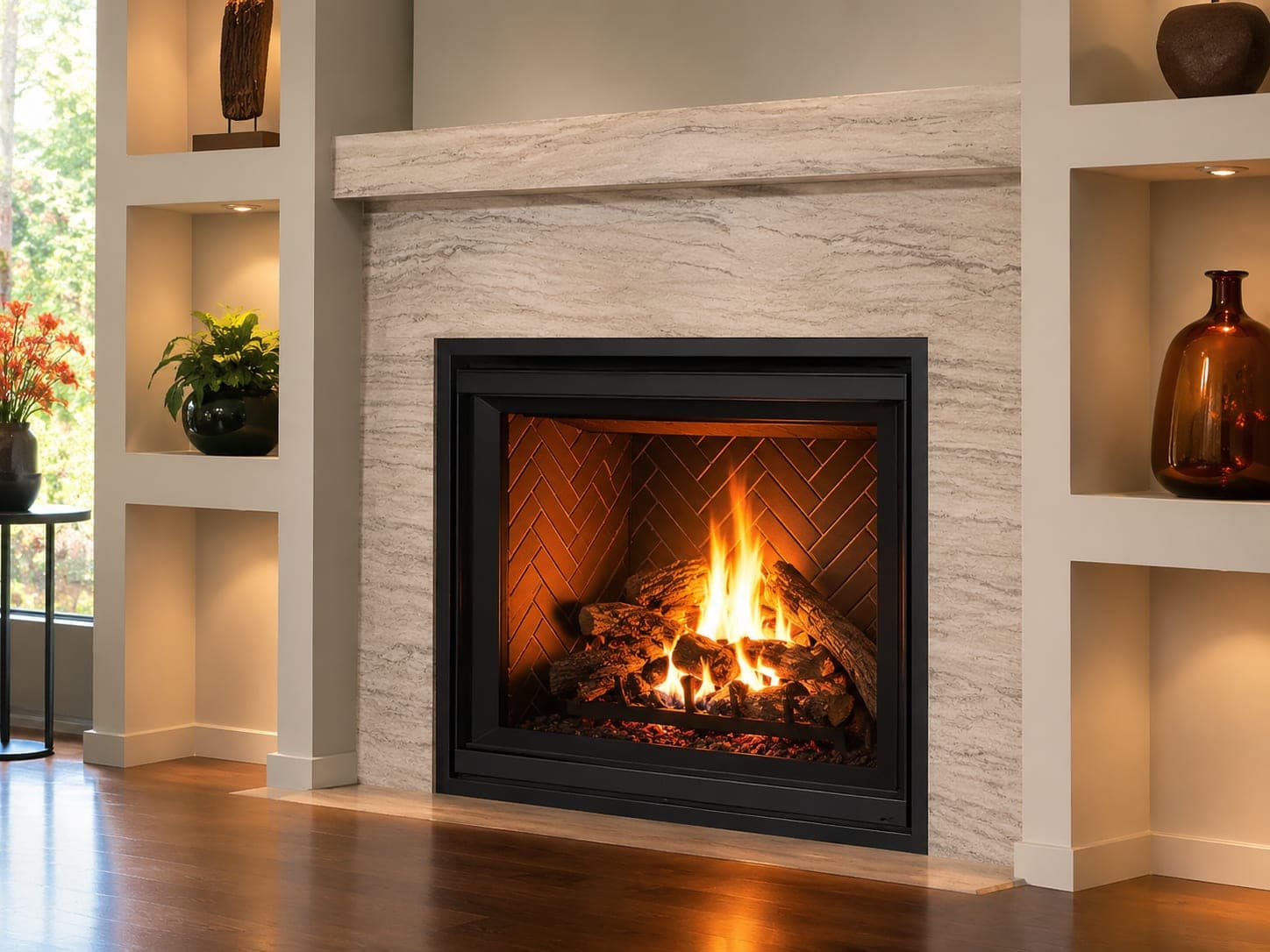
| Gas fireplace | A gas supply and an approved vent path | Push-button convenience; we can run the gas line |
| Fireplace insert | An existing fireplace and a sound chimney | Turns a drafty open hearth into a closed unit |
| Electric fireplace | A suitable outlet or circuit | No flue at all; the simplest install |
Electric units are the quickest way to get the look of a fireplace without a chimney. See how electric fireplace installation works. If heat output matters more to you than appearance, our guide to an efficient fireplace explains why some types warm a room far better than others.
What the visit covers
Venting must match the appliance's listing or it won't draft or pass inspection. A unit sized for the room heats comfortably; one far too large makes the space too warm.
Measure
Opening, clearances and the vent route.
Plan
Permits, venting parts and any electrical or gas work are lined up.
Fit
Unit, liner or vent, surround and hearth.
Start up
Test fire, draft check and a walk-through.
How to prepare
- Clear a few feet of space in front of the hearth or appliance.
- Write down what you've noticed and when it happens — smells, smoke, sounds or stains.
- Note the make and model of any insert, stove or gas unit if you have it.
- Move rugs, photos and anything fragile away from the work area.
Signs to watch for
- An open fireplace that sends most of its heat up the chimney
- A switch from wood to gas or electric
- A remodel that adds or moves a fireplace
- A worn-out insert or stove
- A damaged factory-built unit past repair
If you smell gas
Leave the home right away, don't use switches or phones inside, and call your gas utility or 911 from outside.
Checked on every visit
- Required clearances to combustibles
- Opening or framing dimensions
- Hearth extension and protection
- Gas supply or electrical needs
- Vent or liner route and length
Having a chimney crew install it
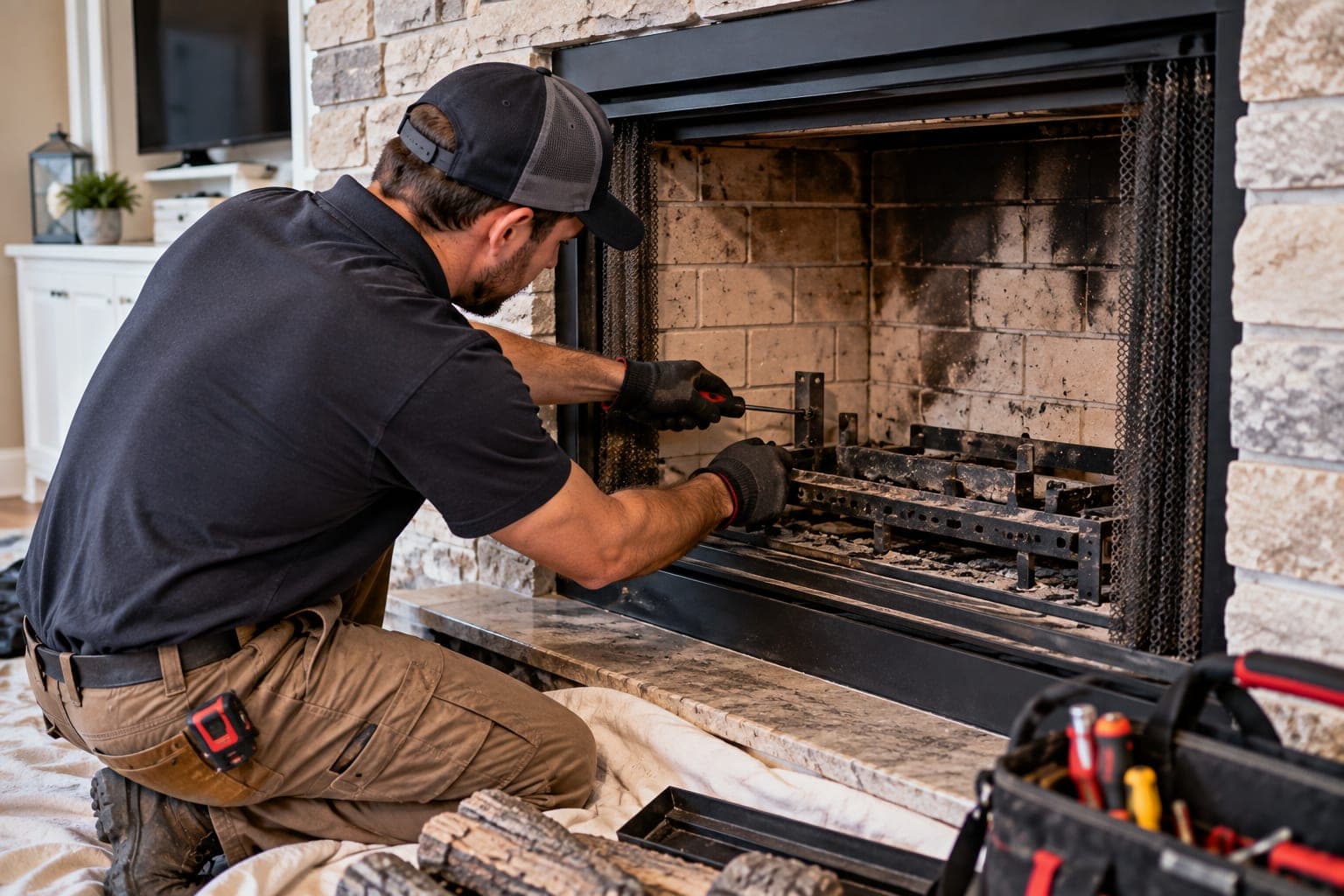
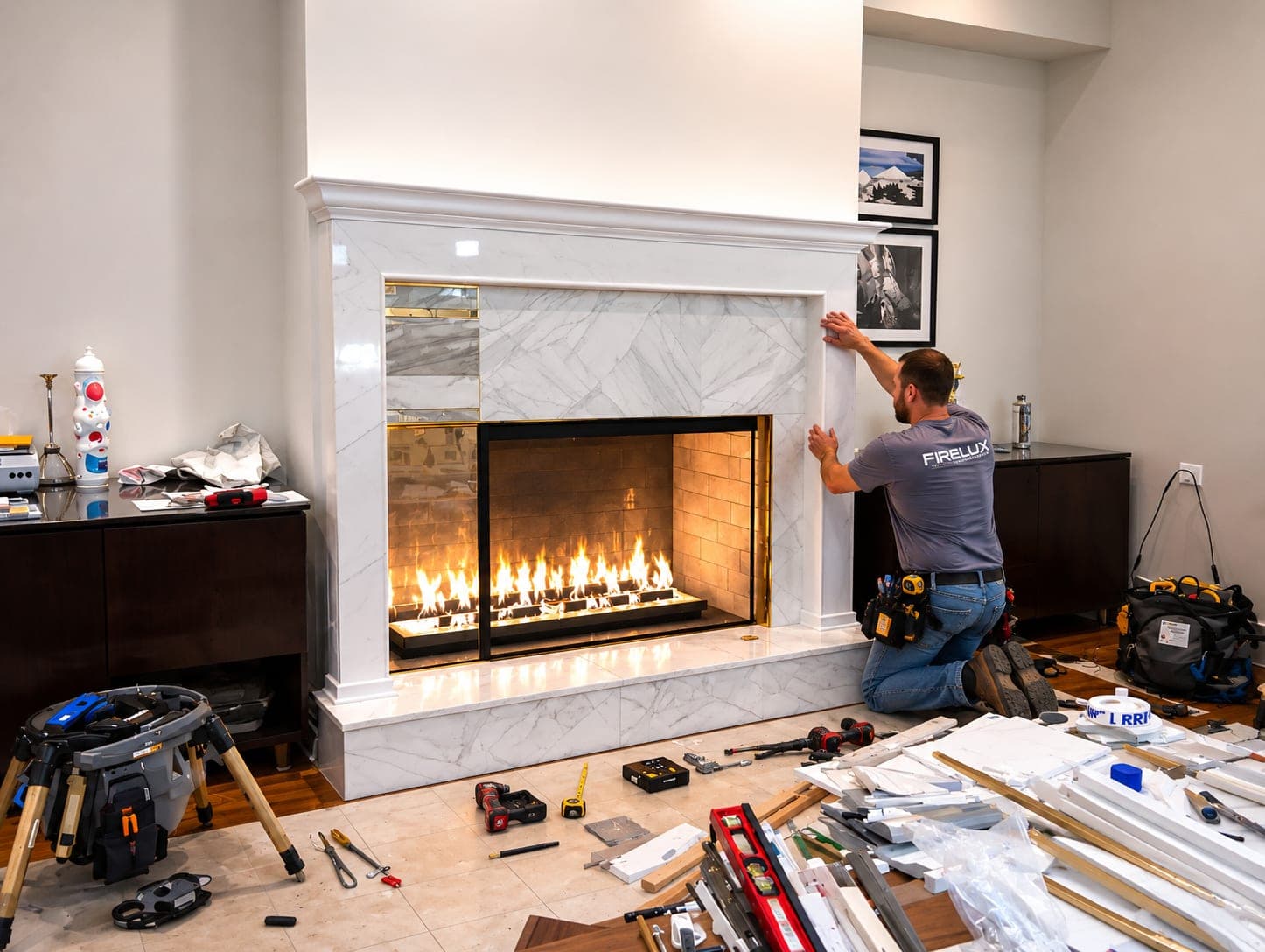
A fireplace is part appliance and part venting system, and most problems start where the two meet. When a chimney company handles the install, the people setting the firebox also understand the flue above it. Including:
- Matching the unit to the venting your house can support
- Setting hearth, mantel and surround clearances to the manufacturer's instructions
- Running the gas line for gas fireplaces and gas logs
- Installing fireplace inserts in existing masonry fireplaces
- Adding finishing pieces such as new glass fireplace doors or a replacement fireplace damper when an older fireplace is being updated
DIY fireplace install: What you'd be taking on
Plenty of home projects are a good fit for a confident DIYer. A fuel-burning fireplace is harder, because the mistakes don't show up on install day. They show up later, as scorched framing behind a wall or exhaust leaking into a room. Before you try it yourself, it helps to know how a fireplace is put together and what has to go right.
What a DIY fireplace install has to get right
- Clearances to framing, mantels and trim, exactly as the manual lists them
- The specific vent components the unit was tested with, not a mix of brands
- Firestops wherever the flue passes through a floor or ceiling
- Gas connections and leak testing on gas units
- Any permit and inspection your town requires
Plug-in electric fireplaces are the reasonable exception. For anything that burns wood or gas, read up on fireplace safety first, and get a free estimate so you know what the professional route involves before you decide.