On this page
How we address masonry repair on commercial chimneys
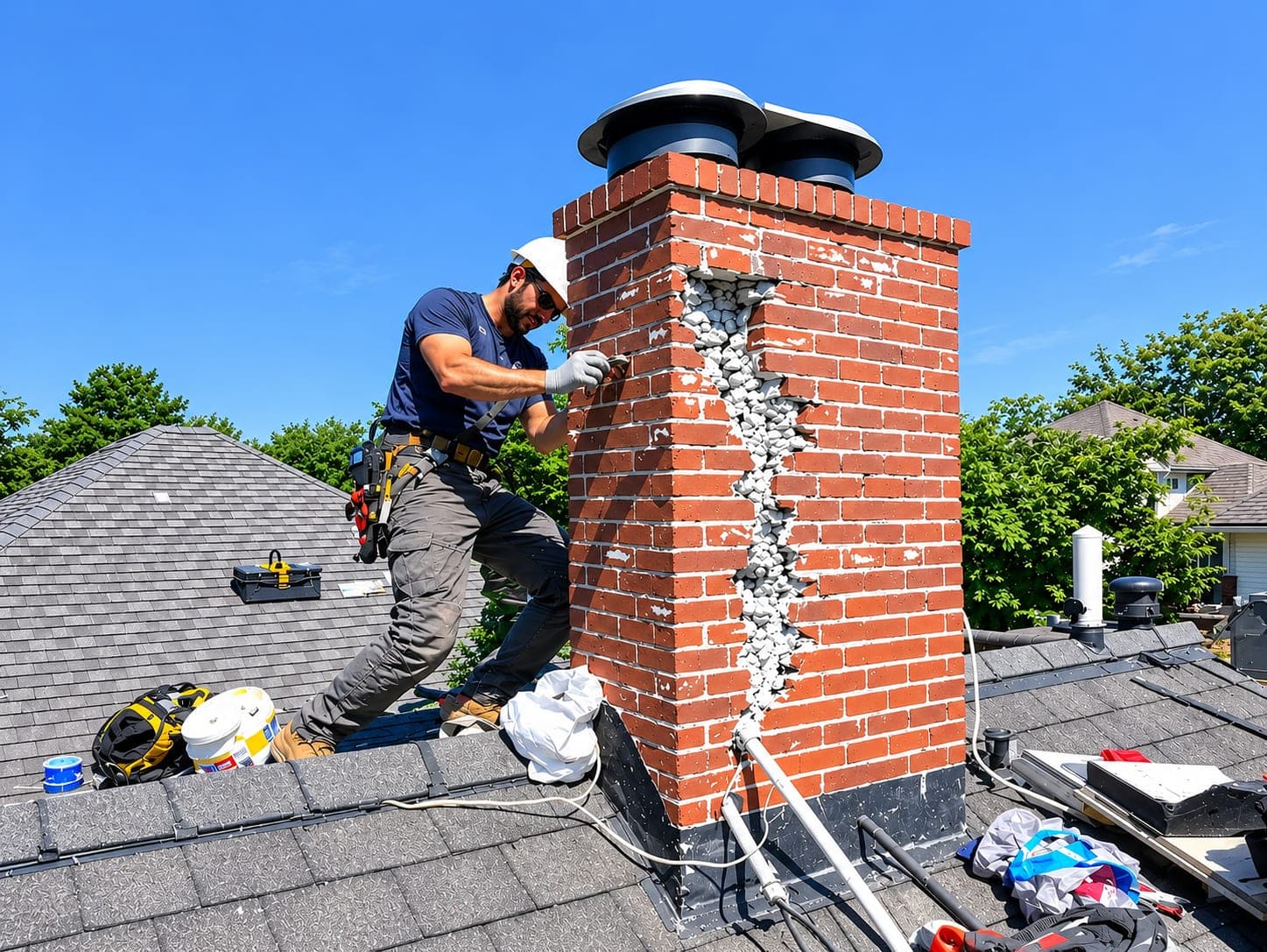
Restaurant kitchen flues, apartment building stacks and boiler chimneys all fail in similar ways, and the damage is rarely just cosmetic. Water gets into open mortar joints, freezes, and breaks the faces off bricks. A cracked crown lets rain straight into the core of the stack. Before we recommend any repair, we find out what is causing the damage. If you patch what you can see without stopping the water, you are usually just scheduling the next repair.
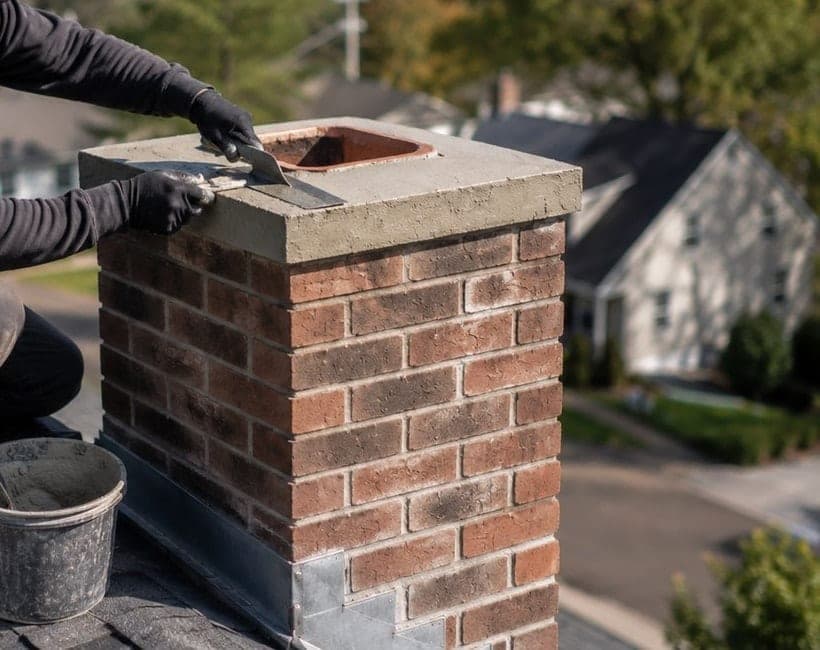
- Tuckpointing: grinding out failed mortar joints and packing them with fresh mortar so water stops getting in.
- Brick replacement: cutting out spalled or cracked units and setting new ones in the course.
- Crown repair: sealing cracks in the concrete cap at the top, or rebuilding a crown that has broken through.
- Flashing and waterproofing: fixing the joint where the stack meets the roof and treating brick that soaks up water.
- Rebuilds: taking down and relaying loose courses, usually above the roofline, when repointing can't save them.
Masonry rarely fails for just one reason. Our guide to common Chimney Issues explains how water, heat and age work together to break it down. For the rest of what we do on business properties, from flue cleaning to inspections, see our commercial chimney services page.
Transforming outdated masonry aesthetic styles
Some commercial chimneys work fine but look tired. Common examples are a patchwork of mortar colors from decades of spot repairs, peeling painted brick, smeared joints, or a crown and cap that no longer suit the building. If a section is being repointed or rebuilt anyway, that is the practical time to change how it looks. The access and labor are already in place.
- Matching or deliberately changing mortar color and joint profile across the whole visible face, not just the repaired patch
- Replacing mismatched or damaged brick so repairs stop looking like repairs
- Rebuilding a crude or cracked crown with a cleaner profile
- Adding a new chimney cap that fits the stack and the building
- Restoring interior fireplaces in lobbies, dining rooms and common areas through firebox repair and fireplace restoration
Need chimney masonry repair? What to sort out first
Have these answers ready for the estimate
- Which appliances, tenants or kitchens vent through the chimney, and whether it's in use now
- How the roof can be reached: hatch, ladder or lift
- Where you've seen symptoms: fallen brick pieces, white staining, water inside, or damp walls near the stack
- Any past repair dates or reports you have on file
- Times when the building must stay fully open or quiet
Loose brick over a walkway
If pieces of brick or crown are falling near an entrance, sidewalk or parking area, keep people clear and call. Emergency calls are accepted, and we're available 24 hours, Sunday through Friday.
Common masonry repair questions from building owners
Most owners ask two things first: is this urgent, and what will it cost? Urgency depends on whether water or loose material is involved. Cost depends on height, access and how far the damage extends, so every free estimate is based on seeing the chimney in person. Our guide on how much does a chimney sweep cost explains what shapes chimney pricing in general. Common Chimney Problems can help you match what you're seeing to a likely cause.
How the visit works
Spalling brick is a sign water is freezing or soaking inside the masonry. Mortar harder than the brick can make the brick itself crack.
Look closely
Where water gets in and how far the damage goes.
Plan the scope
Repointing, brick replacement or a partial rebuild — explained before work starts.
Rebuild the weak parts
Joints, bricks and crown are repaired with compatible materials.
Protect
Where suitable, a breathable water repellent is applied after repairs cure.
Stay off the roof
Looking from the ground or with binoculars is safe. Climbing a steep or wet roof to inspect a chimney is not — leave that to someone with the right equipment.
How to prepare
- Let the fireplace or stove cool completely — ideally no fire for 24 hours before the visit.
- Clear a few feet of space in front of the hearth or appliance.
- Note the make and model of any insert, stove or gas unit if you have it.
- Make sure the technician can reach the roof or attic access if it's needed.
What the technician checks
- Brick faces for spalling
- Stack alignment and loose courses
- Crown cracks and overhang
- Flashing where masonry meets the roof
- Mortar joint depth and condition
- Efflorescence and water staining
Signs to watch for
- Mortar that is sandy, recessed or falling out of the joints
- A leaning or cracked stack
- Loose bricks at the top of the chimney
- White efflorescence staining on the chimney