On this page
What chimney masonry construction involves building
Our masonry work is limited to chimneys and fireplaces. Within that scope, construction means taking down masonry that has failed and building it back properly, not just patching the surface. Typical projects include:
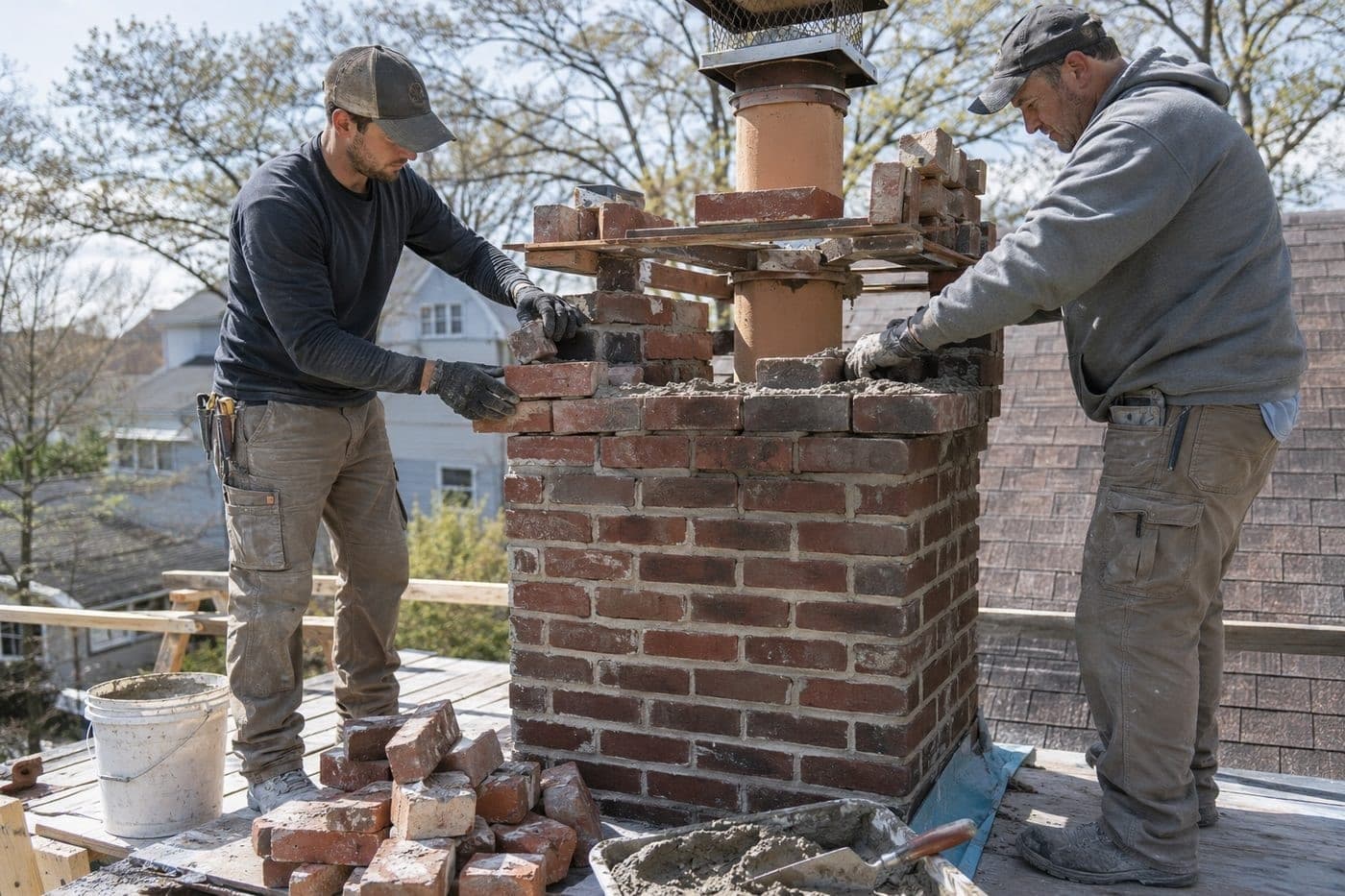
- Rebuilding a chimney stack from the roofline up, or further down when the brick below has also failed
- Building a new crown with an overhang that sheds water away from the brick
- Rebuilding fireboxes with firebrick and heat-resistant mortar
- Repairing or reforming smoke chambers so smoke moves cleanly into the flue
- Tuckpointing and unit replacement on masonry that can be saved
When your chimney needs targeted fixes rather than construction, chimney masonry repair is the better starting point. Brick-specific work like repointing and spalled-brick replacement is covered on our brick masonry repair page.
Driveway paving and Belgian block edging
Searches for masonry construction often include asphalt driveway paving and Belgian block edging. These aren't services we offer. We don't pave driveways, lay edging, or build walkways, patios or retaining walls. If you're planning hardscape work, look for a paving or landscape contractor for that part of the project.
If your project includes both
Exterior projects sometimes uncover chimney problems along the way, such as loose bricks, a cracked crown or staining near the roofline. Those are the parts we can take on, alongside whoever handles the paving.
Why homeowners choose a chimney-focused masonry contractor
A chimney isn't just a brick column. Building one well means getting several details right that general masonry work rarely involves:
Details specific to chimney masonry
- Crown design with a drip edge so water doesn't run down the face of the brick
- Correct handling of the flue liner during a rebuild. See our primer on chimney liners for why this matters.
- Firebrick and refractory mortar inside the firebox instead of standard brick and mortar
- Proper connection to roof flashing so the rebuilt chimney doesn't leak at the roofline
Masonry work often goes together with fixes inside the fireplace, such as a damaged damper, door or panels, which our chimney and fireplace repair work covers. Estimates are free, emergency calls are accepted, and we're available 24 hours, Sunday through Friday.
How the visit works
The crown, cap and flashing decide how long the new masonry stays dry and sound. Rebuilding from sound masonry, not just patching the surface, is what stops a failing chimney from coming back.
Assess
What has to come down, or where the new chimney will run, and what it will serve.
Plan
Brick or stone, the liner size, the height above the roof and permits are settled first.
Build
The masonry goes up course by course with a matched liner, then the crown, flashing and cap.
Finish
The roof line is sealed, the site cleaned up and the draw checked.
Signs it's time for masonry construction
- A crown and top courses too far gone to repair
- A chimney with loose, spalling or leaning masonry above the roof
- Storm or impact damage to the stack
- A new fireplace or stove that needs a chimney
What the technician checks
- Flashing at the roof line
- Flue liner size for the appliance
- Height above the roof
- Crown and cap
- Permit requirements
- Footing or sound masonry to build from
Stay off the roof
Looking from the ground or with binoculars is safe. Climbing a steep or wet roof to inspect a chimney is not — leave that to someone with the right equipment.
Getting ready for the visit
- Let the fireplace or stove cool completely — ideally no fire for 24 hours before the visit.
- Note the make and model of any insert, stove or gas unit if you have it.
- Clear a few feet of space in front of the hearth or appliance.
- Keep pets in another room while the work area is open.