Why chimney bricks crack
Chimney brick takes more abuse than almost any other masonry on a house. It stands above the roofline, gets wet from every direction, and heats and cools every time the fireplace or a connected appliance runs. Most cracked chimney bricks trace back to one of these causes:
- Water and freeze-thaw. Brick and mortar absorb moisture. When that water freezes it expands, and repeated cycles split brick faces and open mortar joints.
- A failing crown or missing cap. A cracked concrete crown lets rain straight into the top of the stack, so damage often starts in the upper courses.
- Settling or movement. A chimney on a weak footing, or one hit by storm debris, can crack along a stair-step line through the mortar.
- Heat stress. A chimney fire or a failed liner can crack bricks from the inside out, so outside cracks sometimes signal inside trouble. If that's a concern, read about what causes cracked chimney flue tile.
- Mismatched repair materials. Hard modern mortar on softer old brick can force the brick itself to crack instead of the joint.
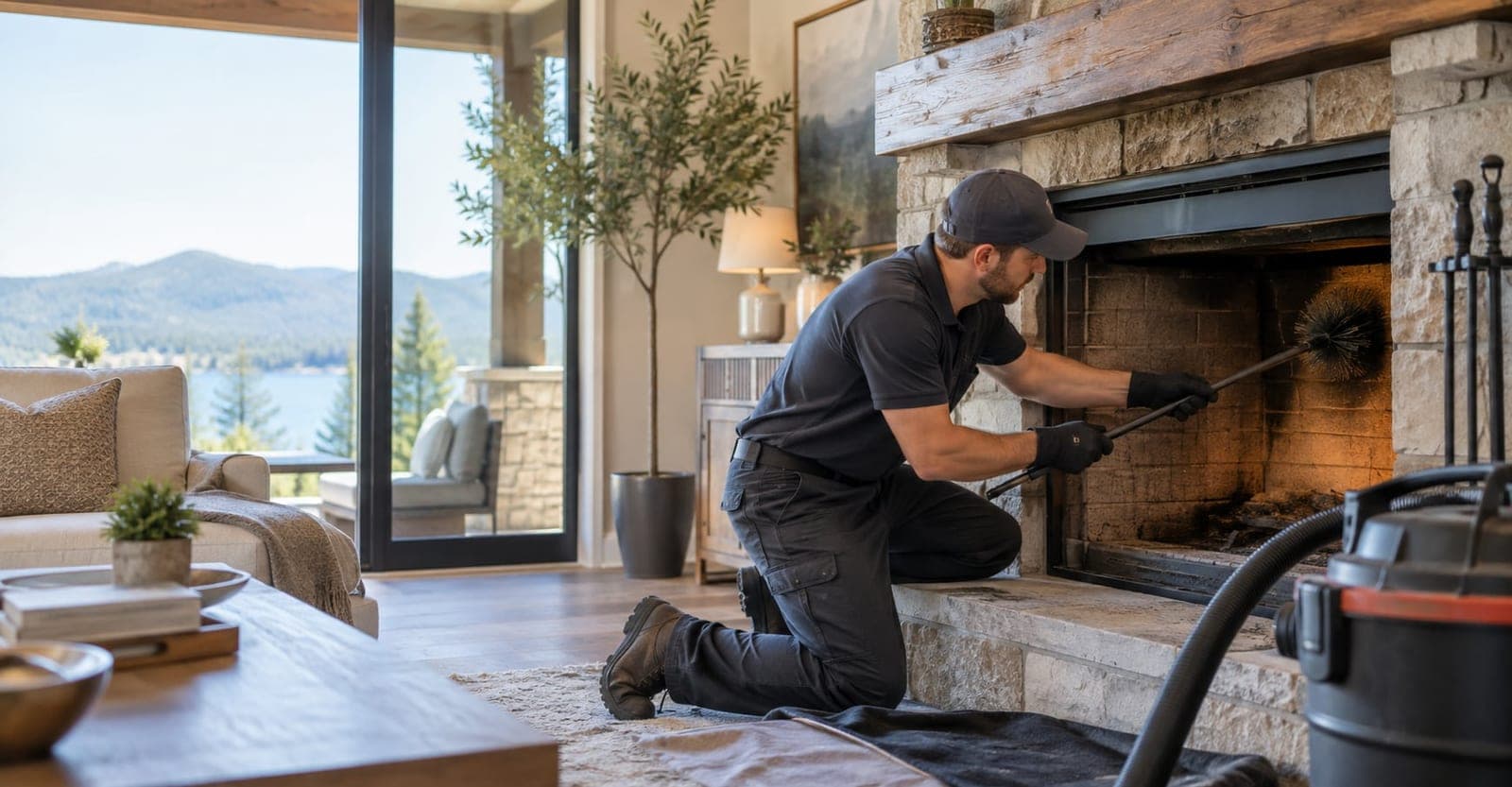
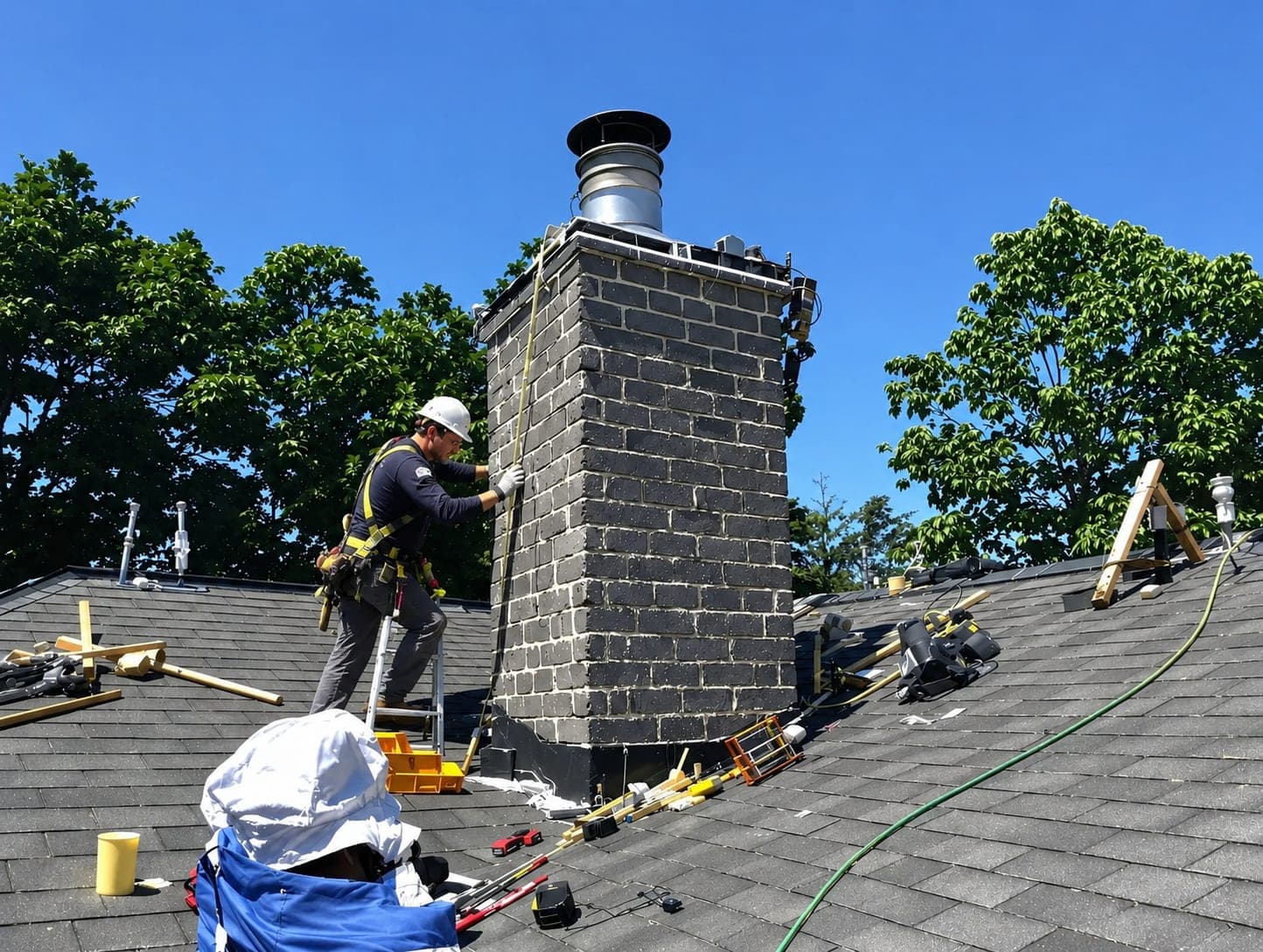
What happens during the visit
Mortar harder than the brick can make the brick itself crack. Spalling brick is a sign water is freezing or soaking inside the masonry.
Look closely
Where water gets in and how far the damage goes.
Plan the scope
Repointing, brick replacement or a partial rebuild — explained before work starts.
Rebuild the weak parts
Joints, bricks and crown are repaired with compatible materials.
Protect
Where suitable, a breathable water repellent is applied after repairs cure.
Stay off the roof
Looking from the ground or with binoculars is safe. Climbing a steep or wet roof to inspect a chimney is not — leave that to someone with the right equipment.
When to book cracked chimney brick
- Mortar that is sandy, recessed or falling out of the joints
- A leaning or cracked stack
- A crown with cracks or missing pieces
- Loose bricks at the top of the chimney
- White efflorescence staining on the chimney
What the technician checks
- Crown cracks and overhang
- Efflorescence and water staining
- Stack alignment and loose courses
- Brick faces for spalling
- Flashing where masonry meets the roof
- Mortar joint depth and condition
Minor crack or serious problem?
Not every crack is urgent, but very few fix themselves. Use these signs to judge how quickly to act:
| Feature | Usually lower priority | Get it looked at soon |
|---|---|---|
| Crack width | Hairline and not growing | Wide enough to fit a coin edge, or getting wider |
| Location | One brick, away from the crown | Several courses, stair-step pattern, or near the roofline |
| Brick face | Surface intact | Flaking, popping off or crumbling (spalling) |
| Inside the house | No change | Water stains, a damp smell, or debris in the firebox |
| Shape of the stack | Straight and plumb | Leaning, bulging or pulling away from the house |
Crack width
- Usually lower priority
- Hairline and not growing
- Get it looked at soon
- Wide enough to fit a coin edge, or getting wider
Location
- Usually lower priority
- One brick, away from the crown
- Get it looked at soon
- Several courses, stair-step pattern, or near the roofline
Brick face
- Usually lower priority
- Surface intact
- Get it looked at soon
- Flaking, popping off or crumbling (spalling)
Inside the house
- Usually lower priority
- No change
- Get it looked at soon
- Water stains, a damp smell, or debris in the firebox
Shape of the stack
- Usually lower priority
- Straight and plumb
- Get it looked at soon
- Leaning, bulging or pulling away from the house
Loose bricks are a falling hazard
If bricks are loose or pieces are landing on the roof or yard, keep people clear of that area and don't use the fireplace until the chimney has been checked. Emergency calls are accepted, and help is available 24 hours, Sunday through Friday.
How cracked chimney brick is repaired
The right repair depends on how far the damage goes. The masonry is checked from the roof and the firebox, and a camera can show whether the flue lining behind the brick has cracked too.
- Tuckpointing replaces cracked or eroded mortar joints when the bricks themselves are sound.
- Brick replacement swaps out spalled or split bricks individually.
- Crown repair and a chimney cap stop water entering the top of the stack, one of the most common root causes.
- Waterproofing with a breathable masonry sealer slows future moisture damage once repairs are done.
- A partial or full rebuild is the practical answer when cracks are widespread or the stack has shifted.
Cracks inside the firebox involve different materials. See fixing cracked fireplace brick if the damage is inside the fireplace. For a wider look at how masonry, flashing and liners fail together, our guide to common chimney problems and the overview of common chimney issues are good next reads.