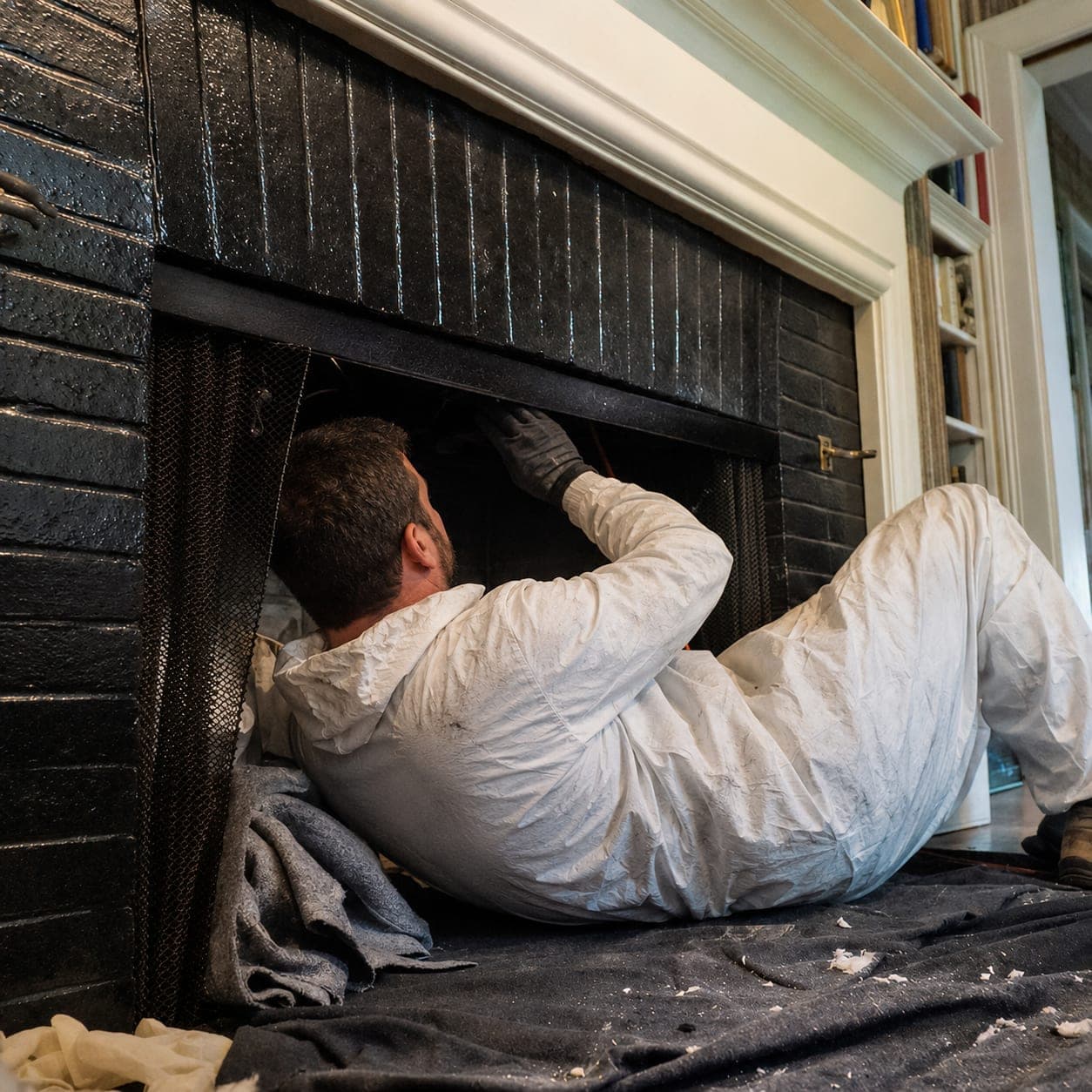
Smoky fireplace cleaning or repair: which do you need?
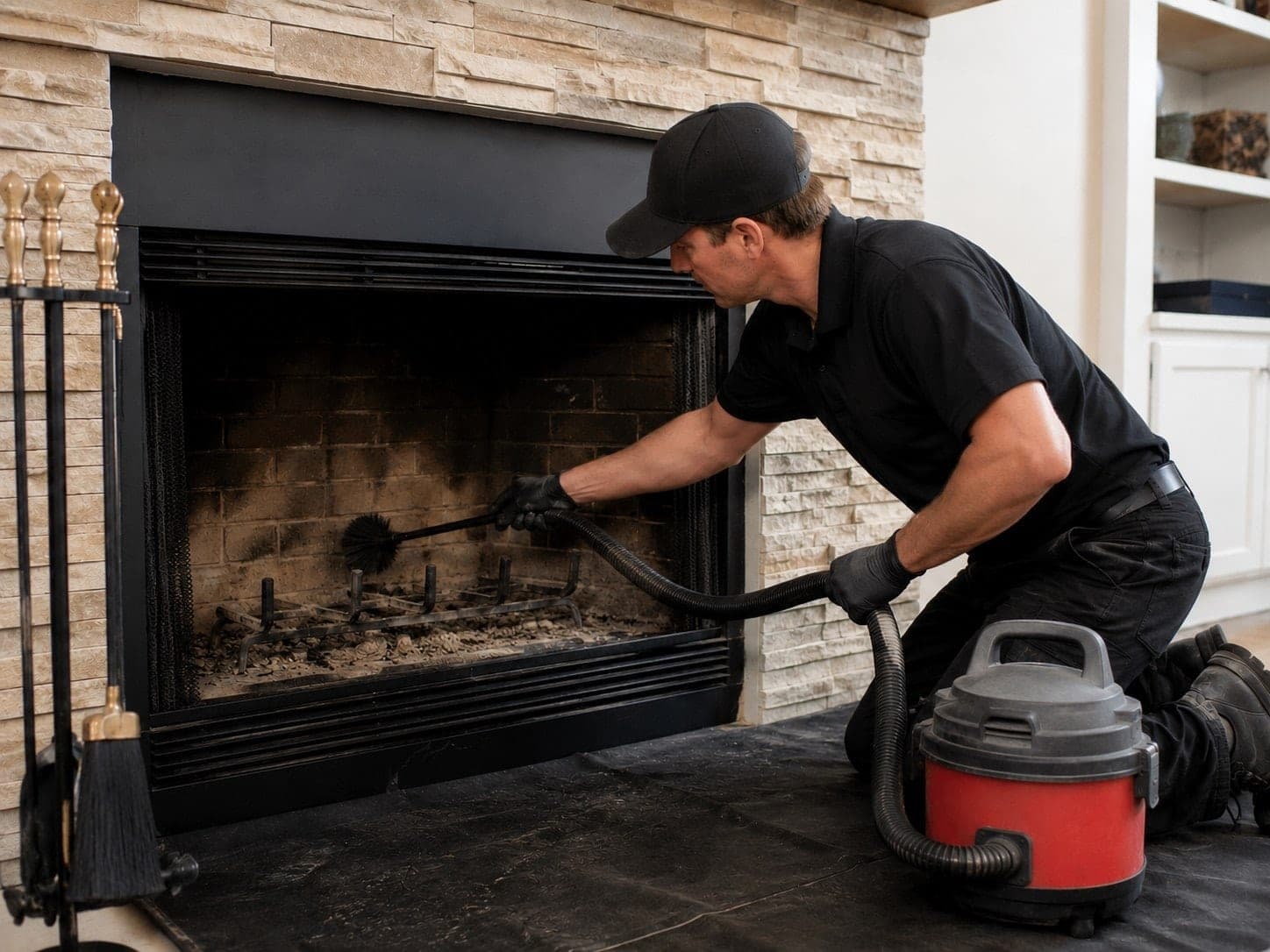
Plenty of smoky fireplaces improve after a sweep, and plenty don't. It comes down to whether buildup is narrowing the flue, or whether part of the fireplace is built or working wrong.
| Feature | Cleaning usually helps | Repair is usually needed |
|---|---|---|
| Inside the flue | Heavy soot or creosote narrowing the passage | Flue tiles cracked, shifted or missing |
| Blockages | Leaves, nests or debris that can be pulled out | Collapsed masonry or a damaged liner causing the blockage |
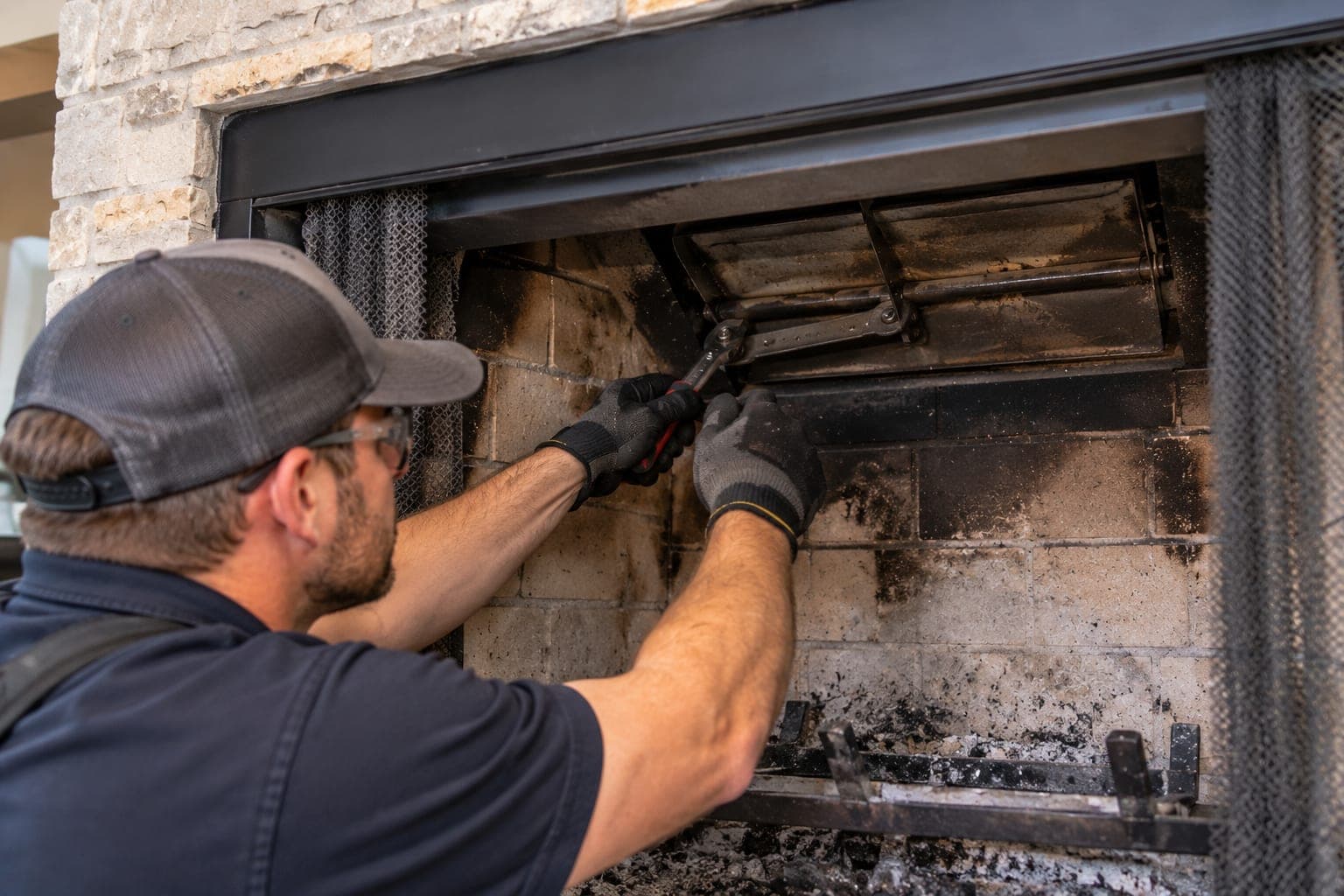
| Damper | Stuck with soot and can be freed | Warped, rusted or broken plate or handle |
| Top of the chimney | Cap screen clogged | No cap, or a damaged cap letting wind push down |
| Firebox and smoke chamber | Rough walls packed with buildup | Opening too large for the flue, or a broken smoke chamber |
Inside the flue
- Cleaning usually helps
- Heavy soot or creosote narrowing the passage
- Repair is usually needed
- Flue tiles cracked, shifted or missing
Blockages
- Cleaning usually helps
- Leaves, nests or debris that can be pulled out
- Repair is usually needed
- Collapsed masonry or a damaged liner causing the blockage
Damper
- Cleaning usually helps
- Stuck with soot and can be freed
- Repair is usually needed
- Warped, rusted or broken plate or handle
Top of the chimney
- Cleaning usually helps
- Cap screen clogged
- Repair is usually needed
- No cap, or a damaged cap letting wind push down
Firebox and smoke chamber
- Cleaning usually helps
- Rough walls packed with buildup
- Repair is usually needed
- Opening too large for the flue, or a broken smoke chamber
If the fireplace was swept recently and still smokes, cleaning probably isn't the fix. What causes a smoky fireplace covers the less obvious culprits.
How the visit works
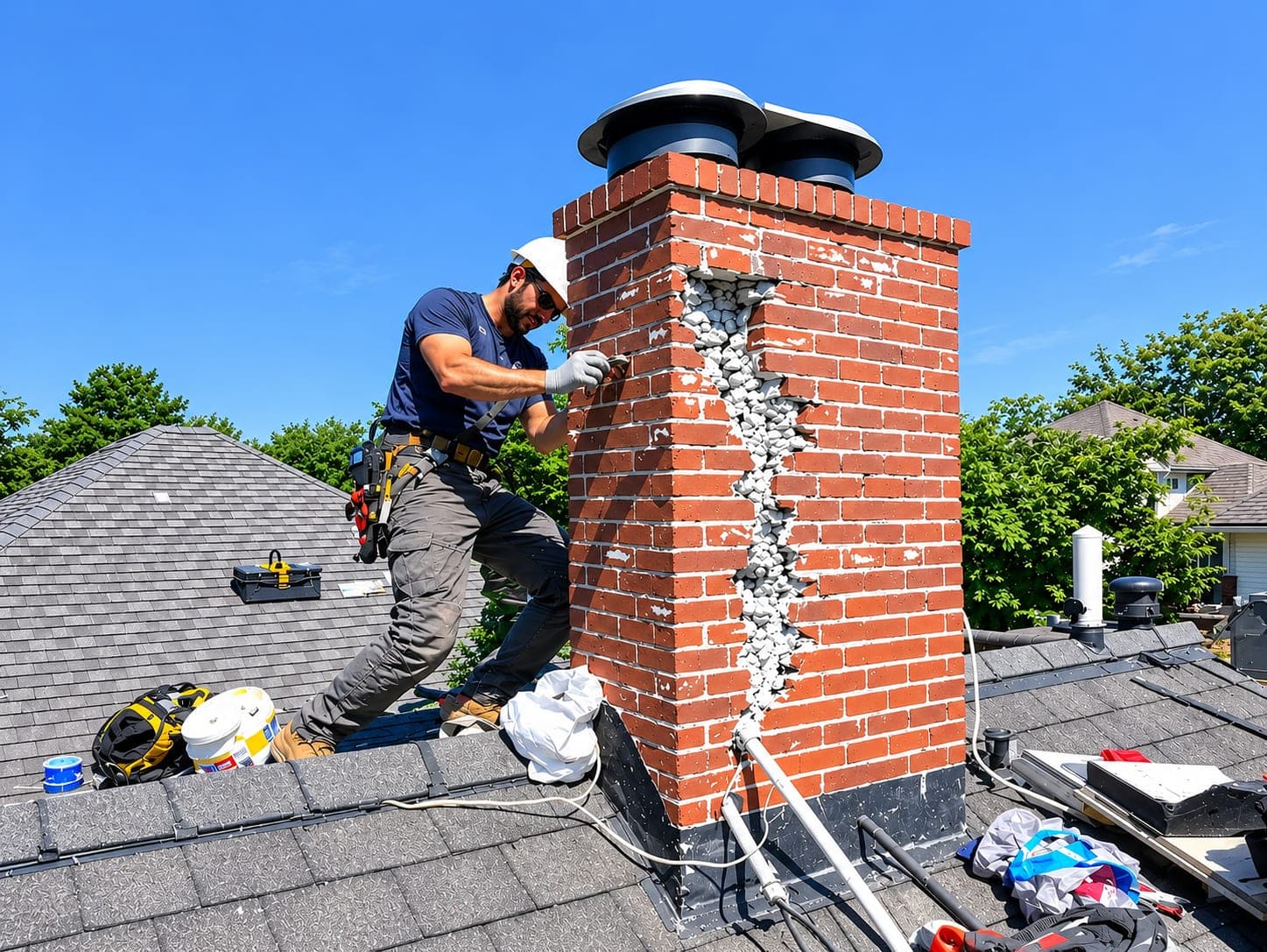
Small repairs done early usually avoid a partial rebuild later. A damaged liner or firebox lets heat reach parts of the house it shouldn't.
Inspect
Masonry, crown, flashing, cap and the inside of the flue are checked.
Trace the cause
The repair targets what is actually failing, not just the symptom.
Agree the scope
Nothing starts until you've approved what will be done.
Fix and finish
The work is completed and the area left clean.
What the technician checks
- Crown cracks and pooling water
- Cap, screen and chase cover
- Mortar joints and brick faces
- Flue liner condition
- Firebox walls and floor
Signs to watch for
- Water stains on the ceiling or wall beside the chimney
- Cracked, flaking or spalling brick
- Rust on the damper or firebox
- A cracked or crumbling crown
- A cap that is loose, rusted or missing
If smoke comes into the room
Stop adding fuel, open a window and don't relight the fire until the chimney has been checked. If the smoke is heavy, an alarm sounds or you suspect a chimney fire, get everyone outside and call 911.
Smoky fireplace repair in Connecticut
Once the cause is clear, the repair targets that cause. Depending on what we find, the work can include:
- Repairing or replacing the damper
- Installing or replacing a chimney cap
- Removing a blockage
- Repairing the flue liner
- Rebuilding a failing smoke chamber
- Correcting a draft problem at the firebox opening
All of this falls under our chimney and fireplace repair work.
We're available 24 hours, Sunday through Friday and accept emergency calls, which helps if smoke fills the room on a night you'd planned to use the fireplace.
When the smoke only shows up sometimes
The pattern is often the best clue. Note it before anyone climbs a ladder:
- Only for the first few minutes: a cold flue is slow to start pulling. This is often a lighting habit rather than a defect.
- Only on windy days: wind may be pushing down a chimney that has no cap or a damaged one.
- Only when the kitchen fan or dryer runs: the house is short on air. Cracking a nearby window while burning is an easy test.
- Every fire, start to finish: this points to a blockage, a damper problem or a fireplace sized wrong for its flue.
If you'd rather stop burning wood altogether, an electric unit sidesteps draft entirely; the electric fireplace installation service explains that route. For quick things to try at home first, see ways of fixing a smoky fireplace yourself.