A chimney looks like a hollow tree or a rock crevice to birds, squirrels, raccoons and bats. It is dark, sheltered, and often warm. Once an animal is inside, most homeowners first want it gone fast. That urge leads to the most common mistakes, such as lighting a fire, dropping chemicals down the flue, or reaching up past the damper. Safe chimney animal removal is slower and more methodical, but it protects the animal, your family and the chimney itself.
Safe chimney, safe home: Why animals are more than a nuisance
An animal in the flue is not only about noise. Nests, droppings and trapped animals cause real hazards:
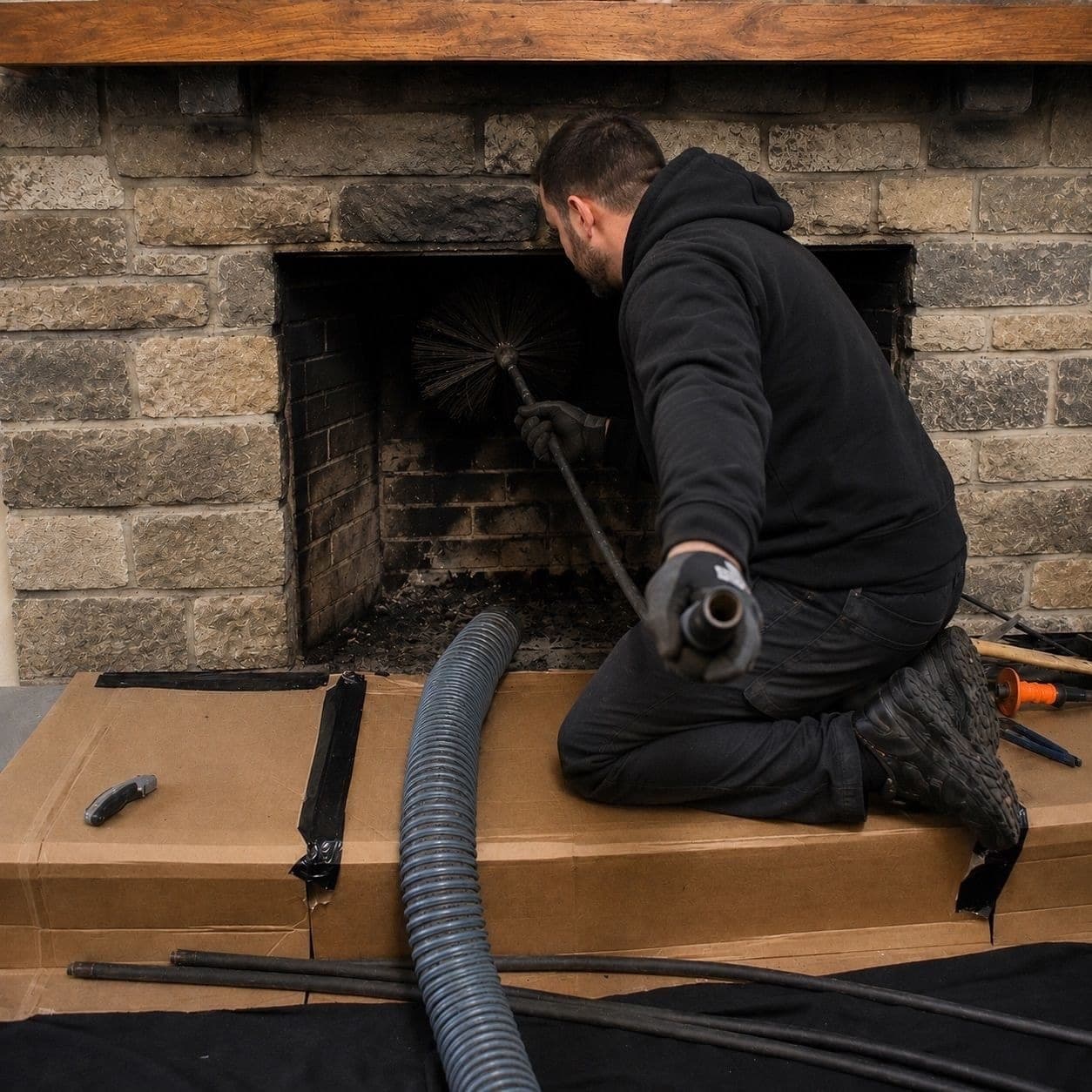
- Blocked airflow. Nest material and debris can stop smoke and combustion gases from venting, pushing them back into the room.
- Fire fuel. Dry twigs, leaves and fur sitting on a smoke shelf or damper can ignite when you light a fire.
- Disease and parasites. Droppings, mites, fleas and ticks can come along with the animal. Raccoons and bats can carry rabies.
- Odor. An animal that dies in the chimney leaves a strong, lingering smell that a basic sweep may not fully clear.
- Damage. Raccoons can tear at dampers, flue tile and crown openings, and they can push into the house through an open damper.
A safe chimney is like a healthy heart
A fireplace works by moving air steadily in one direction, much as a healthy heart keeps blood flowing. A clot in a heart and a nest in a flue do similar damage. Flow slows, pressure builds, and harmful gases end up where they shouldn't. Keeping the passage clear is what keeps the system working.
Signs an animal is in your chimney
Most animal problems announce themselves. If any of these sound familiar, read our page on the signs an animal has moved into your chimney for more detail.
| Animal | Common signs | Key caution |
|---|---|---|
| Birds (including chimney swifts) | Chirping, fluttering, twigs or feathers in the firebox | Chimney swifts are protected under the federal Migratory Bird Treaty Act; active nests generally can't be removed until the young leave |
| Squirrels | Scratching during the day, nuts or leaves on the smoke shelf | Can get trapped and panic, and may enter the house if the damper is opened |
| Raccoons | Heavy thumping, chattering or crying at night, a strong smell | May defend young aggressively; possible rabies carrier, so never handle |
| Bats | Squeaking at dusk, small dark droppings near the hearth | Possible rabies carrier; any direct contact with a person should be taken seriously |
| Unknown or deceased animal | Persistent foul odor, flies or insects near the fireplace | Remains and contaminated debris need careful removal and cleaning |
How to keep the chimney safe while you wait for help
What you do in the first hour matters. These steps protect you and give the animal a chance to leave on its own or be removed humanely.
Do this right away
- Keep the damper closed so the animal can't get into the living space. Only close it once the fireplace is completely cold and no stove, furnace or water heater vents into that flue.
- Close glass doors or the fireplace screen, and keep pets and children out of the room. Check your fireplace's manual first: some glass doors must stay fully open while a fire burns.
- Don't light a fire or use gas logs in that fireplace.
- Note when you hear sounds (day, night, dawn) and what they sound like. This helps identify the animal.
- Keep the area quiet. A calm animal is more likely to climb out the top.
Never try to smoke an animal out
Lighting a fire rarely drives animals up. More often it traps them, kills them, or ignites the nest, which can start a chimney fire. Pouring ammonia, mothballs or other chemicals down the flue is also a bad idea. The fumes can drift into your home and leave residue in the chimney.
What safe chimney animal removal specialists actually do
Removal is more than getting the animal out. A careful job follows a sequence:
A typical removal process
Identify the animal
Sounds, droppings, nest material and a look from above and below show what is living in the flue and whether young are present.
Plan around the animal's situation
Protected birds with an active nest, a mother raccoon with kits, and a single trapped squirrel each call for a different approach. Timing matters as much as technique.
Remove the animal humanely
The goal is to get the animal out without harming it or letting it into the house. Sometimes that means giving it a clear way to leave and making sure it can't come back.
Clear nests and debris
Once the flue is empty, nesting material, droppings and any remains are removed from the flue, smoke shelf and damper area.
Clean, inspect and deodorize
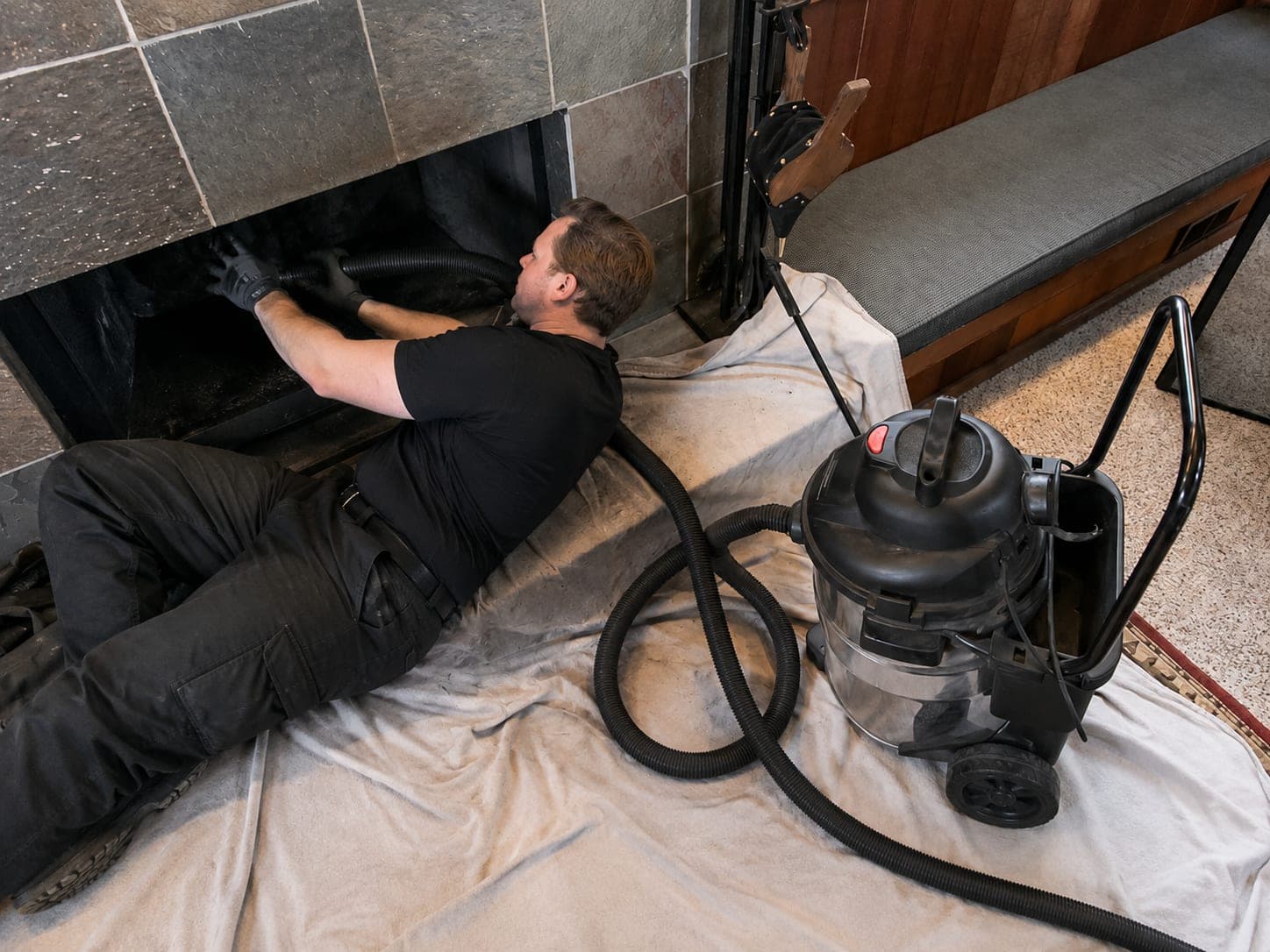
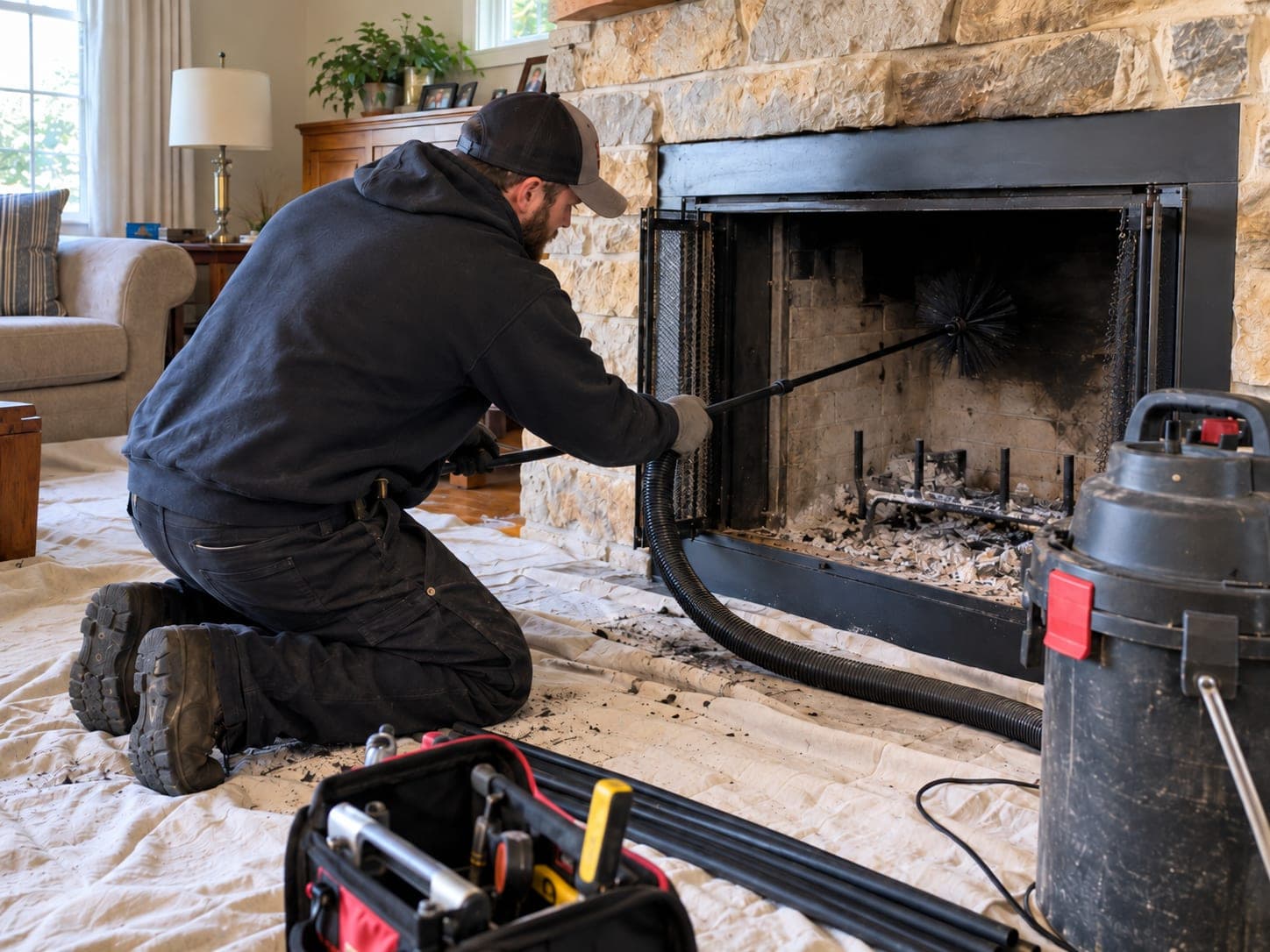
A sweep removes leftover debris and soot. A camera inspection can check for damage, and odor treatment deals with lingering smells.
Seal the entry point
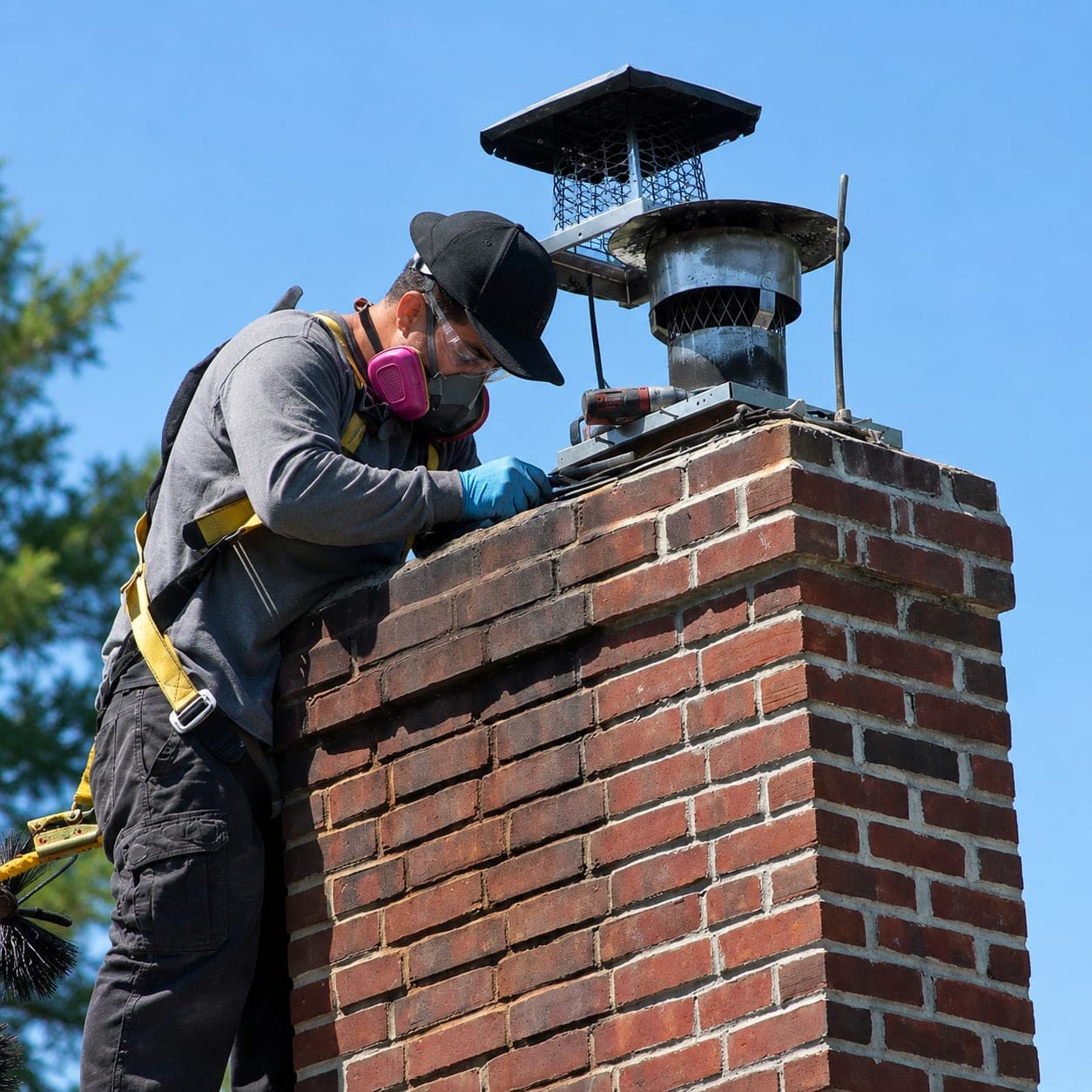
A properly sized chimney cap or animal screen keeps the next animal out while still letting the chimney draft.
| Feature | DIY attempt | Professional removal |
|---|---|---|
| Animal welfare | Risk of trapping, injuring or killing the animal | Planned around the species and any young |
| Your safety | Bites, scratches, falls from the roof, exposure to droppings | Proper gear and roof access |
| Nest and debris | Often left behind on the smoke shelf | Cleared from the flue, shelf and damper |
| Hidden damage | Usually not checked | Inspected, including with a camera if needed |
| Preventing a repeat | Entry point often left open | Cap or animal screen installed |
Animal welfare
- DIY attempt
- Risk of trapping, injuring or killing the animal
- Professional removal
- Planned around the species and any young
Your safety
- DIY attempt
- Bites, scratches, falls from the roof, exposure to droppings
- Professional removal
- Proper gear and roof access
Nest and debris
- DIY attempt
- Often left behind on the smoke shelf
- Professional removal
- Cleared from the flue, shelf and damper
Hidden damage
- DIY attempt
- Usually not checked
- Professional removal
- Inspected, including with a camera if needed
Preventing a repeat
- DIY attempt
- Entry point often left open
- Professional removal
- Cap or animal screen installed
Preventing blockages for safe chimney operation
Animals are one source of blockages. Others include leaves, fallen masonry, a collapsed liner, and heavy creosote buildup. A nest sitting on top of creosote is especially risky, because both materials burn easily. Regular annual chimney cleaning removes buildup before it can catch fire. If soot or creosote has already stained the face of your fireplace, see our page on removing creosote stains from brick.
Why a clean chimney means a safer fire
A clean flue drafts better, so smoke goes up instead of into the room. There is also less fuel for a chimney fire. After an animal has been removed, cleaning is part of the fix, not an extra. Leftover nest material is still a fire hazard even after the animal is gone.
Keeping your home safe from chimney fires after a nest
Before the first fire after a removal, make sure the smoke shelf and damper are clear, the damper opens and closes fully, and nothing is resting on the flue liner. If you're unsure, schedule a full chimney inspection before lighting up.
How to confirm your chimney is clear and safe
Your chimney may be safe to use if...
- No sounds of movement, scratching or chirping for several days in a row.
- No new debris, feathers or droppings in the firebox.
- No unusual odor when the damper is opened.
- The flue has been cleaned and nest material removed.
- An inspection found no cracked tiles, damaged damper or liner gaps.
- A cap or animal screen is in place and intact.
When in doubt, don't light it
If even one item on that list is uncertain, hold off on fires until the chimney has been checked. A short delay costs far less than a chimney fire or smoke damage.
Steps to ensure safe chimney use all year
Dry chimneys, safe homes: lasting protection from caps and crowns
A cap does two jobs. It keeps animals out, and it keeps rain off the flue and damper. A cracked crown or missing cap gives animals an entry point and lets water in, which wears down mortar and liners over time. Repairing the crown and adding waterproofing protects the chimney from both.
Habits that keep a chimney safe always
- Keep the damper closed when the fireplace isn't in use.
- Look up at the cap from the yard after storms to confirm it's still seated.
- Trim tree branches that hang near the chimney top, since they give squirrels and raccoons a bridge.
- Have the chimney swept and inspected before each burning season.
- Learn the warning signs in our guide to common chimney issues.
Keeping your chimney safe and efficient
An animal in the chimney is usually a sign of something else, often a missing cap, a damaged crown or an open flue top. Removing the animal solves today's problem. Cleaning, inspecting and sealing the opening prevent the next one.
Fix the chimney early to save money and stay safe
Small fixes like a new cap, a crown repair or a damper adjustment are far less disruptive than dealing with a chimney fire, water damage or an animal inside the house. For a wider look at what can go wrong, browse common chimney problems homeowners run into. If you think something is living in your flue, get in touch to request a free estimate. Emergency calls are accepted 24 hours a day, Sunday through Friday, and same-day service is available when the schedule allows.