What's actually on your brick
Creosote is the residue left when wood smoke cools and condenses. It forms in three general stages: a dry, flaky soot that brushes off; a sticky, tar-like layer; and a hard, shiny glaze that bonds to the surface. The stains on the front of a fireplace or inside the firebox are usually the first or second kind. The glazed form is most often found inside the flue, where it's both harder to remove and a fire hazard.
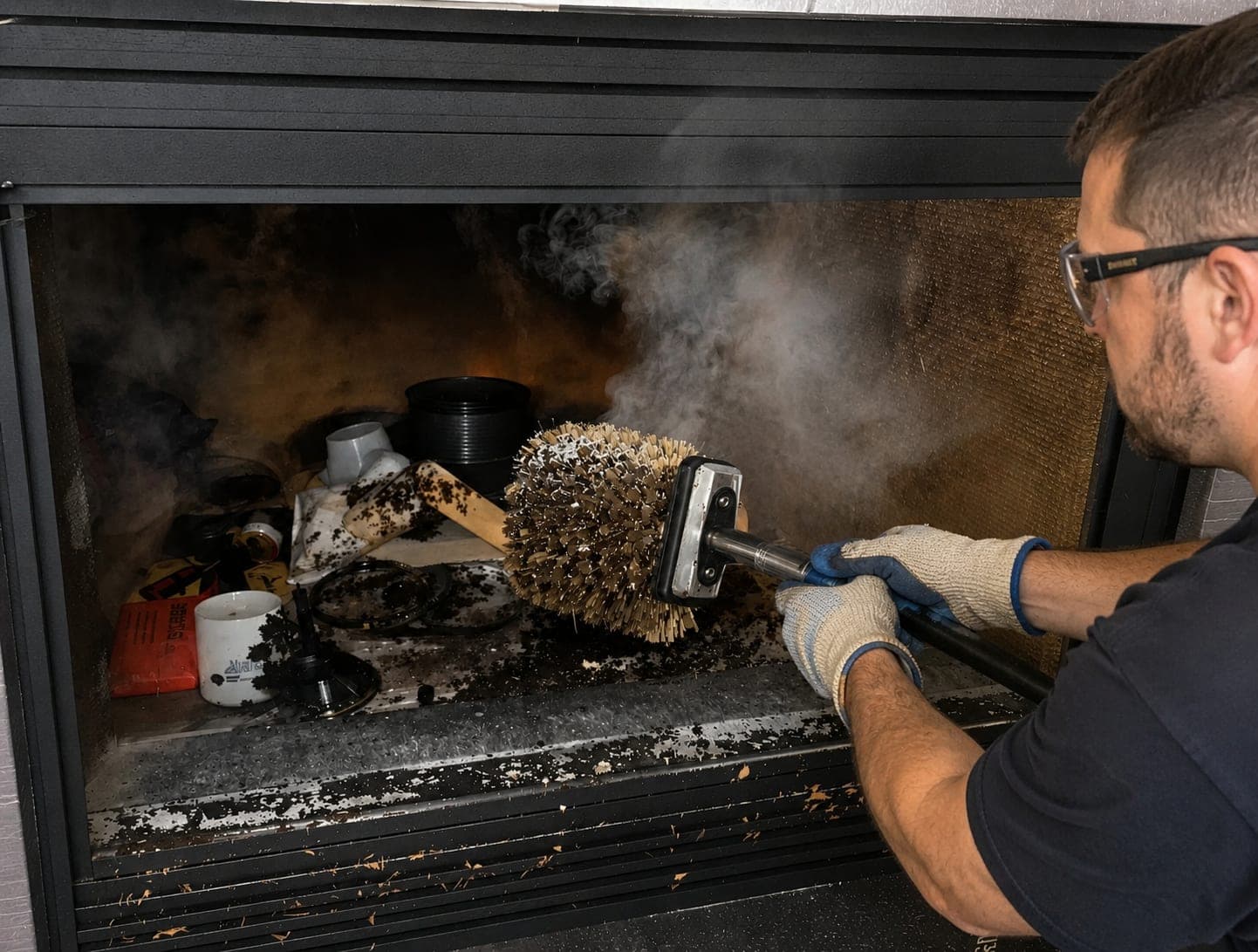
Black streaks above the fireplace opening often mean smoke is rolling out of the firebox, which points to a draft problem rather than just a cleaning problem. A partly blocked flue, including one with a nest in it as described on our page about animals in chimneys, can make both the staining and the buildup worse. Our overview of frequent chimney problems covers other causes.
What happens during the visit
Creosote is flammable: a thick layer is the usual fuel for a chimney fire. Debris and nests can block the flue completely and trap carbon monoxide.
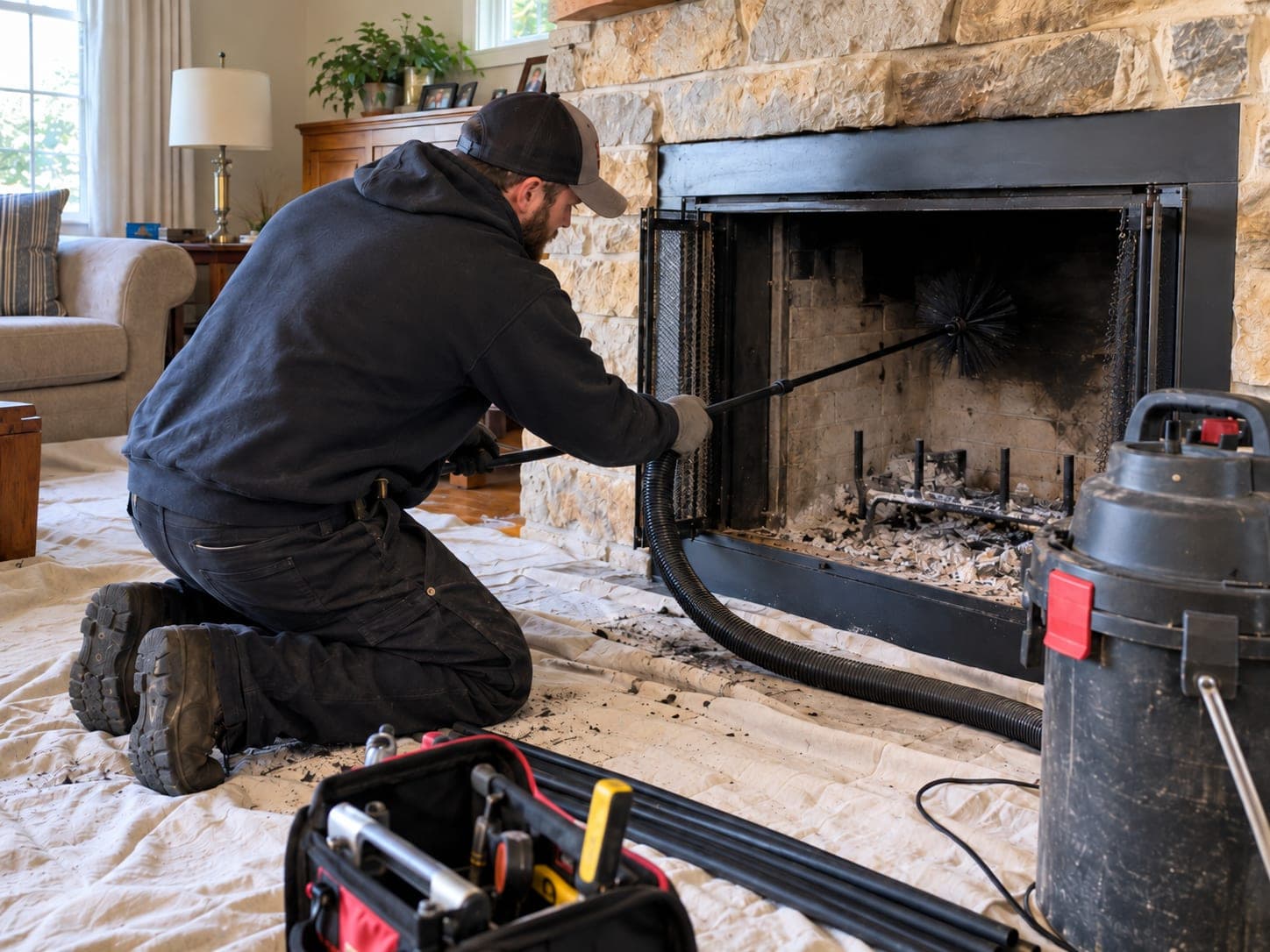
Protect the room
Drop cloths go down around the hearth and the opening is sealed so soot stays out of the house.
Look first
The firebox, damper and visible flue are checked before cleaning, so you know the condition things were in.
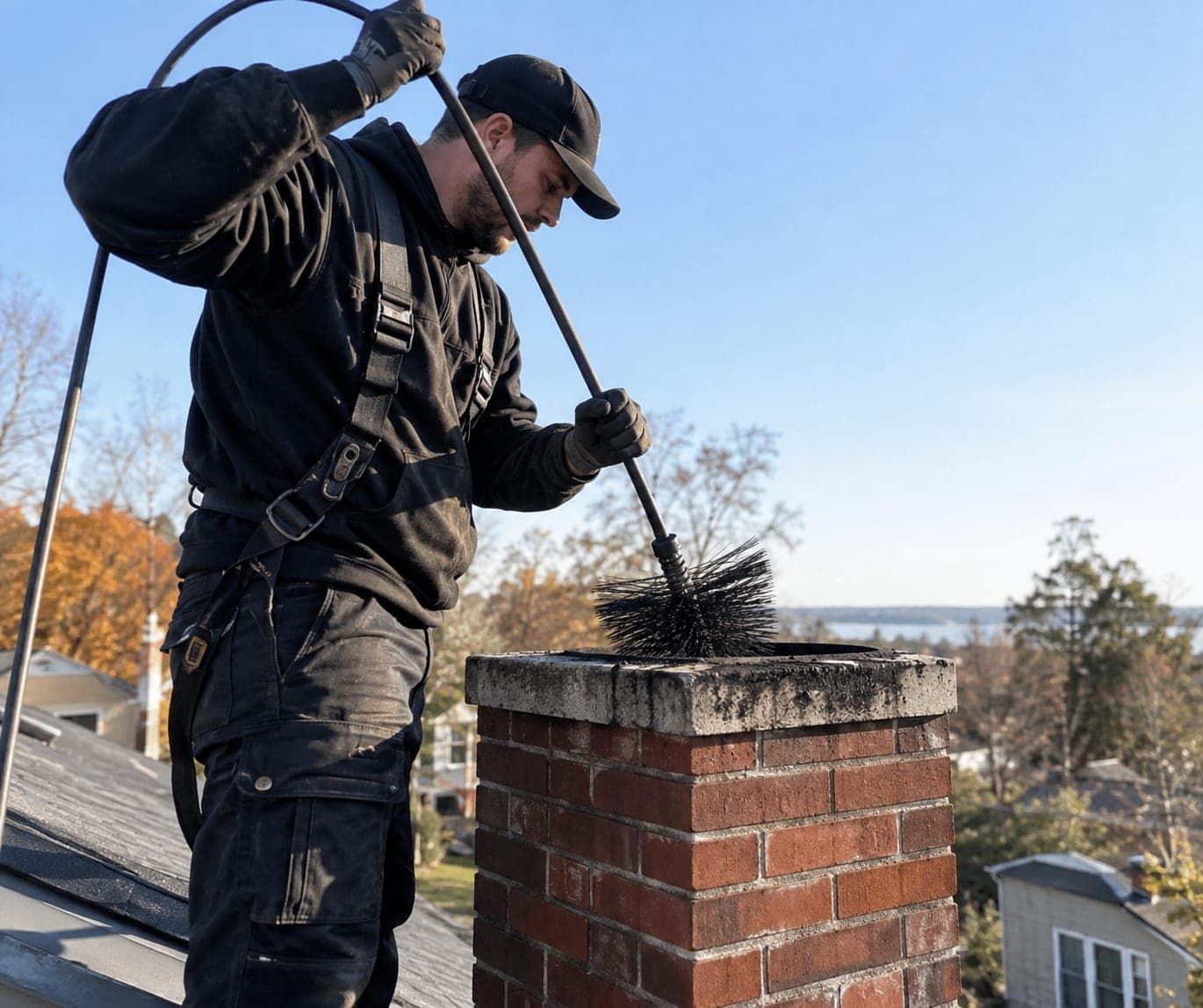
Brush the flue
Rods and brushes sized to the flue clear soot and loose creosote from top to bottom.
Clean the smoke chamber and firebox
The areas just above the fire, where buildup collects fastest, are cleaned and vacuumed.
Explain what was found
You hear what was cleaned and anything that needs watching or repair, before anything else is suggested.
What the technician checks
- Smoke shelf and smoke chamber
- Signs of animals or nesting material
- Damper opening, closing and seal
- Visible liner sections for cracks or gaps
- Draft — how readily smoke moves up the flue
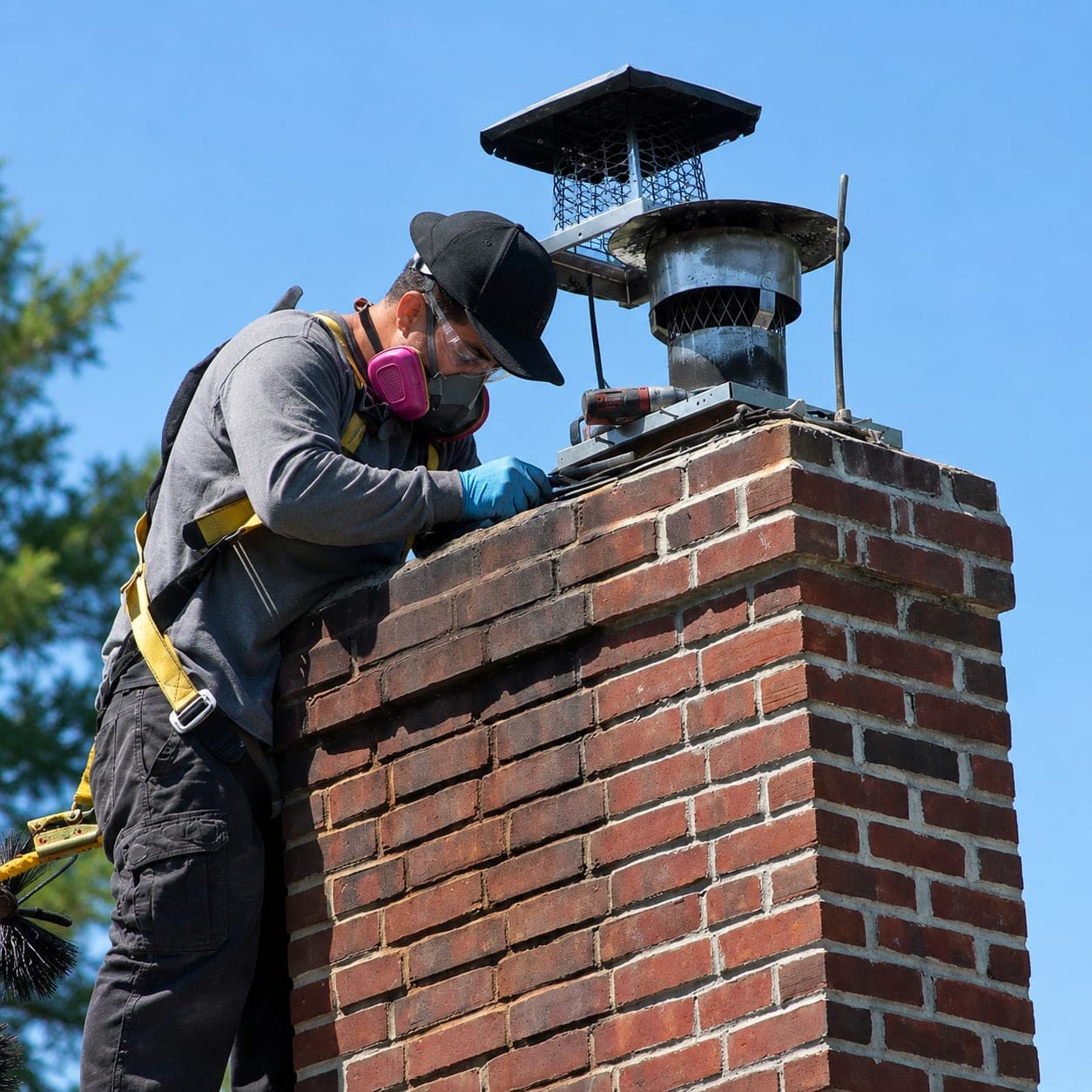
- Cap and screen condition, where it can be seen safely
- Firebox brick or panels and mortar joints
Signs to watch for
- A campfire or tar smell from the fireplace, especially on warm or damp days
- A full burning season since the last cleaning
- Smoke rolling into the room instead of drawing up
- Black, flaky or shiny glazed deposits inside the firebox or flue
- Scratching or chirping sounds, or debris falling into the firebox
If smoke comes into the room
Stop adding fuel, open a window and don't relight the fire until the chimney has been checked. If the smoke is heavy, an alarm sounds or you suspect a chimney fire, get everyone outside and call 911.
How to carefully remove accumulated creosote from fireplace brick
For light stains on the visible face of the brick, a patient manual approach is usually enough:
Cleaning light creosote stains
Wait until it's cold
Let the fireplace sit at least a full day after the last fire so the brick and any embers are completely cool.
Protect and ventilate
Lay drop cloths over the hearth and floor, open a window, and wear gloves and eye protection.
Remove loose soot first
Vacuum or dry-brush the surface before adding any liquid; wetting loose soot just pushes it deeper into the brick's pores.
Scrub with a mild cleaner
Use a stiff nylon brush with a mild detergent solution or a cleaner sold for fireplace soot, testing a hidden spot first.
Rinse lightly and dry
Wipe with a damp sponge rather than soaking the brick, then let it dry fully before judging the result.
Skip the harsh shortcuts
Wire brushes, pressure washers and acid-based cleaners can scar brick faces and eat into mortar joints. Chemical strippers also don't belong in a firebox you plan to light again.
When to have us remove creosote from brick in Connecticut
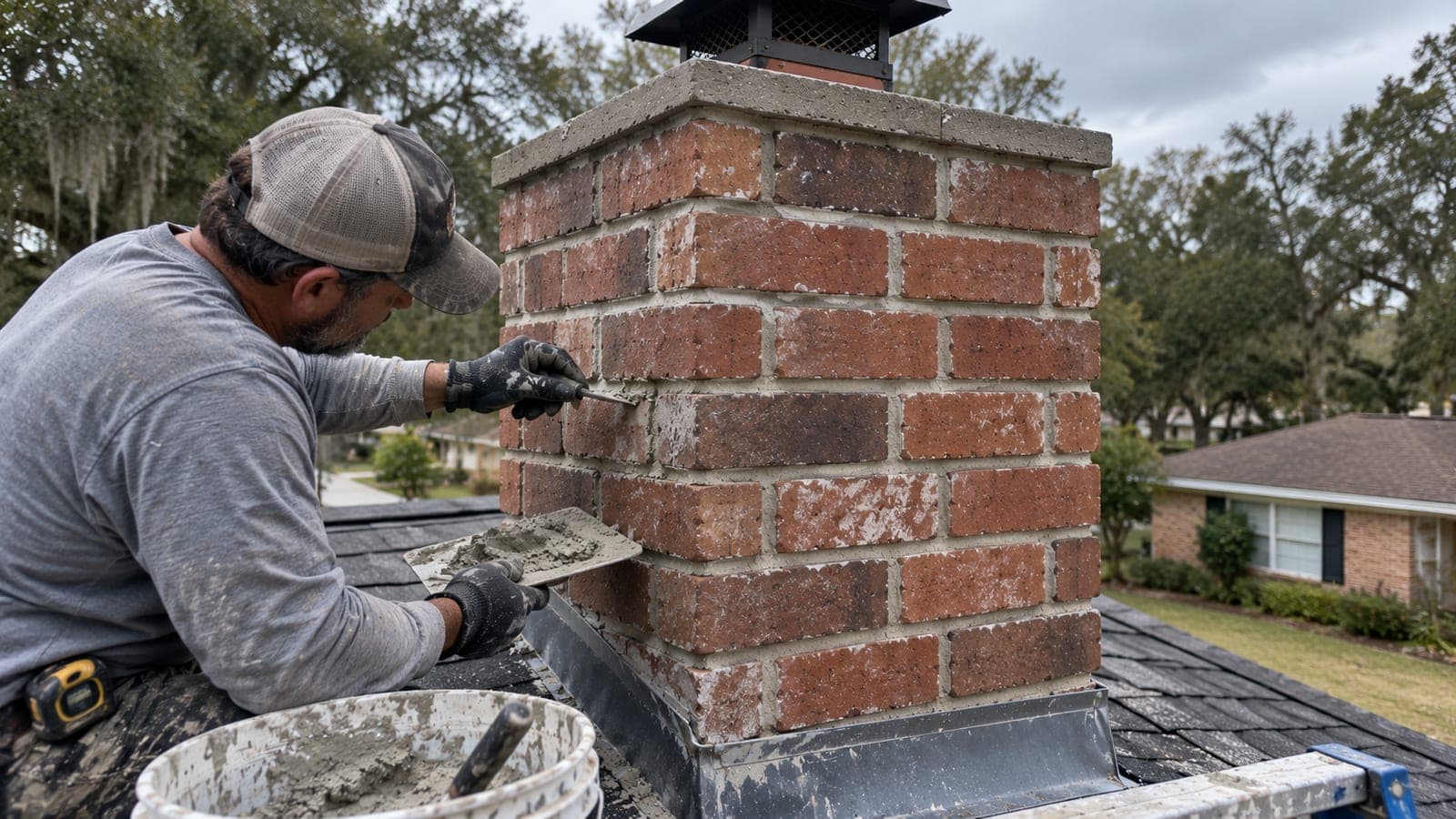
If the residue is thick, sticky or glossy, or it's on the firebox walls, smoke chamber or flue, household cleaning won't reach it safely. That's where professional creosote removal and fireplace cleaning come in, using tools made to break down hardened buildup without harming the masonry. We serve homeowners in Hartford and across Connecticut who would rather not experiment with chemicals on their fireplace.
Repeated heat and moisture can also leave the brick cracked or the mortar soft. When cleaning reveals that kind of damage, we handle it through our brick and mortar repair service. Estimates are free, so you can find out whether you're looking at a surface stain or serious buildup before deciding anything.