Timing a sweep in West Hartford
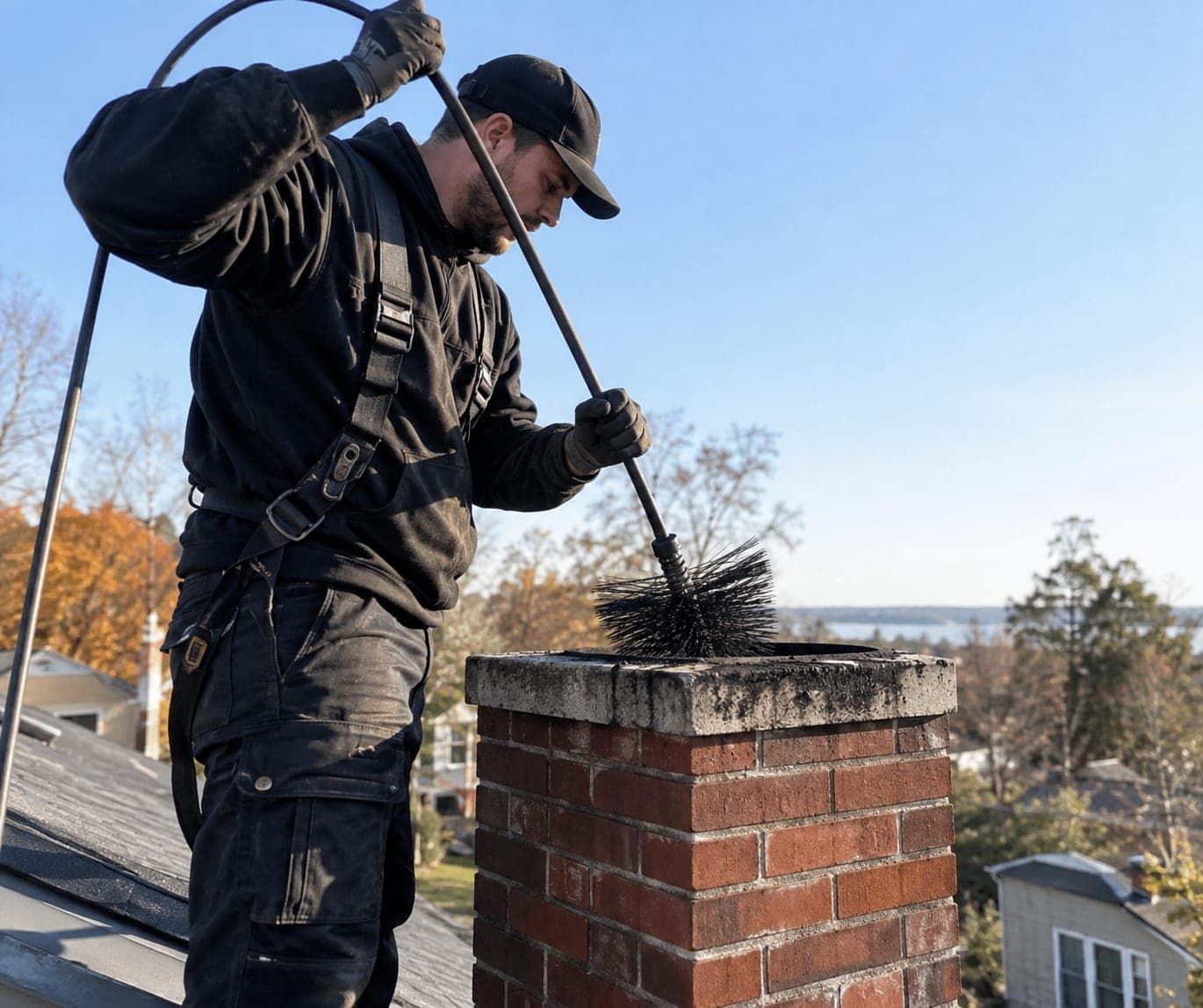
Most homeowners think about the chimney on the first cold night of fall, which is exactly when everyone else does too. Sweeping in West Hartford is easiest to schedule in late spring, summer or early fall. Booking a sweep then also gives you time to deal with anything the cleaning turns up, such as a missing cap, a sticking damper or a crumbling crown, before you want a fire.
Heavy burners may want a second sweep partway through winter. A flue in daily use can collect a season's worth of deposits early. If something goes wrong mid-season, same-day service is offered where the schedule allows, and we're available 24 hours, Sunday through Friday. Still, an off-season appointment is the simplest way to get a time that suits you.
How the visit runs
Debris and nests can block the flue completely and trap carbon monoxide. Creosote is flammable: a thick layer is the usual fuel for a chimney fire.
Protect the room
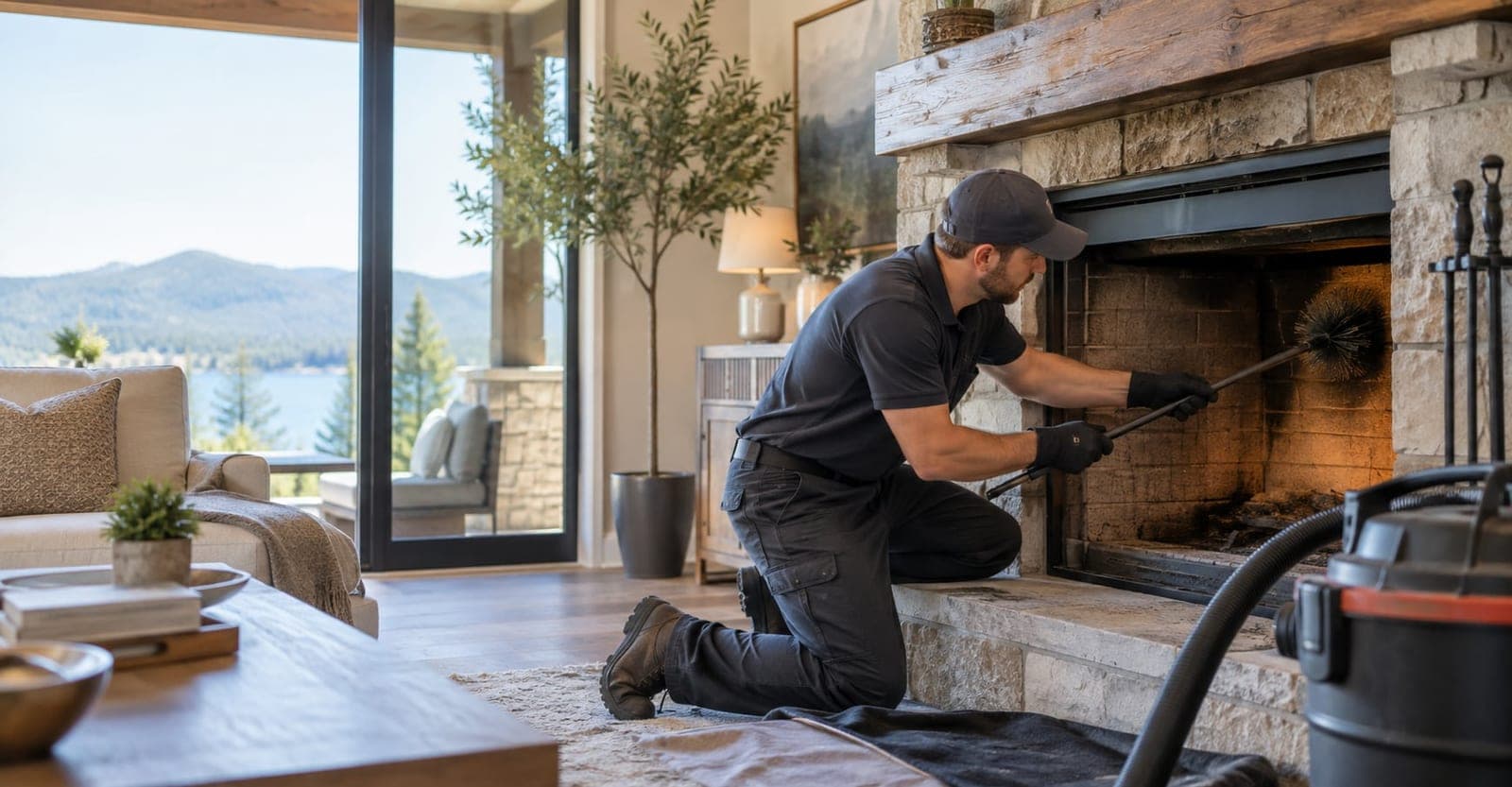
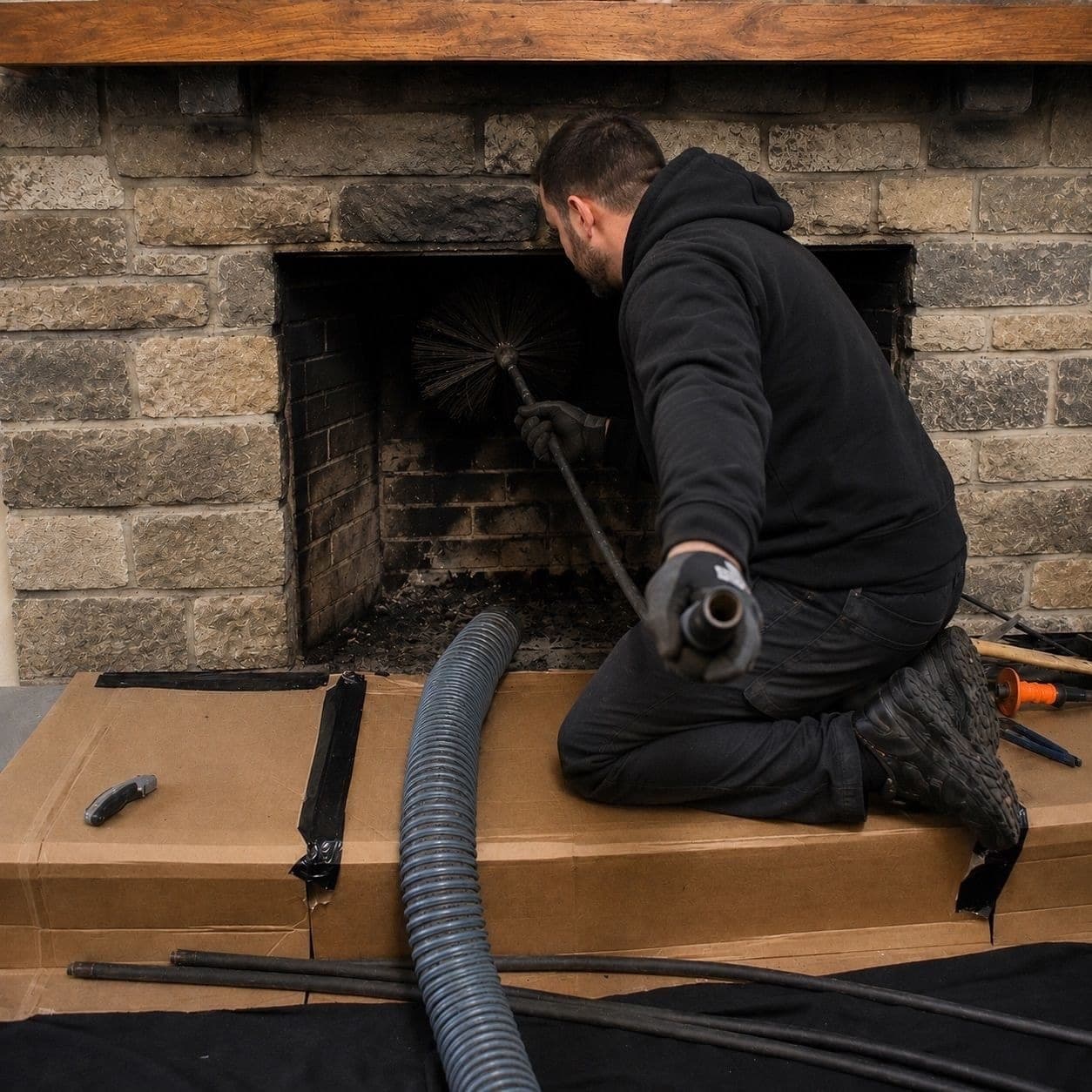
Drop cloths go down around the hearth and the opening is sealed so soot stays out of the house.
Look first
The firebox, damper and visible flue are checked before cleaning, so you know the condition things were in.
Brush the flue
Rods and brushes sized to the flue clear soot and loose creosote from top to bottom.
Clean the smoke chamber and firebox
The areas just above the fire, where buildup collects fastest, are cleaned and vacuumed.
Explain what was found
You hear what was cleaned and anything that needs watching or repair, before anything else is suggested.
What the technician checks
- Signs of animals or nesting material
- Visible liner sections for cracks or gaps
- Damper opening, closing and seal
- Draft — how readily smoke moves up the flue
- Firebox brick or panels and mortar joints
Signs it's time for chimney sweep
- Black, flaky or shiny glazed deposits inside the firebox or flue
- A campfire or tar smell from the fireplace, especially on warm or damp days
- A full burning season since the last cleaning
- Scratching or chirping sounds, or debris falling into the firebox
- Fires that are hard to start or keep going
Before the technician arrives
- Move rugs, photos and anything fragile away from the work area.
- Keep pets in another room while the work area is open.
- Clear a few feet of space in front of the hearth or appliance.
- Let the fireplace or stove cool completely — ideally no fire for 24 hours before the visit.
Reading what's in your flue
Chimney deposits are commonly described in three stages. Knowing which stage you have explains why one chimney needs only a quick brushing and another needs more work.
| Stage | What it looks like | What it usually takes |
|---|---|---|
| First stage | Dry, flaky black soot that brushes off easily | A standard sweep with brushes and vacuum |
| Second stage | Crunchy, tar-like flakes; shiny black bits falling into the firebox | Sweeping with stiffer, more aggressive tools |
| Third stage | Hardened, glazed coating that looks like dripped tar | Dedicated creosote removal, sometimes over more than one visit |
How the wood burns is the main thing that pushes a flue toward the glazed stage. Unseasoned logs, long smoldering fires with the air turned down, and a chimney that runs cool all leave heavier deposits. If you'd like to see the flue walls for yourself, a chimney camera inspection records the inside of the liner, so you can see what's there instead of taking anyone's word for it.
When the sweep isn't the whole answer
A clean flue won't fix a fireplace that smokes because of a warped damper, a damaged smoke chamber or cracked firebrick. When a sweep turns up wear like that, our page on fireplace repair in West Hartford covers the next step. For a closer look at the cleaning process itself, see how a chimney sweep works.
West Hartford has about 64,242 residents (2025 Census estimate) and sits less than four miles from Hartford, with Bloomfield, Newington, Farmington and New Britain nearby. Besides sweeping, we handle inspections, repairs and dryer vents here, and the West Hartford service overview lists them all. We also offer sweep for homes in Newington and chimney sweeping in East Hartford.
Sources (2)
Every West Hartford figure above, with its source.