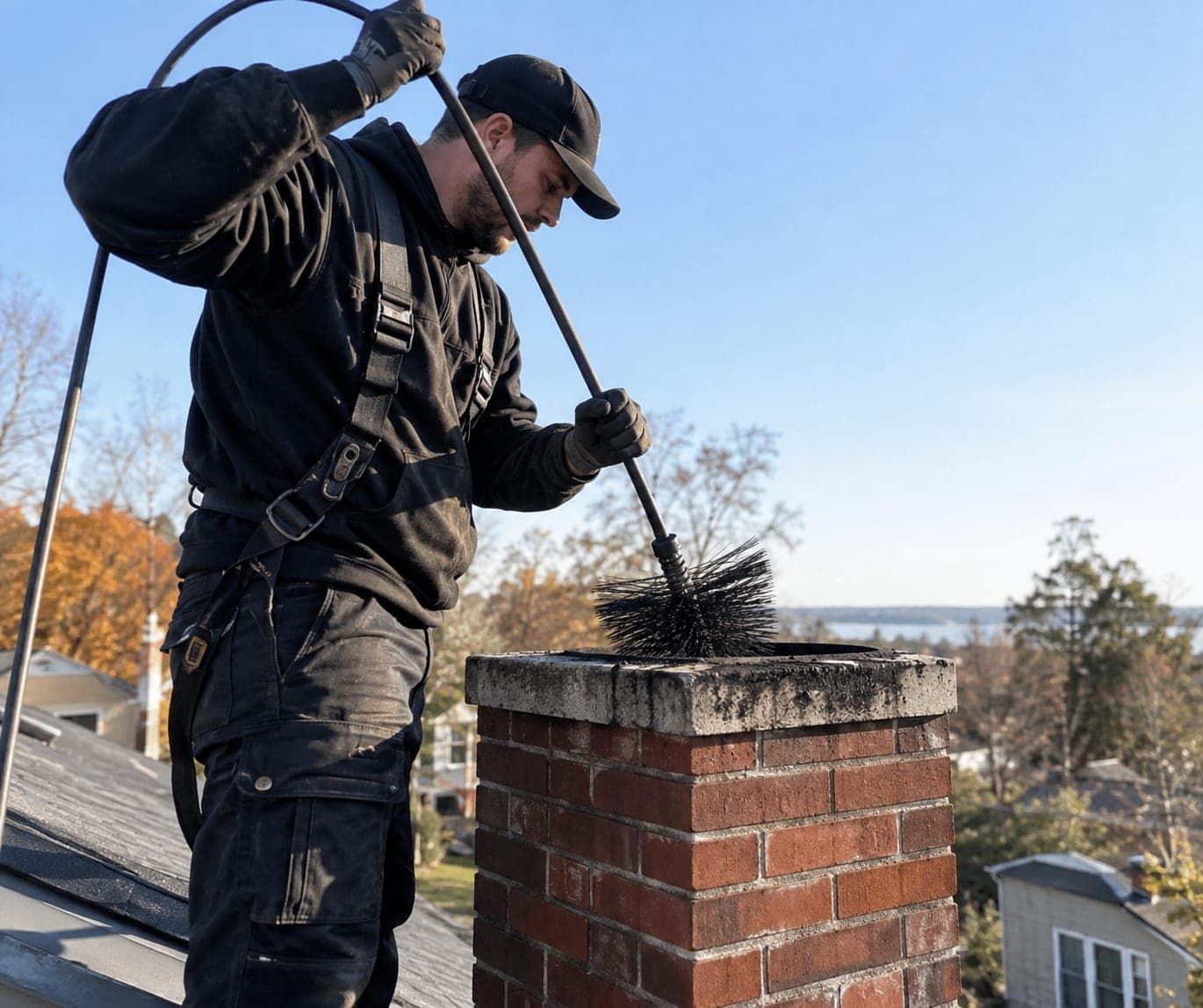
Before the first fire in a new-to-you house
When you buy a home with a fireplace, you inherit the previous owner's burning habits along with it. Listing photos show a tidy hearth; they don't show what's inside the flue. A sweep before your first fire clears whatever was left behind and gives you a clean starting point for your own records.
Useful to find out from the seller or your paperwork
- What was burned: wood, gas or nothing at all
- When the chimney was last swept or inspected
- Whether an insert, stove or gas logs were added later
- Whether there's a cap or screen on top
- Any past leaks, repairs or smoke problems
If you're still mid-purchase, a real estate chimney inspection can be scheduled separately so the findings are in hand before closing.
Chimneys that sat unused
A fireplace left cold for years isn't necessarily clean. Birds and small animals nest in uncapped flues, leaves and twigs blow in, and moisture can loosen mortar or flue tiles. Old creosote mixed with damp can also produce a sour, musty smell that drifts into the house.
Don't use a fire to test it
Lighting a small fire to see whether the chimney draws is not a safe check on a flue that hasn't been used in years. A hidden nest or debris jam can push smoke and carbon monoxide back into the house. Have it swept and looked at first.
If the sweep finds a nest or a solid blockage, we handle that too: blockage removal and animal and nest removal are both services we offer, and a cap or animal screen can keep the problem from coming back.
Sweep, inspection, or both
| Feature | Sweep | Inspection |
|---|---|---|
| Purpose | Clean the flue and firebox | Evaluate condition and safety |
| What you get | A cleared flue and notes on what came out | Findings on the structure, liner and components |
| Best fit | Yearly upkeep on a chimney in known condition | A new purchase, a long-idle chimney or storm damage |
Purpose
- Sweep
- Clean the flue and firebox
- Inspection
- Evaluate condition and safety
What you get
- Sweep
- A cleared flue and notes on what came out
- Inspection
- Findings on the structure, liner and components
Best fit
- Sweep
- Yearly upkeep on a chimney in known condition
- Inspection
- A new purchase, a long-idle chimney or storm damage
For a chimney you know nothing about, both make sense, and the flue is easier to see once it's clean. Farmington had 28,632 residents in 2025 Census estimates and is about eight and a half miles from Hartford. We schedule sweeping here with free estimates, same-day visits where the schedule allows, and emergency calls accepted 24 hours, Sunday through Friday. Read how sweep works in detail, or browse our service in Farmington for everything else.
Other local pages cover sweep in West Hartford, sweep for homes in Newington and sweep in East Hartford.
A typical cleaning, start to finish
Creosote is flammable: a thick layer is the usual fuel for a chimney fire. Buildup narrows the flue, so smoke drafts poorly and can spill into the room.
Set up
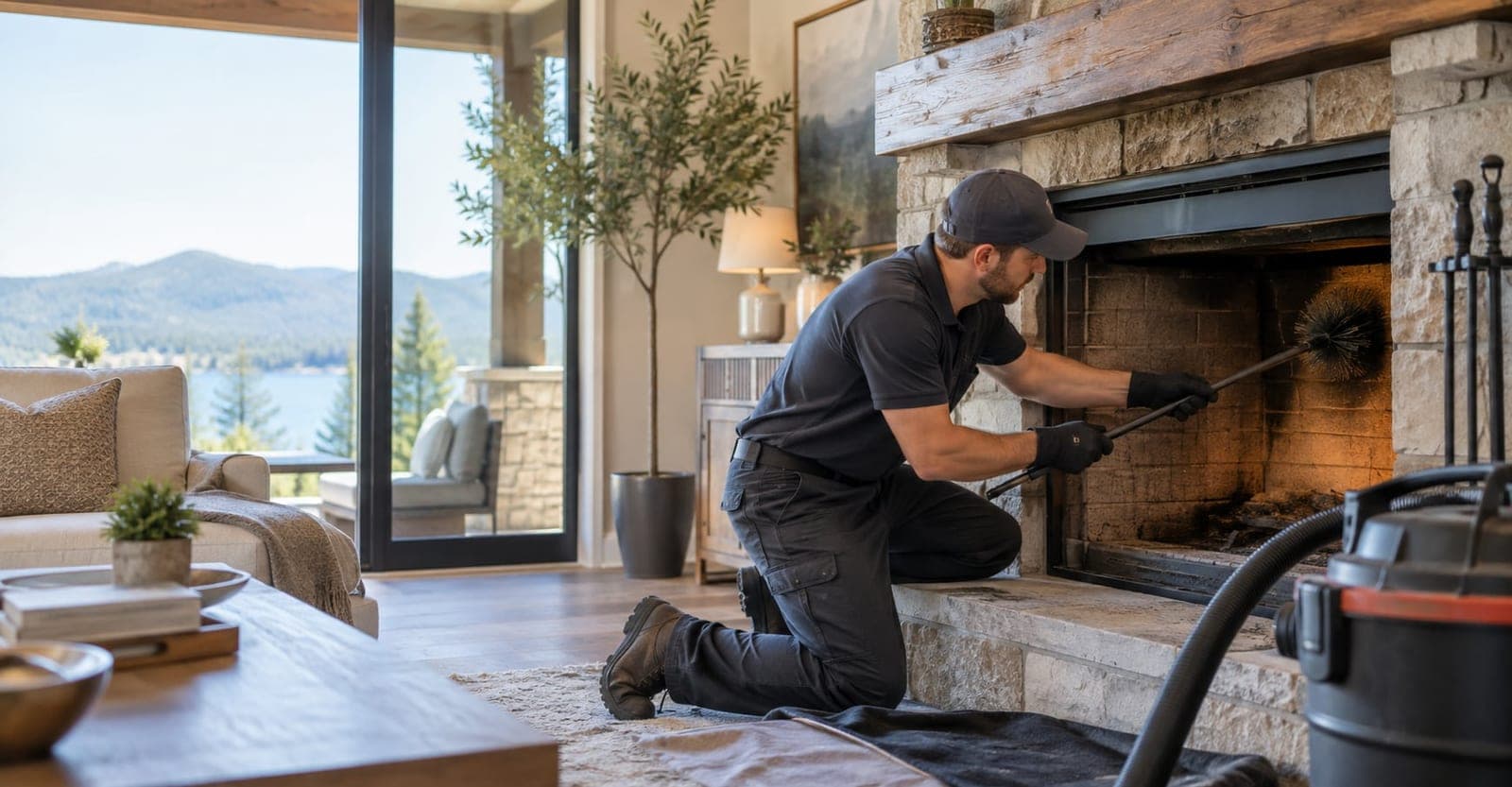
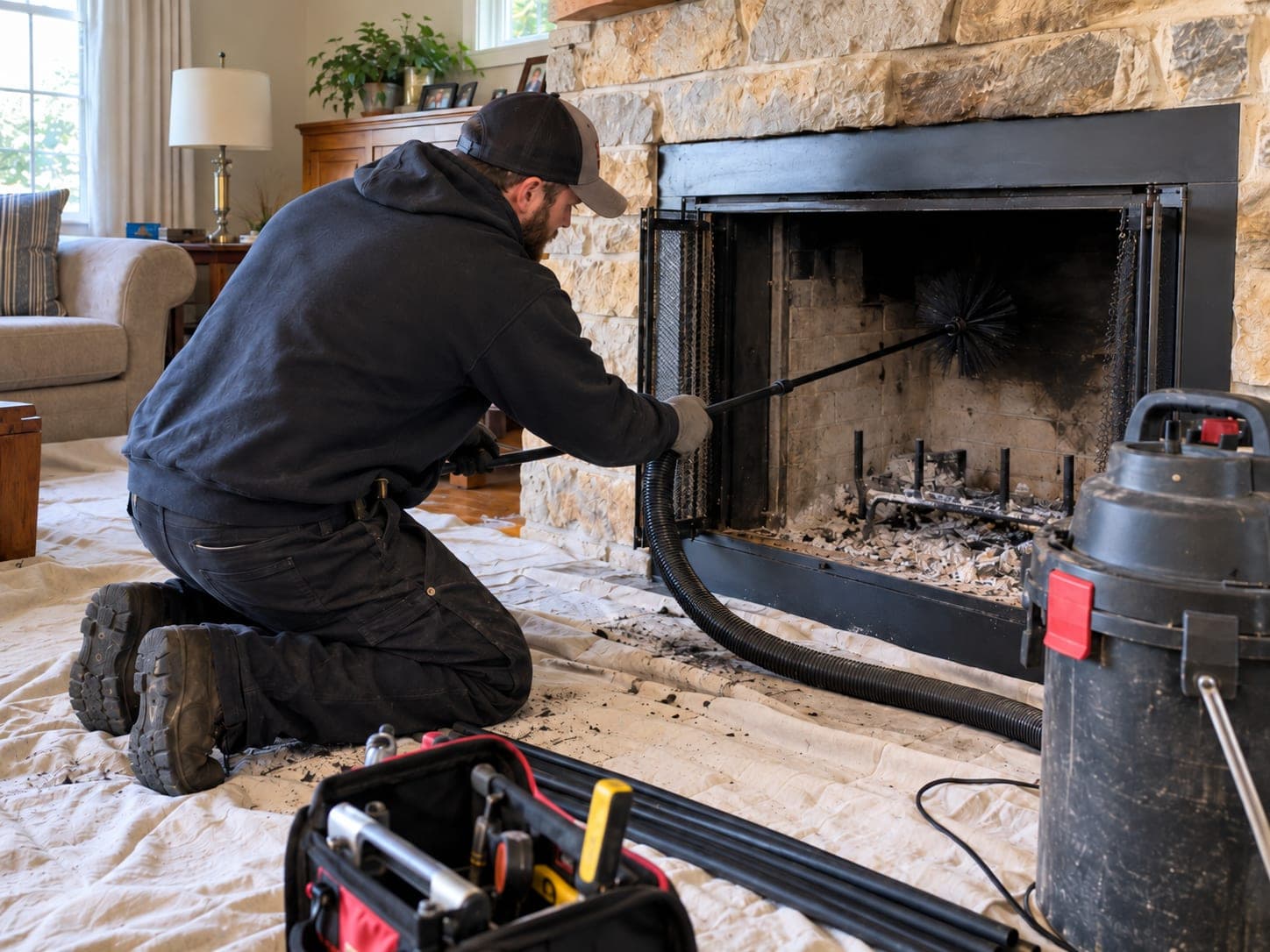
The hearth area is covered and a vacuum keeps dust under control while the flue is open.
Check the system
The damper, firebox walls and the visible flue liner are looked at before any brushing.
Clear the deposits
Soot and creosote are removed from the liner, smoke shelf and smoke chamber.
Finish and report
The area is cleaned up and you get a plain summary of the chimney's condition.
Checked on every visit
- Creosote level and type in the flue
- Signs of animals or nesting material
- Damper opening, closing and seal
- Smoke shelf and smoke chamber
- Firebox brick or panels and mortar joints
- Cap and screen condition, where it can be seen safely
- Visible liner sections for cracks or gaps
Signs it's time for chimney sweep
- Black, flaky or shiny glazed deposits inside the firebox or flue
- Scratching or chirping sounds, or debris falling into the firebox
- Smoke rolling into the room instead of drawing up
- A campfire or tar smell from the fireplace, especially on warm or damp days
Getting ready for the visit
- Note the make and model of any insert, stove or gas unit if you have it.
- Clear a few feet of space in front of the hearth or appliance.
- Write down what you've noticed and when it happens — smells, smoke, sounds or stains.
- Let the fireplace or stove cool completely — ideally no fire for 24 hours before the visit.
Sources (2)
Every Farmington figure above, with its source.