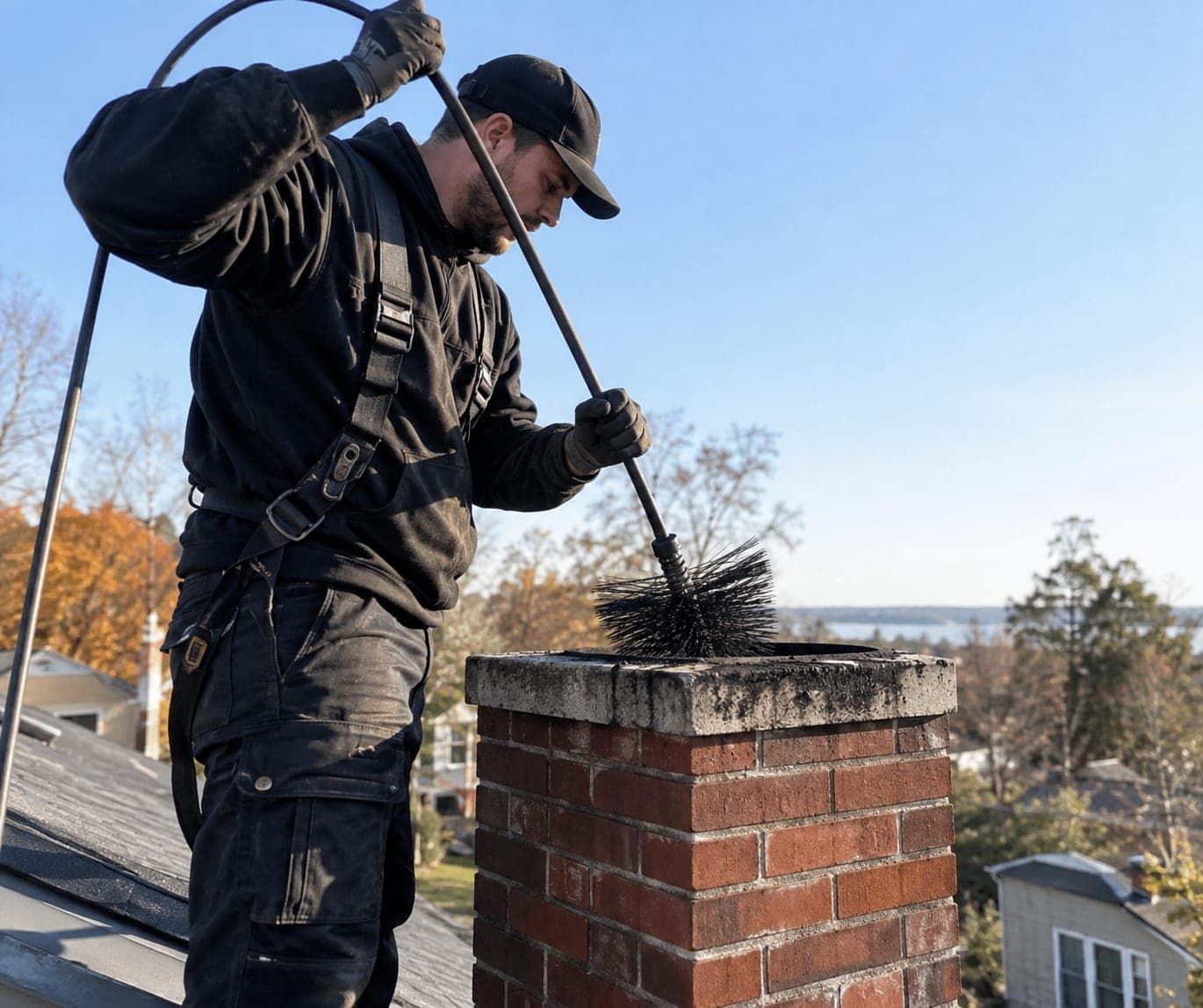
How often a Newington chimney needs sweeping
There's no single calendar answer, because a flue gets dirty at the rate you burn. The widely used guideline is a yearly inspection, with sweeping whenever deposits have built up. For most wood-burning households, that works out to about once a season. If you're comparing sweep services in Newington, CT, start by figuring out which group you fall into:
- Several fires a week. Steady burning leaves deposits quickly, especially with wood that isn't fully seasoned. Plan on a sweep every year, plus a mid-winter check if you burn most nights.
- A few fires a winter. Less creosote forms, but an idle flue still collects leaves, twigs and nesting material between uses.
- Wood stoves and inserts. When these are turned down low for long burns, the flue runs cooler. A cooler flue tends to leave sticky, tar-like creosote, so these usually need closer attention than an open fireplace.
- A recently bought house. Unless the seller can show a recent sweep, treat the chimney as an unknown. Have it cleaned and looked at before the first fire.
What happens during the visit
Buildup narrows the flue, so smoke drafts poorly and can spill into the room. Debris and nests can block the flue completely and trap carbon monoxide.
Protect the room
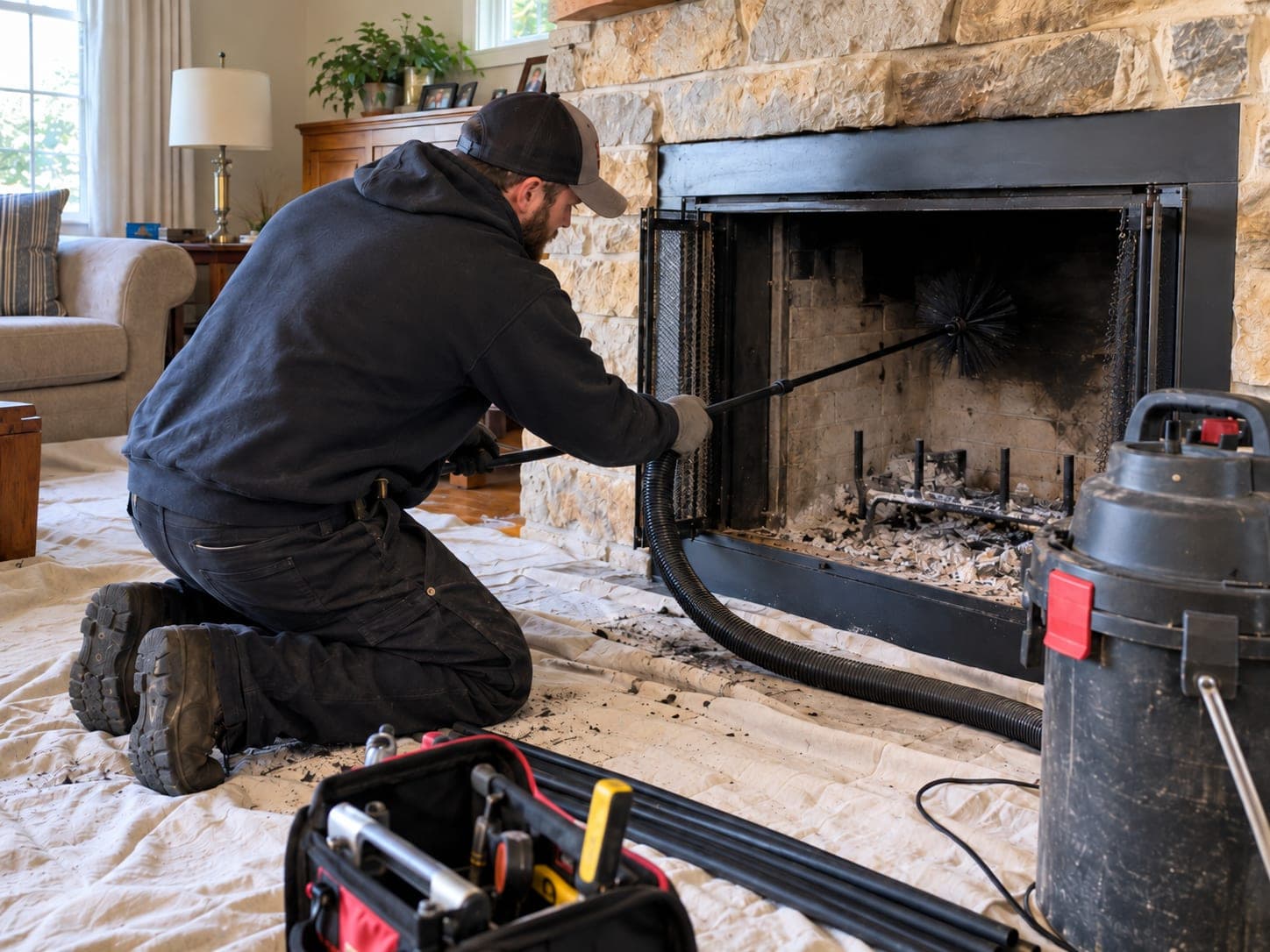
Drop cloths go down around the hearth and the opening is sealed so soot stays out of the house.
Look first
The firebox, damper and visible flue are checked before cleaning, so you know the condition things were in.
Brush the flue
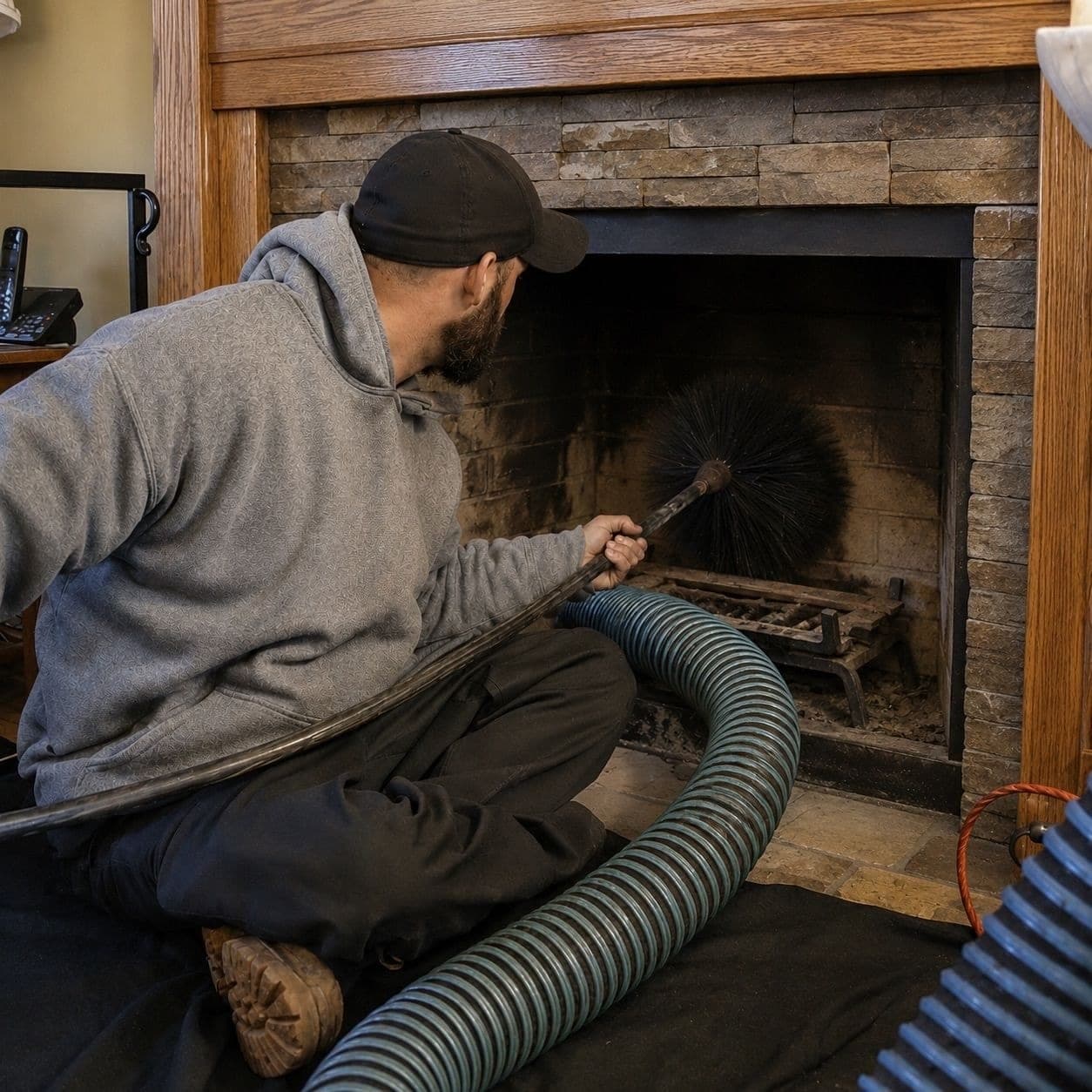
Rods and brushes sized to the flue clear soot and loose creosote from top to bottom.
Clean the smoke chamber and firebox
The areas just above the fire, where buildup collects fastest, are cleaned and vacuumed.
Explain what was found
You hear what was cleaned and anything that needs watching or repair, before anything else is suggested.
Before the technician arrives
- Move rugs, photos and anything fragile away from the work area.
- Clear a few feet of space in front of the hearth or appliance.
- Make sure the technician can reach the roof or attic access if it's needed.
- Write down what you've noticed and when it happens — smells, smoke, sounds or stains.
Signs it's time for chimney sweep
- Soot marks on the face of the fireplace above the opening
- Fires that are hard to start or keep going
- A campfire or tar smell from the fireplace, especially on warm or damp days
- Smoke rolling into the room instead of drawing up
What gets checked
- Draft — how readily smoke moves up the flue
- Cap and screen condition, where it can be seen safely
- Damper opening, closing and seal
- Firebox brick or panels and mortar joints
- Smoke shelf and smoke chamber
- Creosote level and type in the flue
Signs your chimney is due
Book a sweep if you notice:
- A campfire smell indoors on humid days or when the fireplace is cold
- Black, crunchy flakes dropping into the firebox
- Smoke rolling into the room instead of drawing up the flue
- Fires that are slow to catch or keep dying down
- Scratching or chirping above the damper, or twigs landing in the firebox
A few of these point past ordinary soot: - A heavy, glazed coating is handled as creosote removal rather than a routine sweep. - A smell that lingers after cleaning may need odor removal. - Animals are a separate job. We remove nests and can fit an animal screen or cap so they don't come back. The full sweep service page explains the cleaning itself in more depth.
Sweeping in Newington and next door
Newington is home to about 31,647 people (2025 Census estimate). It sits roughly six miles from Hartford, with New Britain, Wethersfield, Rocky Hill and West Hartford nearby. Beyond sweeping, we can also look at a fireplace, replace a cap or clean a dryer vent, and you can ask about combining that work with the sweep. See all of our work in Newington for the full list.
Arranging a cleaning for family or a rental nearby? We also cover chimney sweeping for West Hartford homes, sweep for homes in East Hartford and sweep in Glastonbury.
We're available 24 hours, Sunday through Friday and accept emergency calls, for example when smoke is pouring back into the house or a blockage has shut down the flue mid-winter.
Sources (2)
Public data and code references cited for Newington.