On this page
- What a real estate chimney inspection is and who needs it
- Importance of a real estate chimney inspection before closing
- What the inspection visit involves
- What gets checked
- Real estate chimney inspection in Connecticut: timing it with your sale
- Estate homes, multi-flue chimneys and stone construction
- Inspection options and what decides between them
- What affects the scope
- Fitting the inspection into a sale timeline
- How to prepare
What a real estate chimney inspection is and who needs it
A real estate chimney inspection is a full look at a home's venting system during a sale. We check the chimney from the firebox to the cap, along with every flue serving a fireplace, wood stove, insert or other appliance. It is more thorough than the quick glance a general home inspector usually gives a chimney. Many home inspectors note "recommend evaluation by a chimney professional" for this reason.
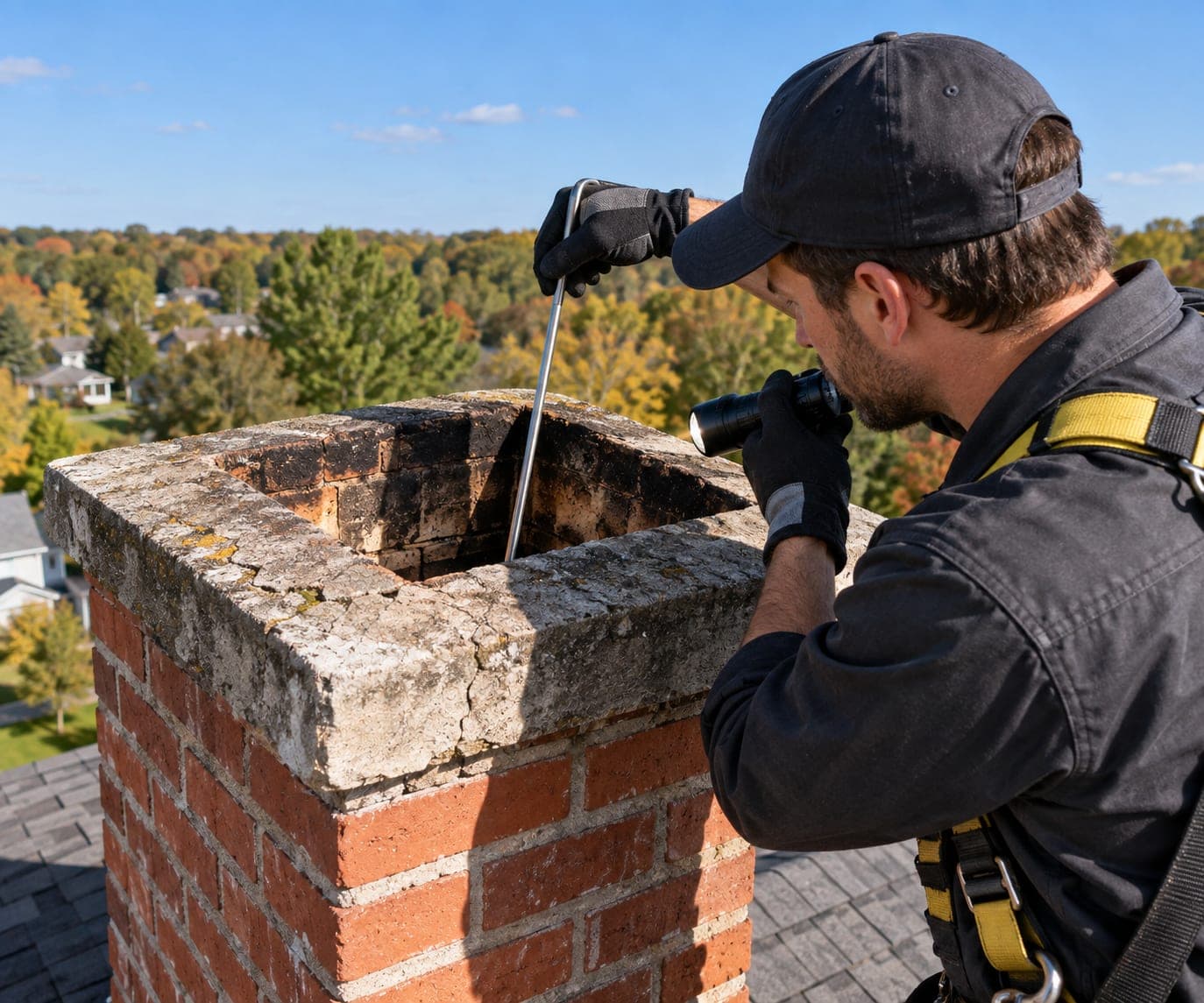
It is useful for three groups. Buyers want to know what they are taking on. Sellers want to find problems early so they don't surprise anyone during the contingency period. Agents and investors want something factual to point to when repair requests come up.
Importance of a real estate chimney inspection before closing
Many chimney problems cannot be seen from the living room. A cracked flue liner, a deteriorated crown or a smoke chamber full of creosote can look fine from the hearth. Once a sale closes, the cost of fixing them falls on the new owner. Getting an inspection during the contingency window turns an unknown into a specific finding that buyer and seller can deal with.
Schedule one if any of these apply to the home:
- The seller can't say when the chimney was last cleaned or inspected
- The fireplace or stove hasn't been used in years
- There are stains on the ceiling or wall next to the chimney, or efflorescence (white residue) on the brick
- Mortar joints are crumbling, bricks are spalling, or the crown is cracked
- There is a smoky or musty smell near the fireplace, especially in humid weather
- The home inspection report flagged the chimney for further evaluation
- A heating appliance was added, removed or converted from wood to gas
For background on what these symptoms usually mean, see our guide to common chimney problems.
What the inspection visit involves
How a real estate chimney inspection works
Schedule around the deal
Tell us your contingency deadline and how many fireplaces, stoves and flues the listing shows. We coordinate access with the listing agent or the occupant.
Interior review
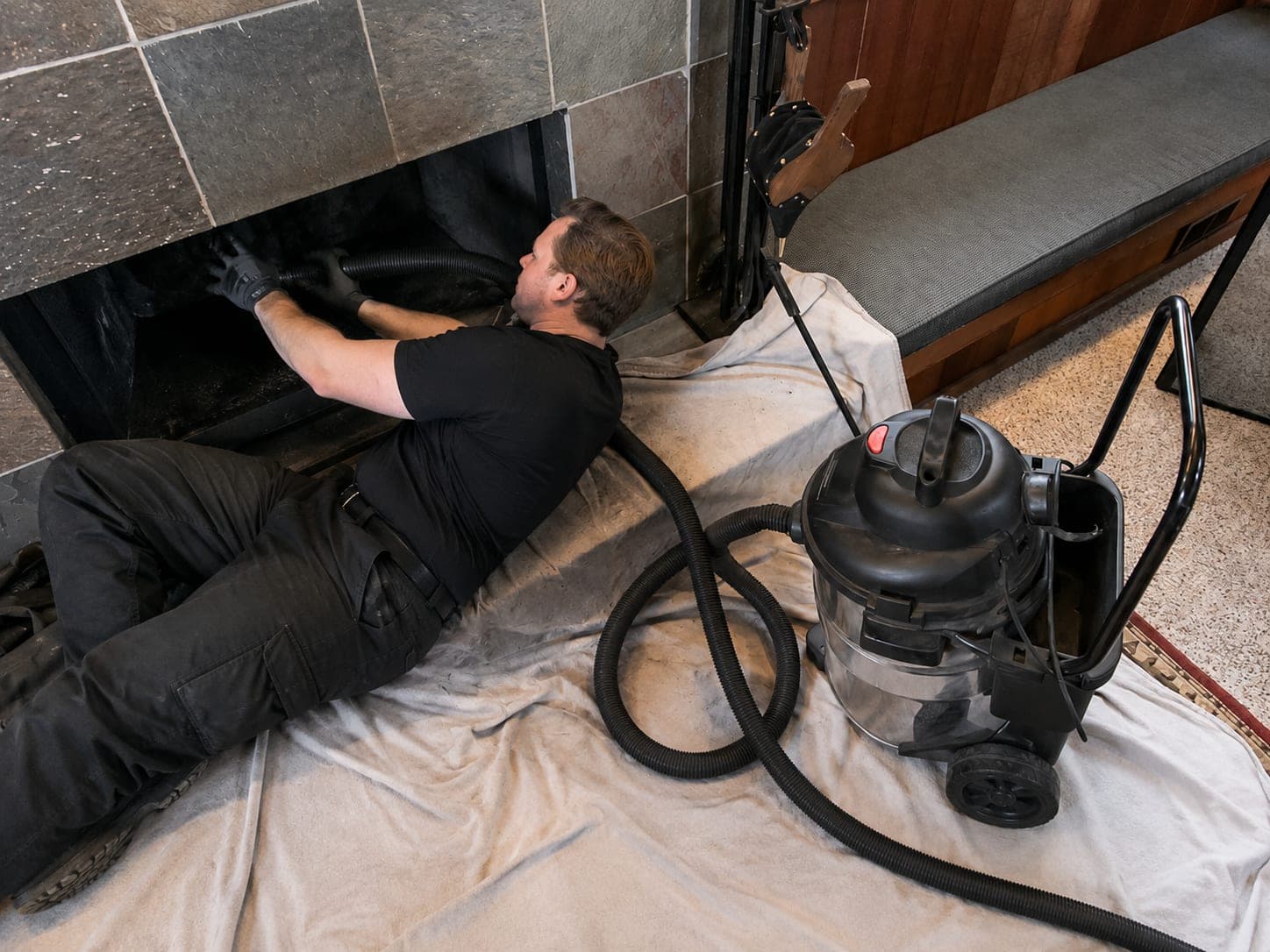
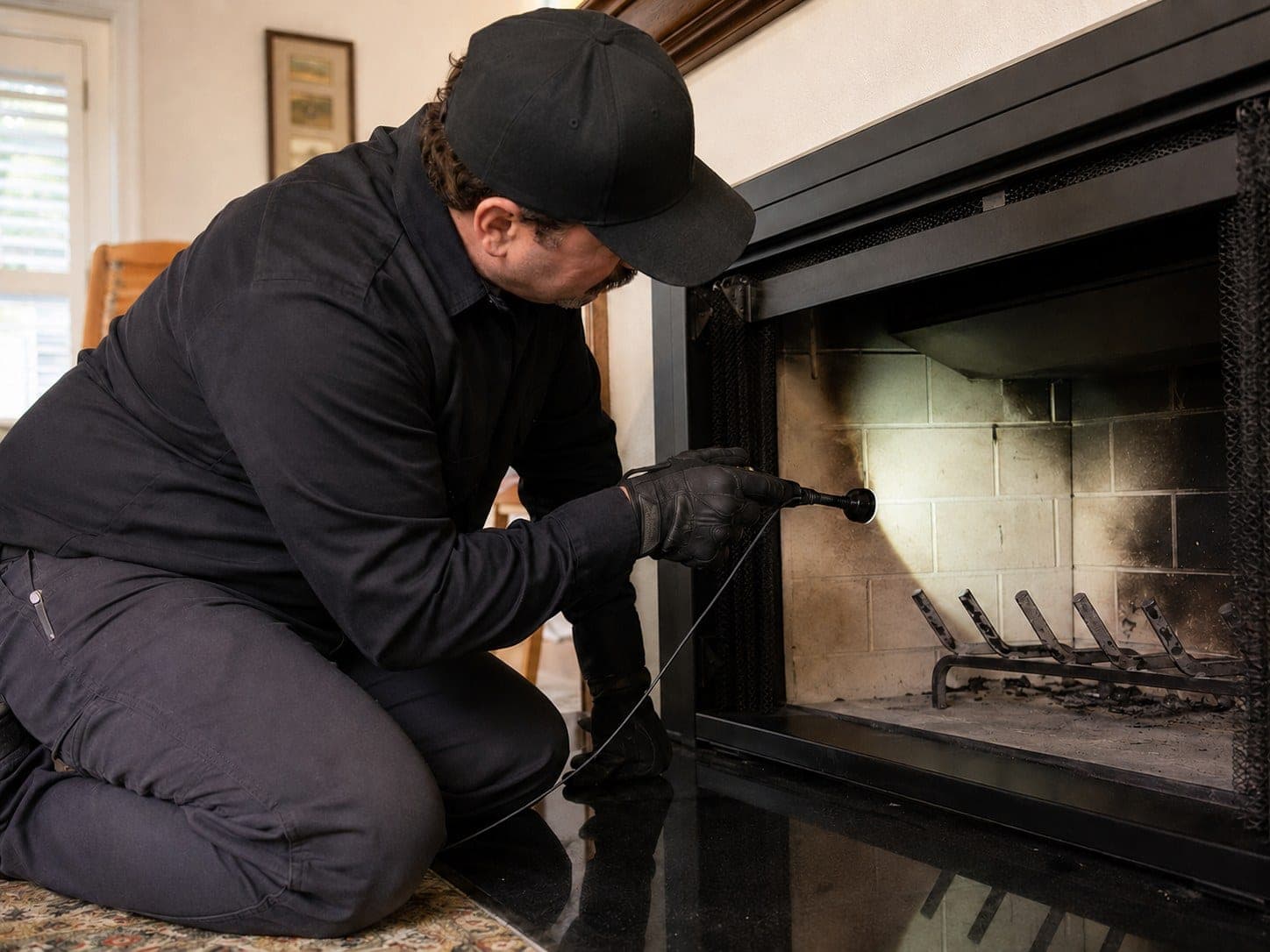
We examine each firebox, damper, smoke chamber and hearth, plus any insert or stove and its connection to the flue.
Flue and liner check
Each flue is checked for cracks, gaps, deposits and blockages. Where a full view is needed, we use a chimney camera to see the liner from top to bottom.
Exterior and roof check
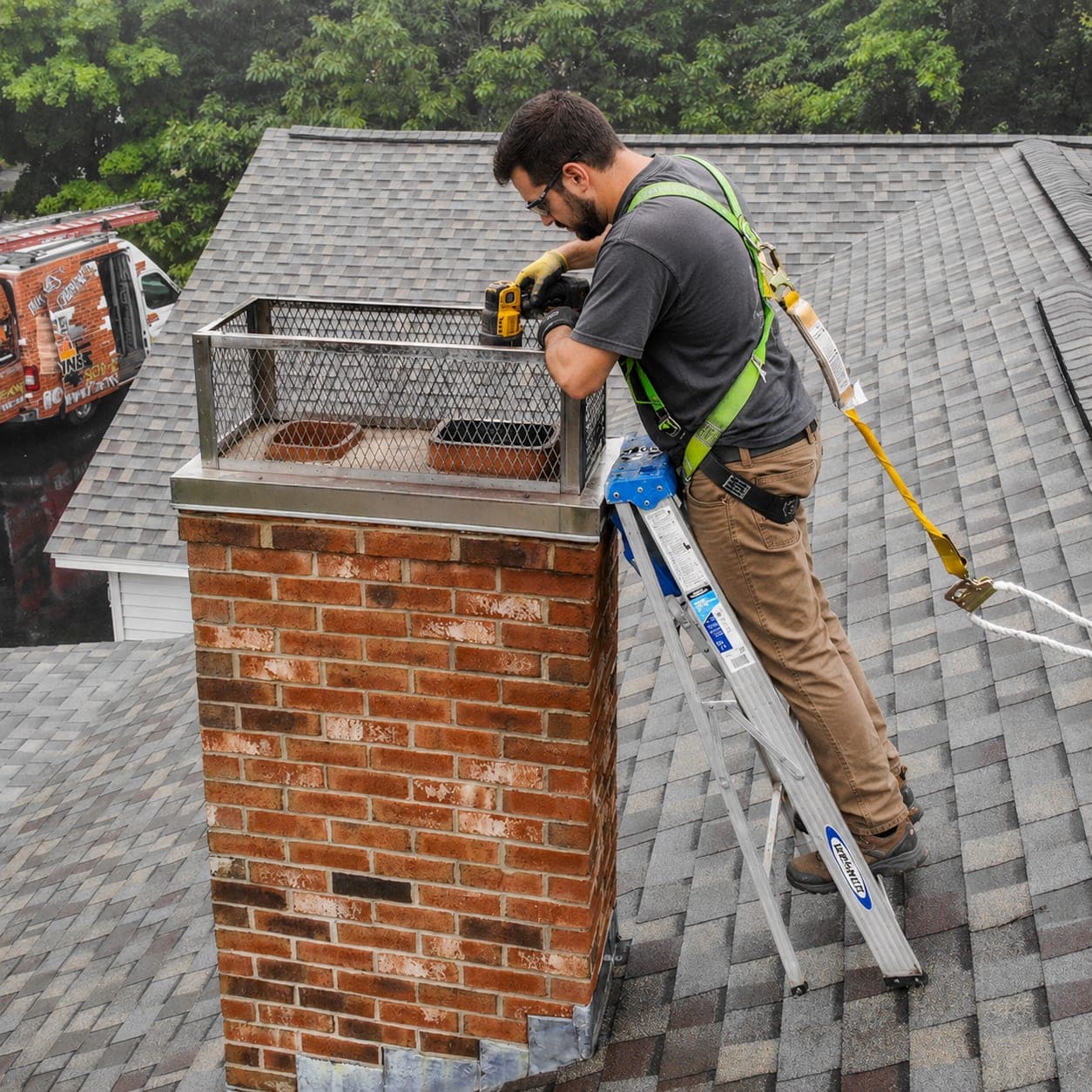
Where it is safe to reach, we look at the crown, cap, flashing, masonry and chase.
Attic and basement
Where accessible, we check for water staining, heat damage and clearance problems around the chimney structure.
Findings and next steps
We go over what we found, put it in writing for you and your agent, and offer a free estimate for any repairs that are needed.
What gets checked
Inspection checklist
- Flue liner condition, cracks, gaps and sizing for the connected appliance
- Creosote and soot buildup in the flue and smoke chamber
- Blockages from debris, nests or fallen masonry
- Damper operation and seal
- Firebox brick, mortar joints or refractory panels
- Hearth and hearth extension
- Chimney crown, cap and any spark arrestor or animal screen
- Flashing where the chimney meets the roof
- Exterior masonry, including spalling, cracking and loose bricks
- Prefab chimney chase and chase cover, where present
- Insert, wood stove or gas fireplace connections
- Signs of water entry or heat damage in the attic and adjoining walls
Real estate chimney inspection in Connecticut: timing it with your sale
Inspection contingencies often leave only a short window, so it helps to book the chimney visit as soon as an offer is accepted, or before listing if you are selling. Our crews offer same-day service when the schedule allows, and we take calls 24 hours a day, Sunday through Friday. If you find a problem during a showing, such as smoke coming back into the room or a strong odor, emergency calls are accepted as well.
Estate homes, multi-flue chimneys and stone construction
Larger properties take more time to inspect because there is more to look at. Several fireplaces, more than one chimney stack, outbuildings with their own stoves, and older masonry all add to the scope.
Estate multi-flue chimneys
One chimney stack can hold several flues, each serving a different fireplace, furnace or boiler. Each flue gets inspected separately. A clean flue next to a cracked one doesn't make the stack sound, and a crack in a shared wall between flues can let smoke or gases move from one into another. We label findings by flue so it is clear which fireplace or appliance each one affects.
Estate-scale multi-flue relining
If an inspection finds damaged liners in several flues, relining may be the recommended repair. We handle chimney liner repair and chimney liner installation. On a multi-flue stack, the choice usually depends on which flues are still in use, what each one serves, and whether any can be capped and retired. Knowing this before closing gives buyers and sellers a concrete repair item to negotiate instead of a vague concern.
Limestone chimneys on horse farm estates
Limestone and other natural stone weather differently from brick. Softer stone can absorb water, erode at the joints and lose mortar faster where the crown or cap isn't shedding water well. Farm properties may also have a barn, guest house or workshop with its own stove and flue. We include any of these that you want covered and note masonry condition, crown condition and water entry points for each structure.
Coastal estate chimneys
Homes exposed to salt air and wind-driven rain tend to show wear sooner on metal parts and masonry. Caps, chase covers, flashing and fasteners can corrode, and masonry can take on more moisture. On these homes we pay extra attention to the metal components and to signs of leaks around the roofline, because those are usually the first places the weather causes trouble.
Inspection options and what decides between them
| Feature | Standard chimney & fireplace inspection | Camera inspection added |
|---|---|---|
| What it covers | Readily accessible parts: firebox, damper, visible flue, exterior | Everything in the standard inspection plus a video view of the full flue liner |
| Best for | Homes with recent service records and no warning signs | Property sales, unknown history, past chimney fires, leaks or storm damage |
| Finds hidden liner cracks | Only where they are visible | Yes, along the length of the flue |
What it covers
- Standard chimney & fireplace inspection
- Readily accessible parts: firebox, damper, visible flue, exterior
- Camera inspection added
- Everything in the standard inspection plus a video view of the full flue liner
Best for
- Standard chimney & fireplace inspection
- Homes with recent service records and no warning signs
- Camera inspection added
- Property sales, unknown history, past chimney fires, leaks or storm damage
Finds hidden liner cracks
- Standard chimney & fireplace inspection
- Only where they are visible
- Camera inspection added
- Yes, along the length of the flue
For most sales we recommend the camera view, because the liner is the part buyers can't check for themselves. If the chimney was recently serviced and you just need a basic condition check, our budget chimney inspection may be enough. You can compare the two with our standard chimney inspection service.
What affects the scope
- Number of chimneys, flues and connected appliances
- Whether outbuildings are included
- Roof pitch, height and safe access to the chimney top
- Heavy creosote that has to be cleaned before the liner can be seen
- Masonry type and visible deterioration
- Attic or basement access around the chimney
For a sense of how cleaning and inspection pricing is usually structured, read how much a chimney sweep costs. Your own estimate is free.
Fitting the inspection into a sale timeline
For buyers
Book as early in your inspection window as you can. The camera might find a cracked liner or a failing crown. If it does, you'll want time to get a repair estimate and negotiate before deadlines pass. We explain the findings and camera images in plain terms you can pass straight to your agent.
For sellers
A pre-listing inspection lets you deal with problems on your own schedule rather than a buyer's. A missing cap or a sooty flue is easy to handle ahead of time. If the flue is overdue for a routine annual chimney cleaning, get it done before showings rather than see it flagged in a buyer's report.
How to prepare
- Don't burn anything in the fireplace or stove for at least a day before the visit
- Clear the hearth and leave a few feet of open space in front of each fireplace
- Make sure the attic hatch and the basement area around the chimney are reachable
- Let us know about any pets, alarm codes or lockbox instructions
- Gather any past cleaning, repair or relining records the seller has
Safety before the first fire
Buyers should not light a fire in a newly purchased home until every flue has been checked. Cracked liners and creosote buildup are leading causes of chimney fires, and a blocked flue can push carbon monoxide into the house. If a CO alarm sounds, get everyone outside and call emergency services first. For more on warning signs, see common chimney issues.