On this page
Outdoor fireplaces and fire pits transforming Connecticut backyards
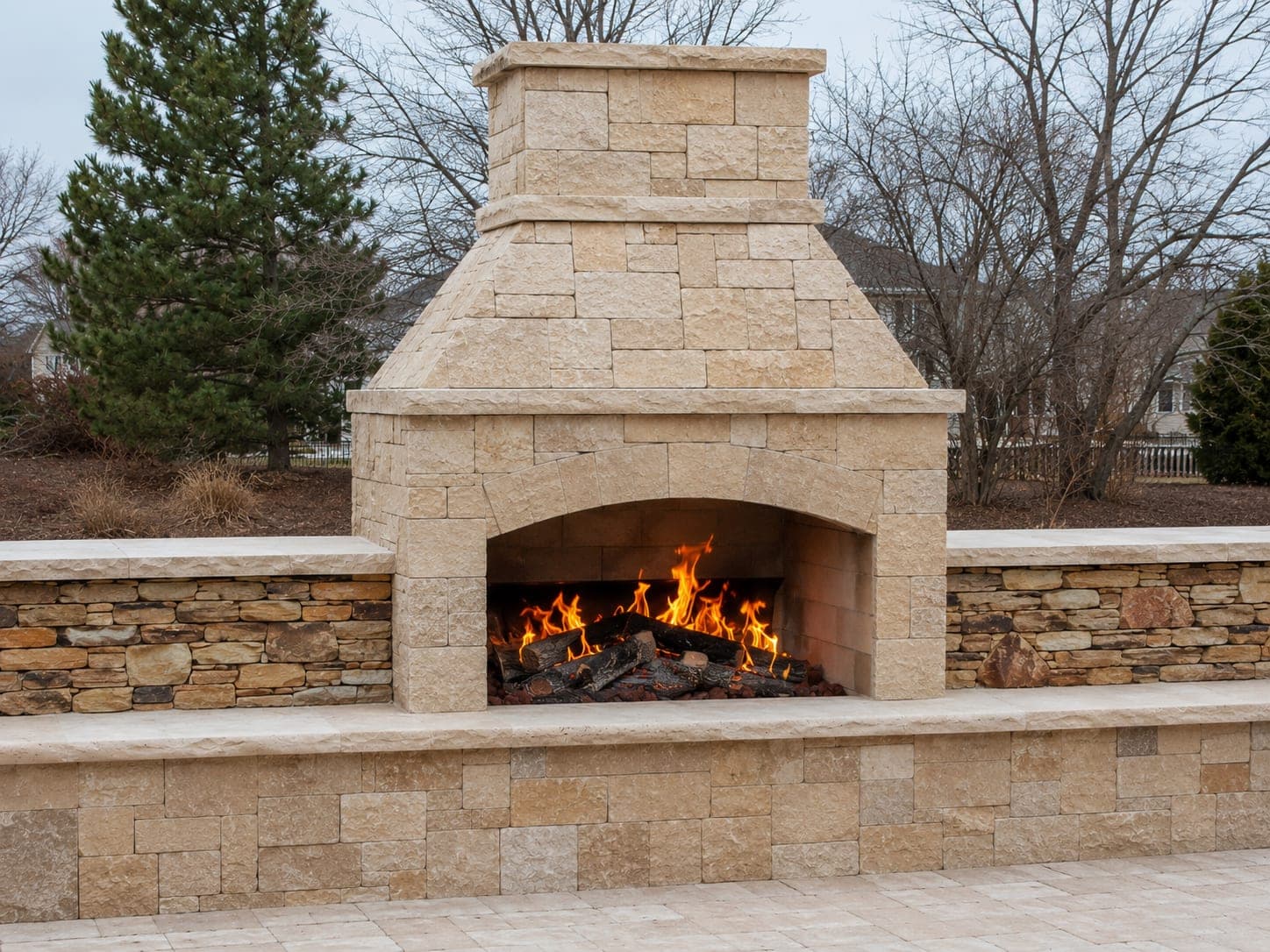
A fire outdoors lets you use a patio or yard on cool spring and fall evenings. The two main choices behave very differently, though. A fire pit is open on all sides, so people gather in a circle and smoke goes wherever the breeze sends it. An outdoor fireplace has a firebox and a chimney that carry smoke up and away. It usually serves as a backdrop for a seating area rather than its center.
| Feature | Fire pit | Outdoor fireplace |
|---|---|---|
| Seating | All the way around | In front, facing the firebox |
| Smoke | Drifts with the wind | Drawn up through a chimney |
| Footprint | Smaller, often low to the ground | Larger structure on a foundation |
| Fuel | Wood or gas | Wood or gas |
| Upkeep | Ash removal, a cover, burner care on gas units | Ash removal, chimney cap, masonry and crown care |
Seating
- Fire pit
- All the way around
- Outdoor fireplace
- In front, facing the firebox
Smoke
- Fire pit
- Drifts with the wind
- Outdoor fireplace
- Drawn up through a chimney
Footprint
- Fire pit
- Smaller, often low to the ground
- Outdoor fireplace
- Larger structure on a foundation
Fuel
- Fire pit
- Wood or gas
- Outdoor fireplace
- Wood or gas
Upkeep
- Fire pit
- Ash removal, a cover, burner care on gas units
- Outdoor fireplace
- Ash removal, chimney cap, masonry and crown care
Planning a beautiful fire pit or fireplace setup
What makes a backyard fire feature look right is mostly what makes it work. It needs a level, non-combustible base and enough distance from the house, the deck and overhanging branches. It also needs a spot where the wind won't push smoke into the seating area or toward neighbors. Gas-fueled versions need a supply line run to them, and wood-burning outdoor fireplaces need a chimney top that stops sparks.
If you're comparing fire pit and outdoor fireplace contractors, ask who handles each piece. Our part is the work we do every day: gas line installation, gas log installation, chimney cap and spark arrestor installation, masonry and crown repair, and inspection. See our firepits and fireplaces service for how that fits into a project. If you're also thinking about gas heat indoors, read how direct vent gas fireplaces work.
Real fires teach lessons in fireplace safety
What home fires in the news reveal about safety breaches
When a house fire linked to a fireplace or fire pit gets reported, the cause described is usually an ordinary one. The same breaches come up again and again:
- Ashes that seemed cold dumped into a cardboard box, paper bag or plastic bin
- A fire left burning after everyone went inside or to bed
- Embers carried onto a deck, a roof or dry leaves
- A chimney coated with creosote that finally ignites
- A fire feature built too close to siding, railings or overhangs
None of these depend on whether the fire is indoors or out.
How a well-kept fireplace helps prevent house fires
A fireplace in good condition is built to keep fire where it belongs. A cap with a spark arrestor screen stops embers from leaving the chimney. A clean flue gives creosote nothing to build on. Intact crown and mortar keep heat and water out of the structure, and correct clearances keep combustibles out of reach. The fireplace anatomy guide explains each of those parts. Our zero-clearance fireplace guide covers why clearances are set the way they are.
Habits for every backyard fire
- Keep a hose, a bucket of water or an extinguisher within reach
- Skip the fire on gusty days
- Put ashes in a metal can with a tight lid, set away from the house
- Burn only dry firewood, never trash, cardboard or treated lumber
- Check your town's rules on outdoor burning before the first fire
- Put the fire out completely before going inside