On this page
Matching a fireplace and insert
An insert is a closed firebox that slides into the opening of an existing fireplace. It has its own door, its own controls and a vent that runs up the chimney. Electric units have no vent at all. The fireplace and insert have to suit each other: the opening must be wide, tall and deep enough, the hearth must meet floor-protection requirements, and the chimney must be in good enough condition to vent the new unit.

| Insert type | How it's fueled and vented | A good fit when |
|---|---|---|
| Wood | Split firewood, vented through a liner run up the existing chimney | You want a real wood fire and serious heat from a masonry fireplace |
| Gas | Natural gas or propane, typically sealed direct-vent with pipes through the chimney | You want heat at the push of a button without hauling wood |
| Electric | Household power, no chimney venting | The chimney isn't usable or you mainly want the look of a fire |
For gas, see how direct vent gas fireplaces work. For plug-in units, our electric fireplace inserts service covers the options. Some homeowners also consider a vent-free unit, which is covered on our vent-free gas fireplace installation page.
What sets quality fireplace inserts apart
Every brochure promises efficiency. The differences that matter show up after a few winters:
- A door that seals. Good gaskets and a solid latch give you real control over the burn.
- Sturdy firebox construction. Heavy steel or cast iron lined with firebrick or refractory holds up to repeated heating and cooling.
- A size that suits the room. An oversized insert gets run low and smoky. An undersized one never keeps up.
- Proper venting. A correctly sized liner from the insert to the top of the chimney matters as much as the insert itself.
Installation decides a lot of this. A premium insert pushed into a fireplace with a cracked firebox or a damaged smoke chamber won't perform the way it should. Our guide to fireplace anatomy shows the parts involved. The efficient fireplace guide explains why a closed firebox heats better than an open one.
About our fireplace insert service
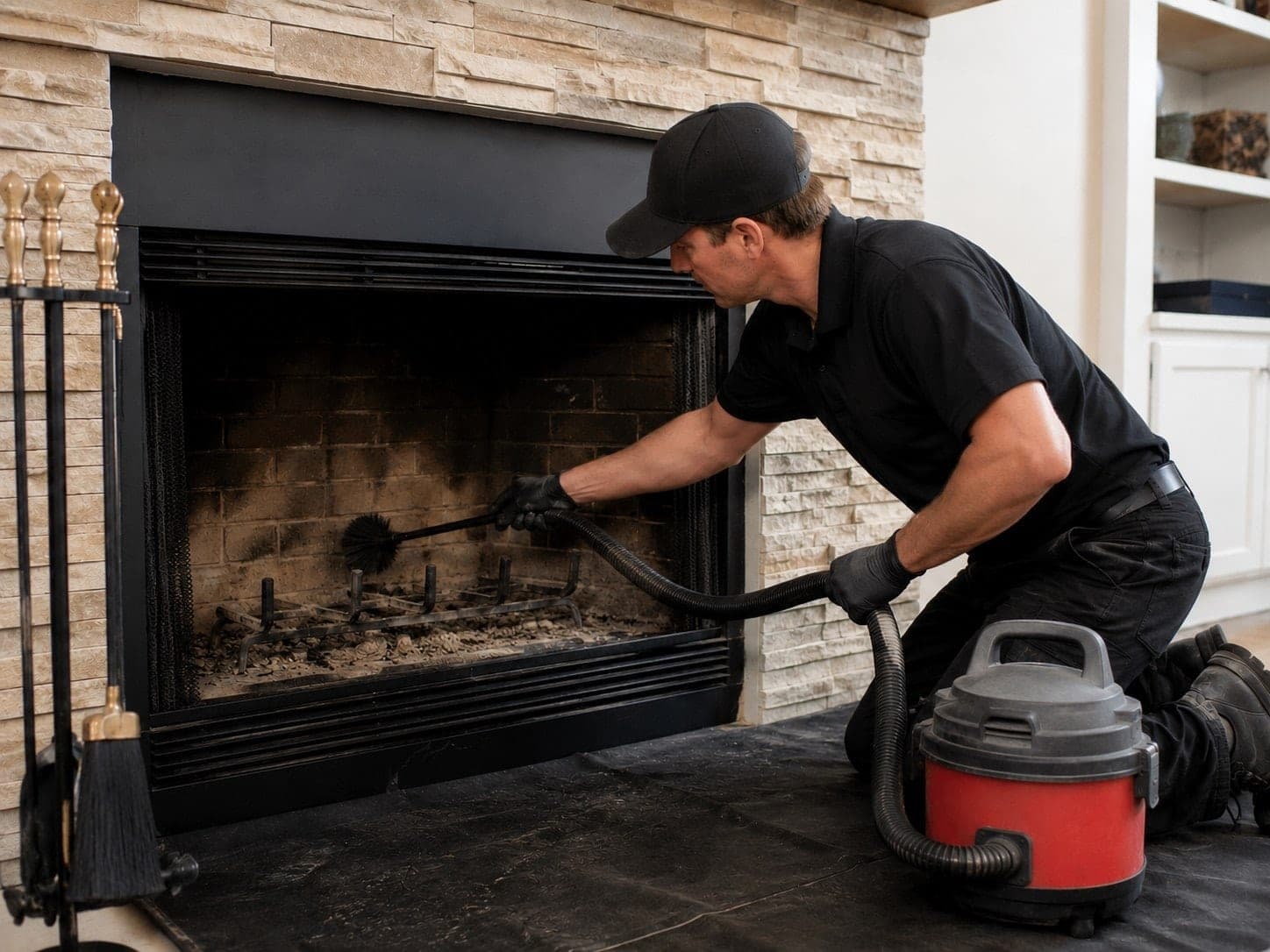
We install fireplace inserts and handle the work around them. That includes chimney liner installation, firebox and smoke chamber repair, and chimney crown repair when the top of the chimney needs attention. Once the insert is in, we also offer fireplace insert cleaning and chimney flue cleaning to keep it venting properly.
If your fireplace is a factory-built, zero-clearance model rather than masonry, an insert is only an option if the fireplace manufacturer allows it. Our zero-clearance fireplace guide explains why. Estimates are free, so the first step is a visit to measure the opening and look at the chimney.