On this page
What comprehensive hearth cleaning includes
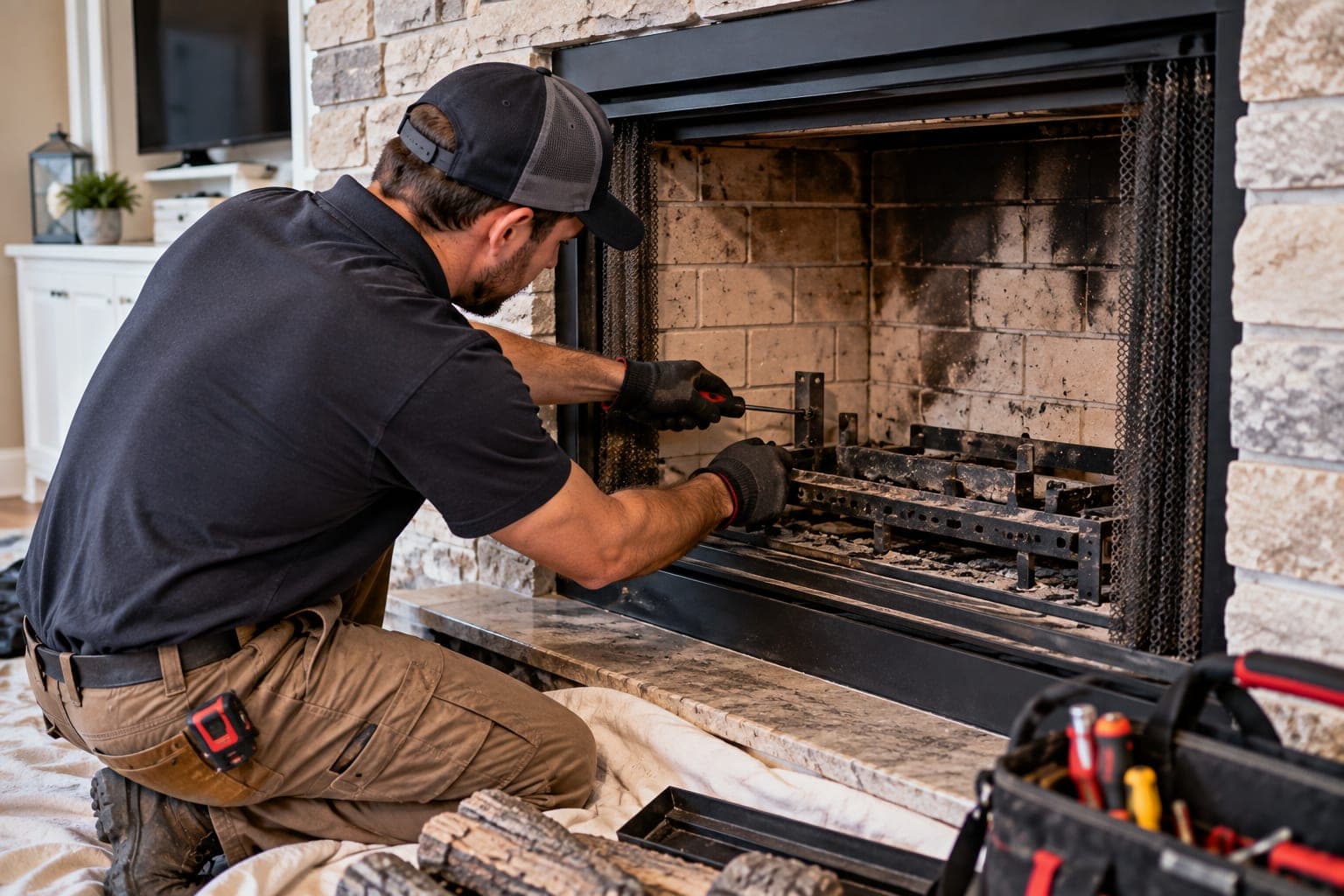
The hearth is the part of the fireplace you live with every day. It includes the firebox floor and walls, the grate, the glass, and the apron of stone, brick or tile in front. Comprehensive hearth cleaning covers all of it, not just the ash pile.
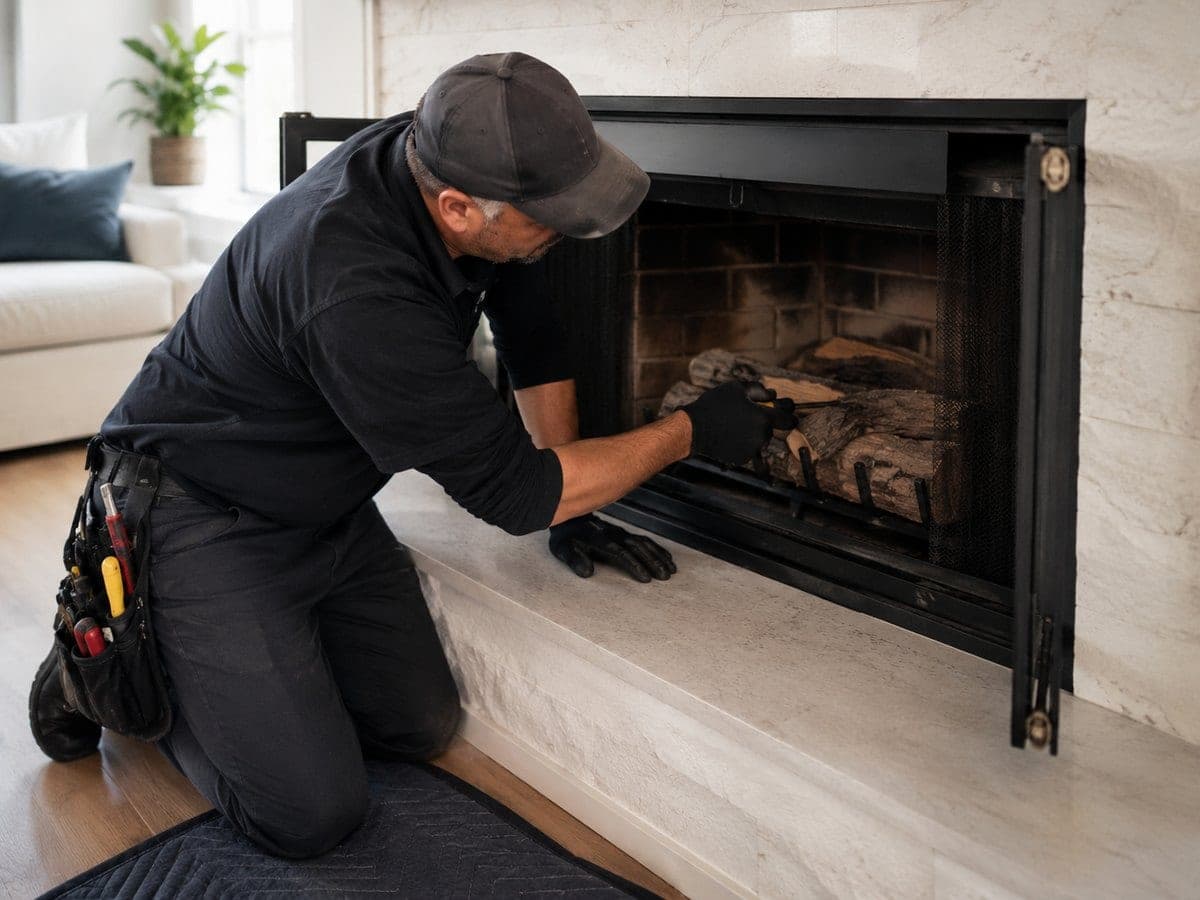
Covered in a full hearth cleaning
- Ash, old coals and half-burned wood removed from the firebox
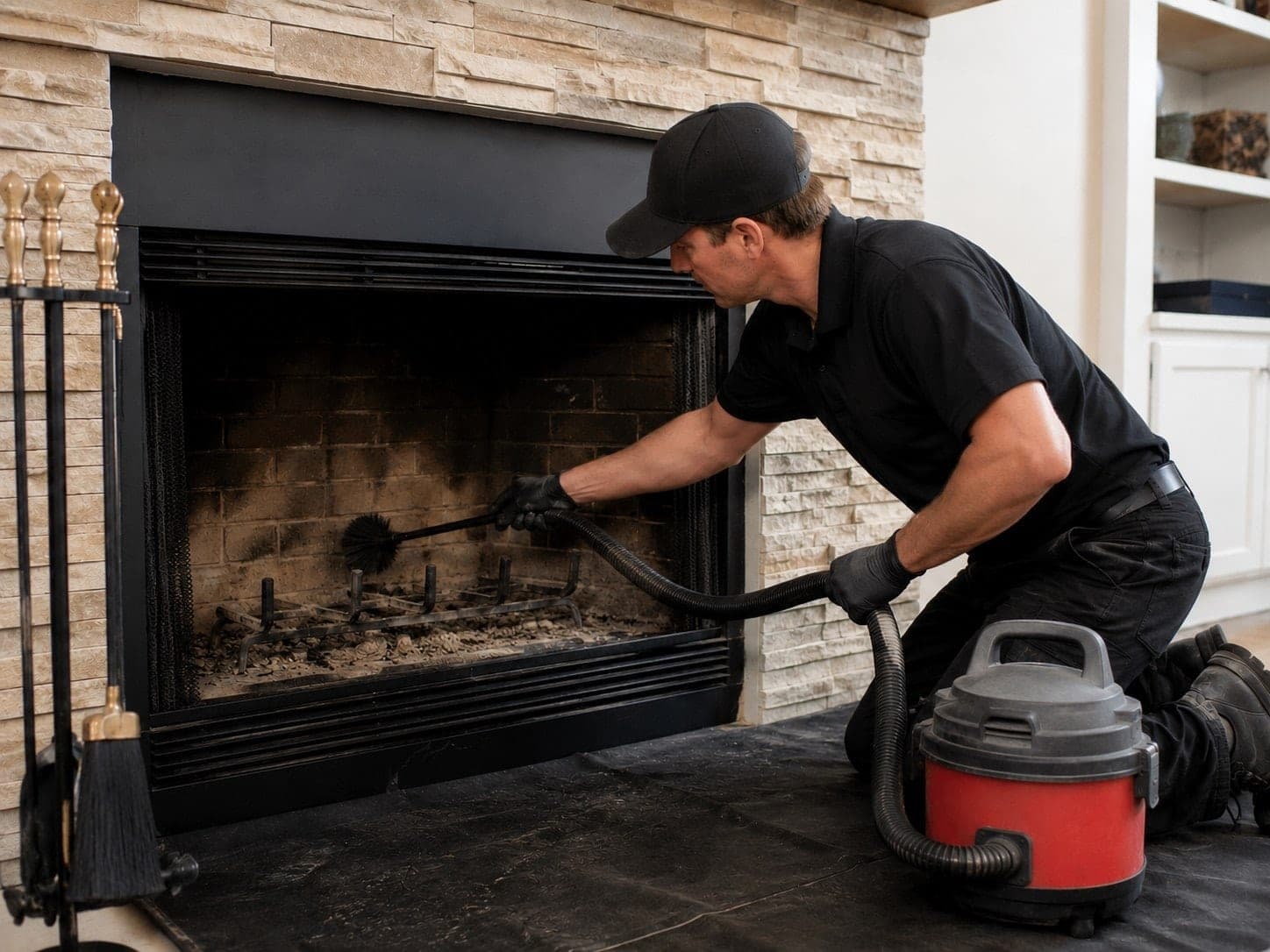
- Soot brushed from the firebox walls and back panel
- Grate, andirons and ash pit door cleaned
- Fireplace glass and door frames cleaned of soot film
- Loose debris cleared from the damper and smoke shelf area within reach
- Hearth apron and the face of the surround cleaned of soot and ash residue
Hearth cleaning isn't a chimney sweep. Creosote builds up in the flue above the damper, and that's handled through chimney cleaning. It's practical to pair the two with annual chimney cleaning so the whole system is done together. For the firebox and doors on their own, see how fireplace cleaning works.
Hearth cleaning in Connecticut
We clean hearths across Hartford and the rest of Connecticut. You can request a free estimate at any hour, Sunday through Friday, since we're available 24 hours, Sunday through Friday, and same-day service is offered where the schedule allows.
A typical cleaning, start to finish
Buildup narrows the flue, so smoke drafts poorly and can spill into the room. Creosote is flammable: a thick layer is the usual fuel for a chimney fire.
Set up
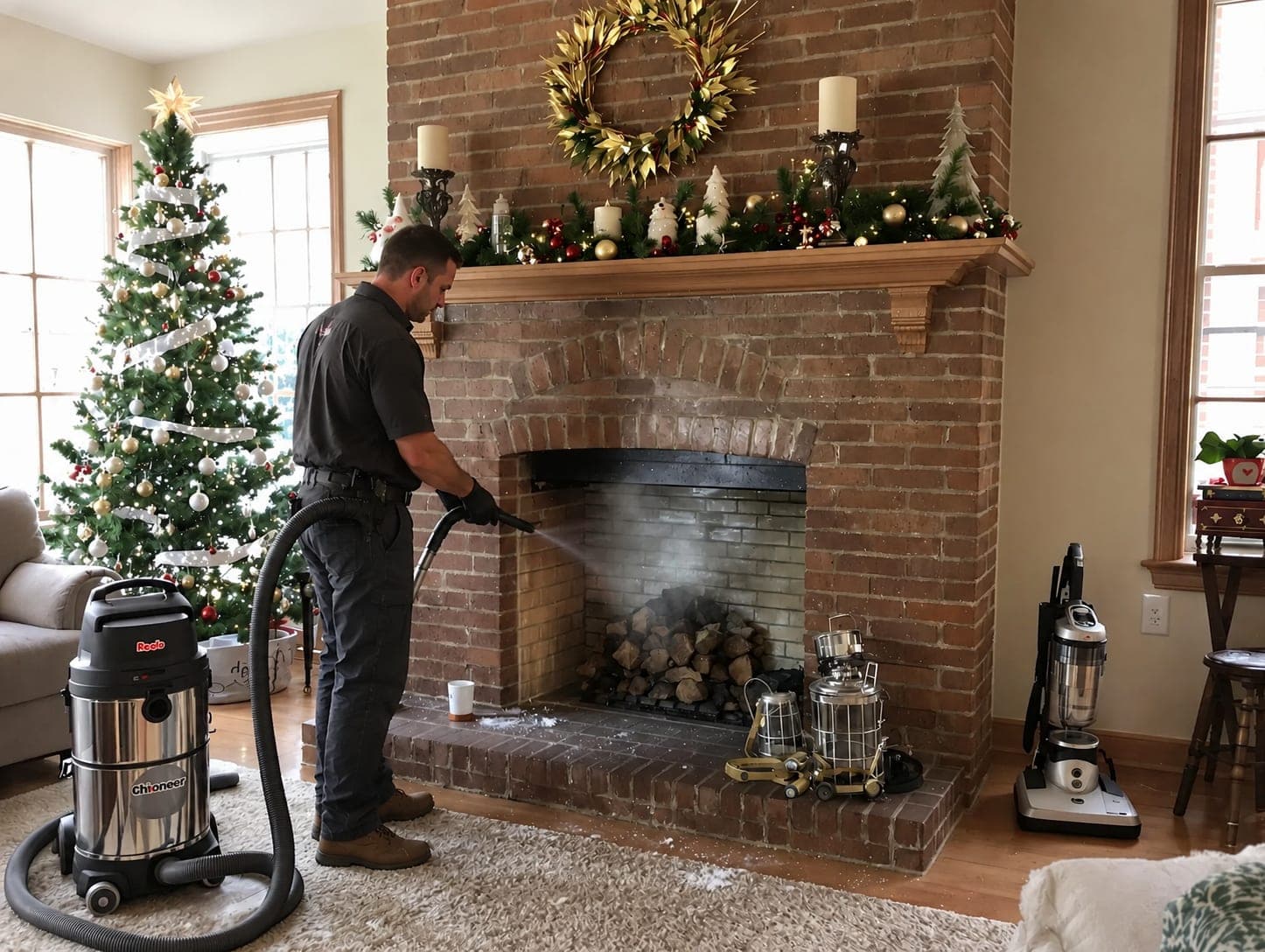
The hearth area is covered and a vacuum keeps dust under control while the flue is open.
Check the system
The damper, firebox walls and the visible flue liner are looked at before any brushing.
Clear the deposits
Soot and creosote are removed from the liner, smoke shelf and smoke chamber.
Finish and report
The area is cleaned up and you get a plain summary of the chimney's condition.
What we look at
- Creosote level and type in the flue
- Smoke shelf and smoke chamber
- Cap and screen condition, where it can be seen safely
- Visible liner sections for cracks or gaps
- Firebox brick or panels and mortar joints
How to prepare
- Clear a few feet of space in front of the hearth or appliance.
- Write down what you've noticed and when it happens — smells, smoke, sounds or stains.
- Keep pets in another room while the work area is open.
- Note the make and model of any insert, stove or gas unit if you have it.
If smoke comes into the room
Stop adding fuel, open a window and don't relight the fire until the chimney has been checked. If the smoke is heavy, an alarm sounds or you suspect a chimney fire, get everyone outside and call 911.
Signs to watch for
- Fires that are hard to start or keep going
- A campfire or tar smell from the fireplace, especially on warm or damp days
- Smoke rolling into the room instead of drawing up
- Black, flaky or shiny glazed deposits inside the firebox or flue
Safe hearth cleaning: methods that protect the room and the stone
A careful approach avoids the most common ways hearth cleaning goes wrong:
- Ash can hold live embers well after a fire looks out. Let it cool fully, and store it in a lidded metal container away from the house.
- Household vacuums aren't made for ash. Fine ash passes through ordinary filters and back into the air, and warm ash is a fire risk.
- Acidic and abrasive cleaners can etch marble, limestone and some tile. Use products suited to the surface.
- Soaking soot spreads it. Remove soot dry first, then use cleaning suited to the material so stains don't set deeper.
When the hearth tells you about the chimney
Some hearth problems point to trouble above the damper. Watch for heavy soot on the face above the opening, flaky black deposits falling into the firebox, or a strong smell that remains after cleaning. Our guide to signs that your chimney needs cleaning explains what to look for.