On this page
- What fireplace restoration covers
- Signs your fireplace needs restoration
- Proficient firebox restoration
- Historic fireplace restoration
- Cast iron fireplace restoration guide
- Restoration options and what decides between them
- Fireplace restoration cost: what affects the scope
- How to prepare
- Related fireplace work
What fireplace restoration covers
Fireplace restoration sits between a quick fix and a full replacement. We keep the original brick, stone, cast iron or surround wherever it is still sound. Then we repair or rebuild the components that have worn out. The goal is a fireplace that burns safely, drafts properly and looks the way it should. If you want to know what each part does before the visit, read how a fireplace is put together. It covers the firebox, damper, smoke chamber and flue.
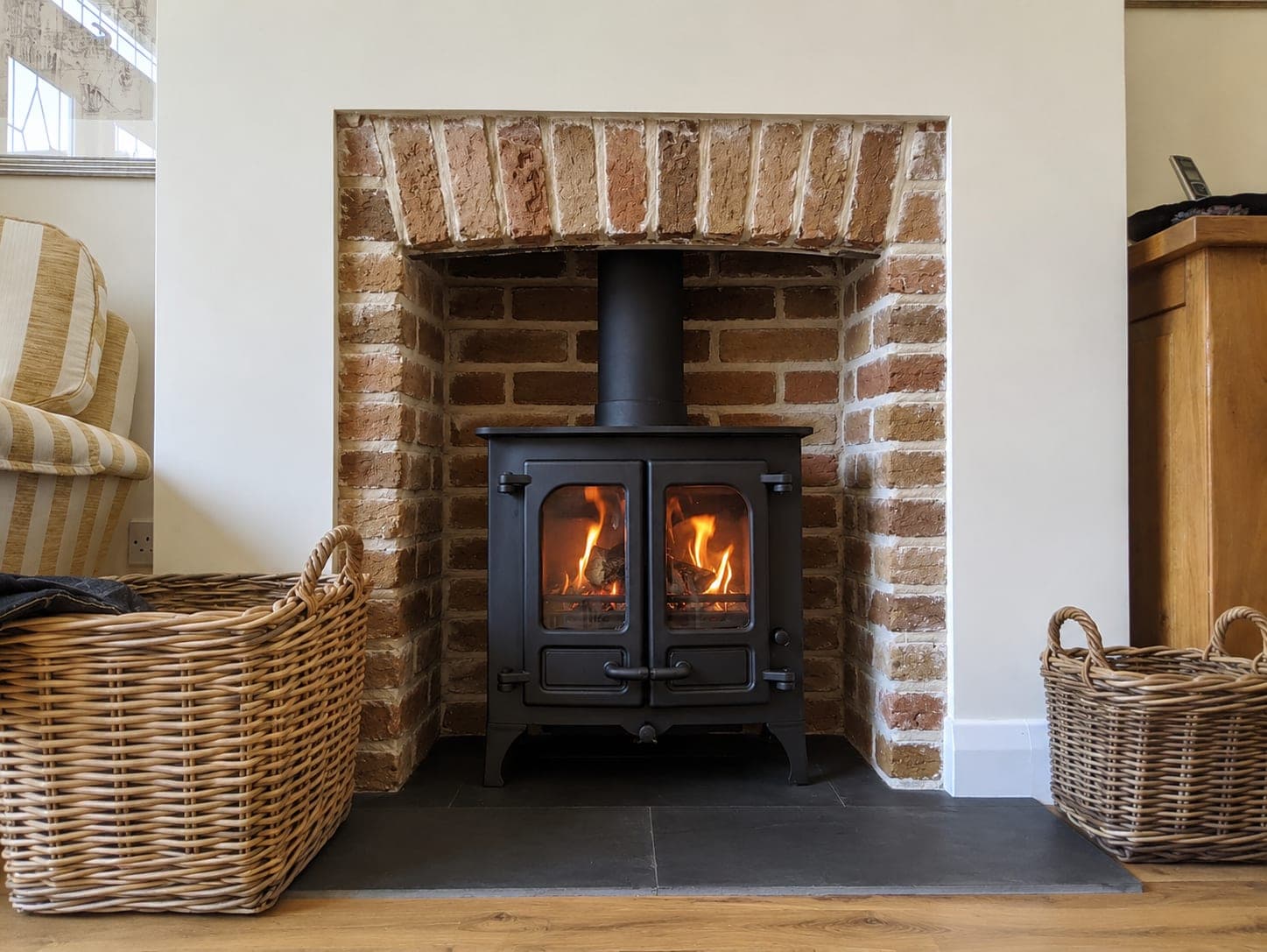
Our fireplace restoration services are usually a good fit if you:
- Bought a house with a fireplace that hasn't been used in years and you aren't sure it's safe
- Have a firebox with cracked or missing brick, or mortar that is falling out
- Want to keep a decorative or historic surround instead of replacing it
- Are preparing to sell and want the fireplace in usable, presentable shape
- Have a fireplace that works but is badly stained, smoke-damaged or patched with mismatched materials
Signs your fireplace needs restoration
- Cracks in firebrick or refractory panels that are wider than a hairline or keep growing
- Mortar joints that are sandy, recessed or missing
- Smoke stains above the opening, which can point to a draft problem
- Loose, chipped or flaking brick or stone on the face or hearth
- Rust, cracks or missing pieces in cast iron fronts, covers or grates
- A damper that sticks, won't seal or won't open fully
- Water stains or white powdery deposits, which suggest moisture is getting in
- Gaps between the hearth and the firebox floor
Cracked fireplace restoration
Cracks are the most common reason homeowners call. Fine surface cracks in firebrick are often just a result of years of heating and cooling. Some cracks are more serious: ones that widen, run through the brick, let you see the backing behind it, or come with loose bricks. Those can let heat and embers reach materials that shouldn't get hot. The right fix depends on where the damage is. It may mean repointing joints, replacing individual firebricks, swapping the refractory panels in a prefab unit, or rebuilding the firebox.
Proficient firebox restoration
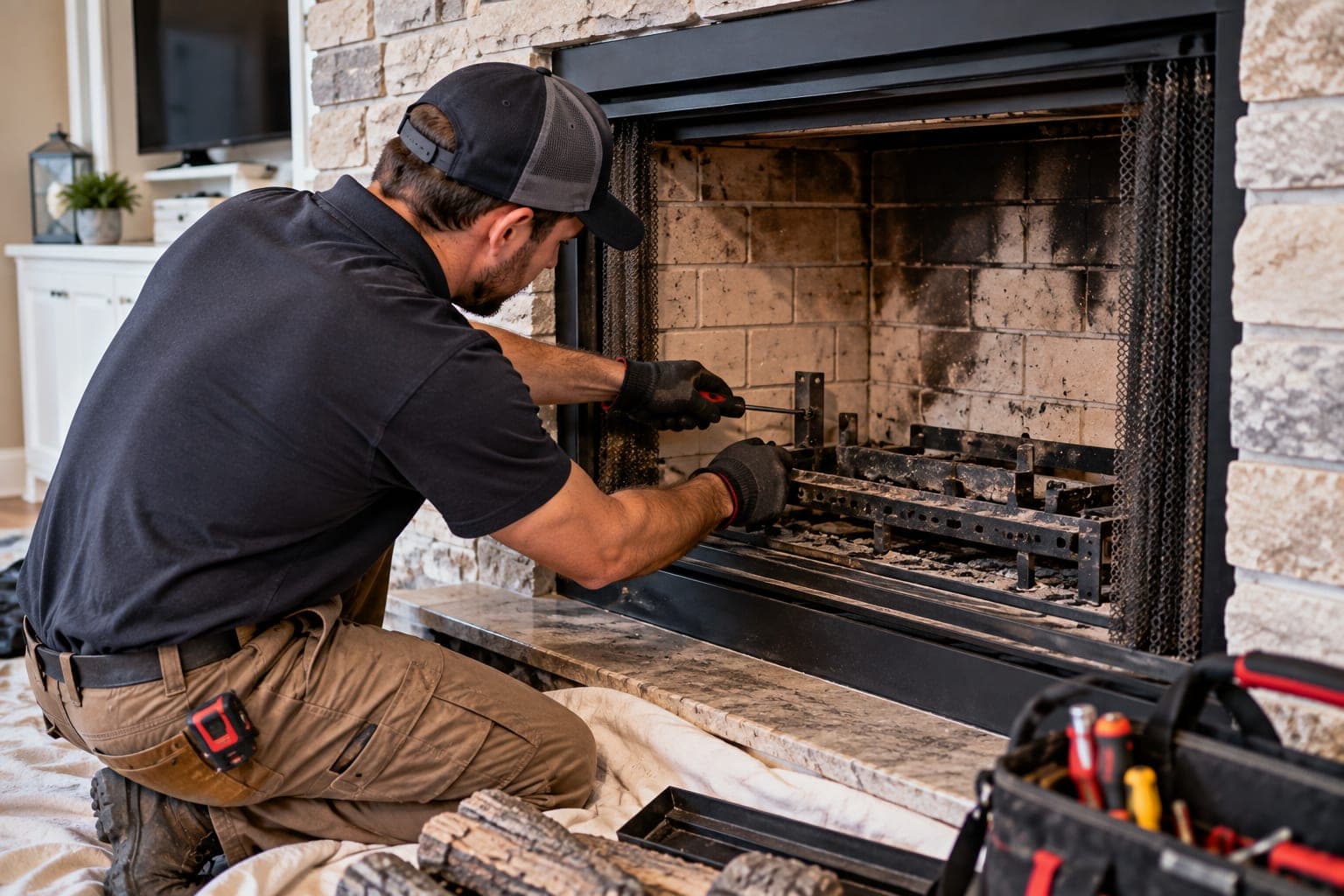
The firebox takes the most punishment of any part of the fireplace, so it gets the most attention. Doing this work properly means using heat-rated firebrick and refractory mortar. Standard masonry mortar, caulk and general-purpose patch products break down under fire. We remove failed material down to a sound base before rebuilding. Shortcuts here tend to crack again within a season or two.
Historic fireplace restoration
Aesthetic reasons for historic fireplace restoration
An original fireplace is often the focal point of a room. Its brick pattern, stone, tile or cast iron details were chosen to match the house. Restoring it keeps that character. A modern replacement can look out of place in an older room. Where possible we match materials and mortar color so repairs blend in rather than stand out.
Adding historic fireplace restoration to a larger project
If you're already planning chimney repair, a liner, or a room renovation, it usually makes sense to add the fireplace to the same scope. One inspection covers the whole system, and the repairs can be sequenced so nothing has to be redone. Some homeowners also keep the historic surround and add an insert behind it, which preserves the look while changing how the fireplace is used.
Cast iron fireplace restoration guide
Cast iron fronts, covers and grates show up in many older fireplaces. Restoring them generally follows this order:
- Assess each piece for cracks, warping and missing sections before any cleaning
- Clean off rust, soot and old finish down to sound metal
- Refinish with a heat-rated coating suited to how hot that piece gets
- Refit with sound fasteners so the piece sits correctly against the opening
- Check clearances so the iron doesn't cover vents or trap heat where it shouldn't
A piece that is cracked straight through is harder to repair, and fixing it doesn't always make sense. We'll tell you plainly whether a cracked casting is worth saving or is better left as decoration.
What happens during a restoration visit
Inspection and free estimate
We look at the firebox, hearth, surround, damper and smoke chamber. If the flue needs a closer look, we use a camera.
Clear scope
You get a plain explanation of what we found, what we recommend and which options you have.
Protect the room
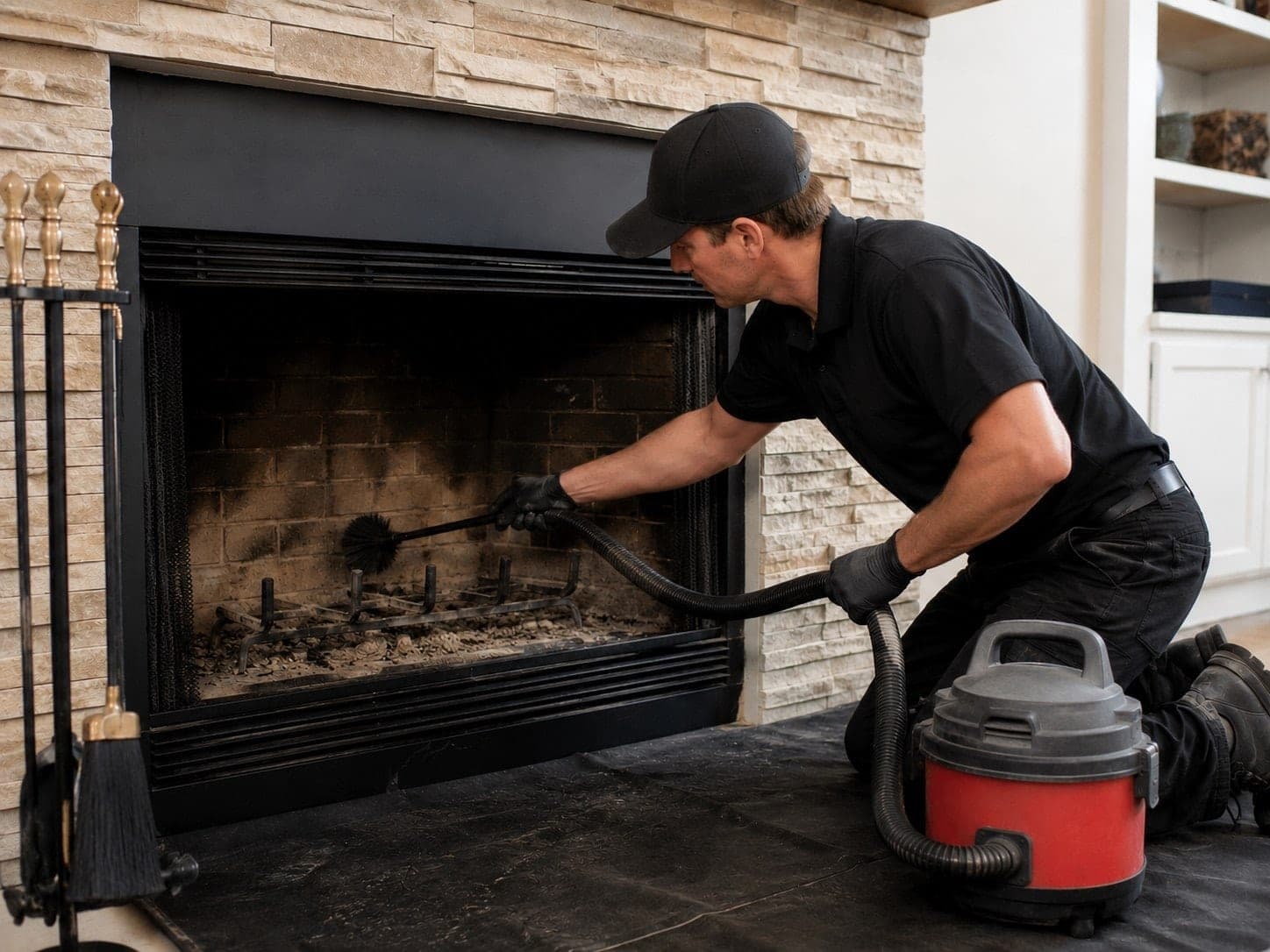
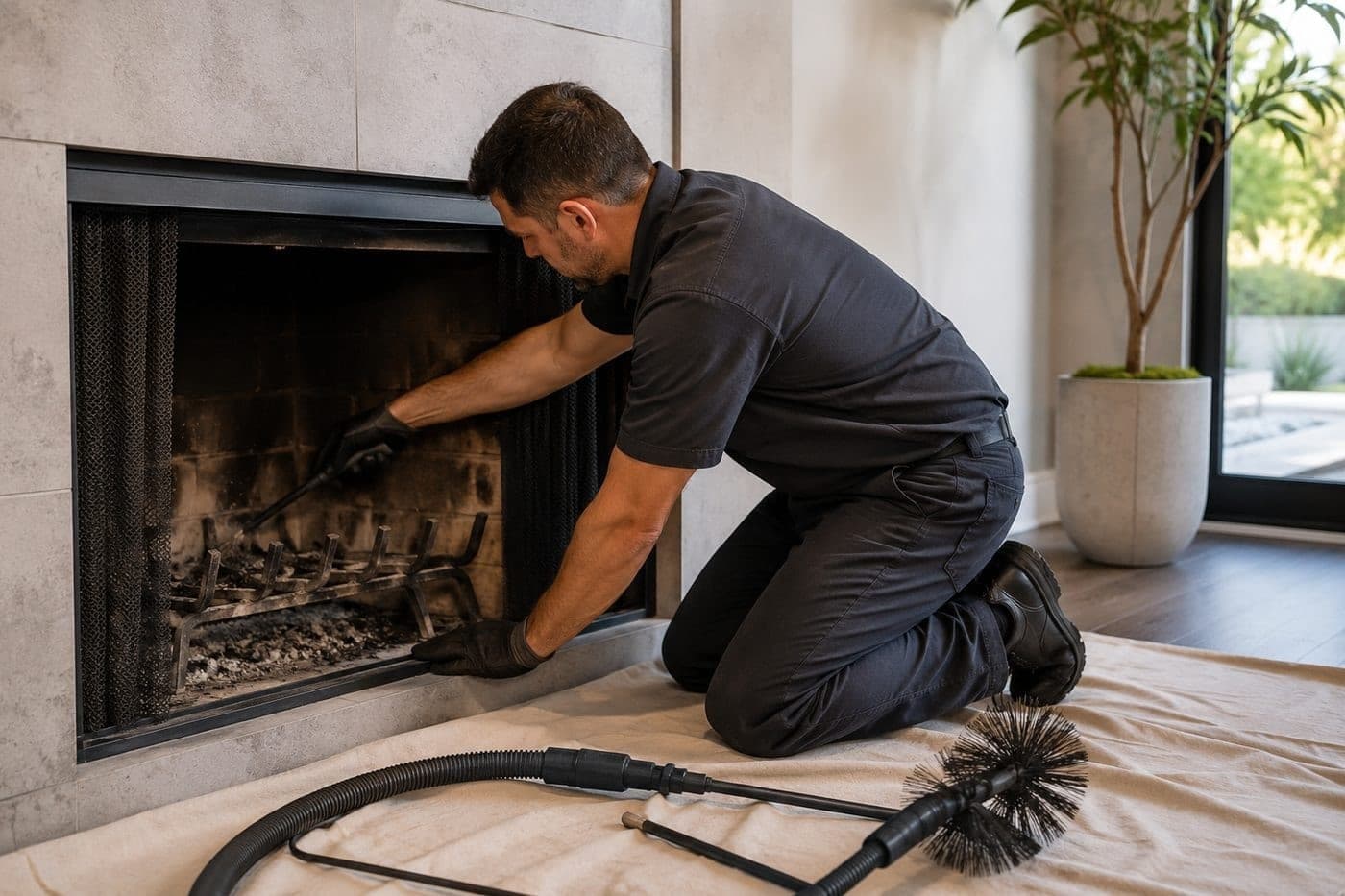
We cover floors and furniture and seal off the opening to keep dust and soot contained.
Clean
We remove soot, creosote and loose debris so we can see the real condition of the masonry and metal.
Repair and rebuild
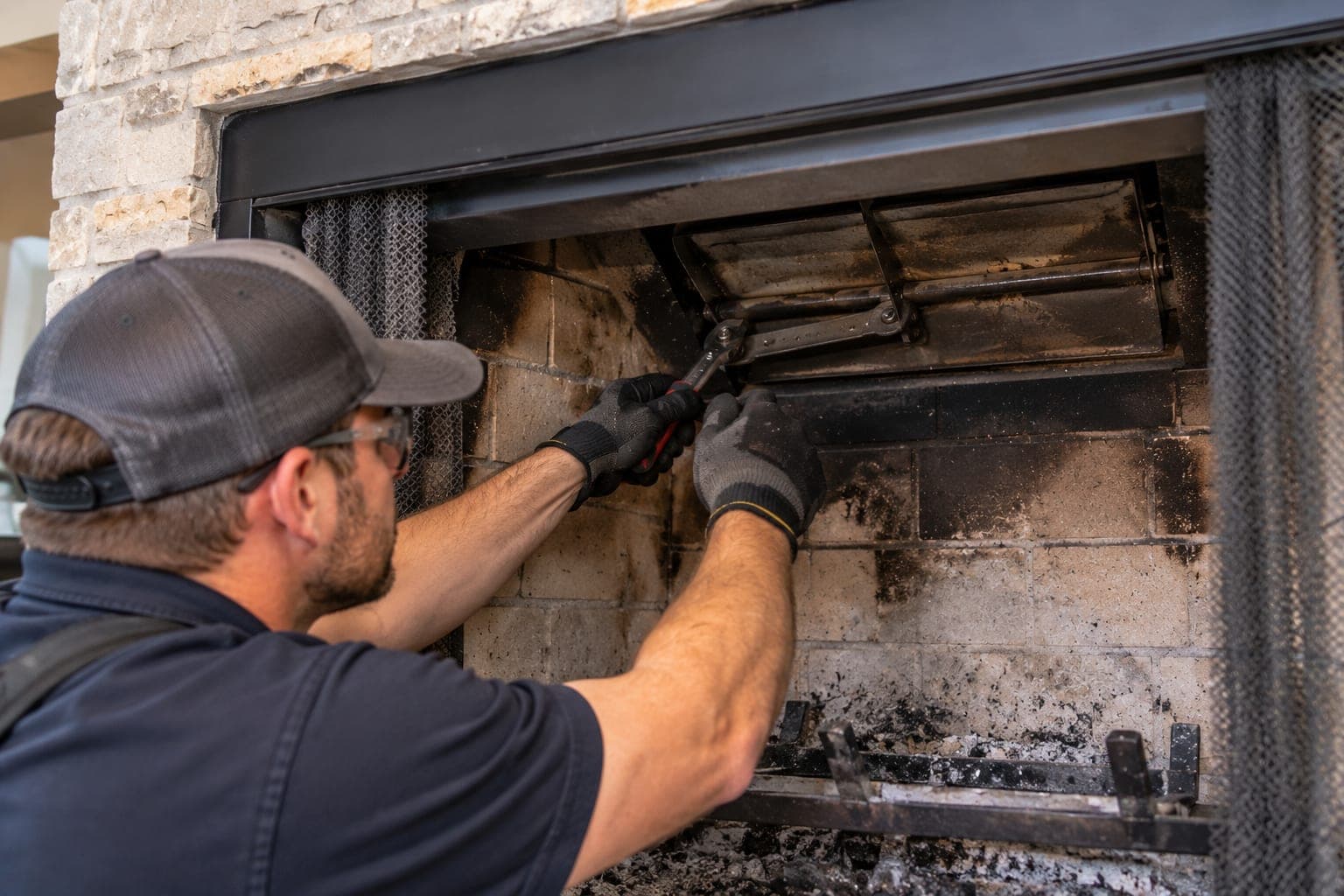
We replace or repoint brick, swap panels, service the damper and restore cast iron or surround pieces as agreed.
Cure and walkthrough
We explain how long the new mortar needs to cure and how to ease back into using the fireplace.
What we check and work on
- Firebrick condition and mortar joints
- Refractory panels in prefab fireplaces
- Hearth and hearth extension, including gaps and loose pieces
- Surround and mantel clearances from the opening
- Damper operation and seal
- Smoke chamber surface and shape
- Flue condition, with a camera when needed
- Cast iron fronts, covers and grates
- Glass doors and frames
- Signs of water entry or past smoke problems
Restoration options and what decides between them
| Feature | Repair in place | Firebox rebuild |
|---|---|---|
| Best when | Damage is limited to joints, a few bricks or panels | Cracking or loose brick is widespread |
| What's kept | Nearly all original material | Surround, hearth and chimney |
| Disruption | Lowest | Moderate |
| Deciding factor | Whether the backing is still sound | How deep the damage goes |
Best when
- Repair in place
- Damage is limited to joints, a few bricks or panels
- Firebox rebuild
- Cracking or loose brick is widespread
What's kept
- Repair in place
- Nearly all original material
- Firebox rebuild
- Surround, hearth and chimney
Disruption
- Repair in place
- Lowest
- Firebox rebuild
- Moderate
Deciding factor
- Repair in place
- Whether the backing is still sound
- Firebox rebuild
- How deep the damage goes
Fireplace restoration cost: what affects the scope
We don't publish prices. Two fireplaces that look alike from the living room can need very different work once the firebox and flue are inspected. These factors decide the scope:
- How much firebrick or panel material needs replacing
- Whether the damage stops at the face or reaches the backing
- Matching older brick, stone or mortar color
- The number and condition of cast iron pieces
- Damper, smoke chamber or flue problems found along the way
- Access to the fireplace and the roof
Estimates for Connecticut homes
Wherever you are in our Connecticut service area, the estimate is free. You'll know what we recommend and why before any work starts.
How to prepare
- Stop using the fireplace at least a day ahead so it is fully cool
- Clear the hearth and move furniture back from the opening
- Take decorations off the mantel
- Note when it was last used and any smoke, odor or draft problems
- Keep pets in another room during the visit
Don't burn in a damaged firebox
Open cracks, loose bricks and missing mortar can let heat reach materials behind the firebox. Smoke and carbon monoxide can also escape into the room through those gaps. Hold off on fires until the fireplace has been checked. For everyday habits, see our guide to fireplace safety.
Related fireplace work
Not every fireplace is masonry. For electric units, see electric fireplace restoration. For branded prefab units, see gas hearth fireplace restoration. If you're replacing rather than restoring, see how electric fireplace installation works. If heat output is your main concern, getting more heat from an efficient fireplace is a good place to start.