On this page
- What electric fireplace repair covers and who needs it
- Signs your electric fireplace needs repair
- What a repair visit involves
- What gets checked and serviced
- Repair options and what decides between them
- What affects the scope of the work
- Electric fireplace repair in East and West Hartford
- How to prepare for the visit
- Safety notes for electric fireplaces
What electric fireplace repair covers and who needs it
An electric fireplace has no chimney, gas line, or combustion. It is an appliance with a heating element and blower, a flame-effect system (LEDs, a rotating reflector, or a projection screen), and a control system (switches, thermostat, remote receiver, and on many models a circuit board). Electric fireplace repair means tracing a symptom back to the part that failed and fixing or replacing it. This covers freestanding units, wall-mounted models, built-in units, and electric inserts that sit inside an existing firebox.
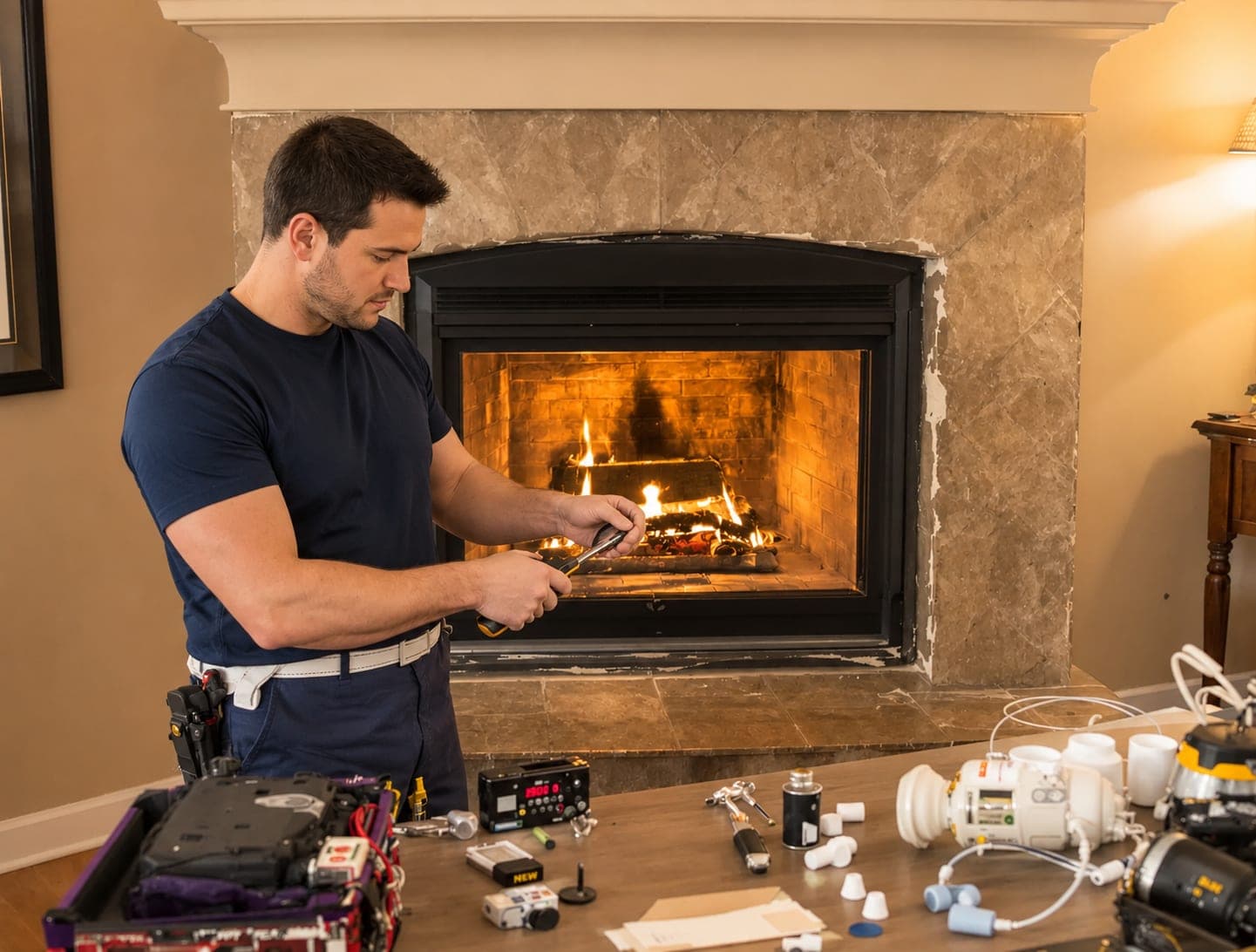
You need repair when the unit stops doing its job or starts behaving in a way that worries you. Many homeowners also call when a unit that ran fine for years starts tripping breakers or putting out a burning smell. If you are new to these appliances, our overview of how electric fireplaces work explains the main parts in plain terms.
Signs your electric fireplace needs repair
- No heat, but the flames work. This usually points to the heating element, the thermal cutoff, the thermostat, or the heater switch.
- Heat works, but no flame effect. This often means failed LEDs or bulbs, a seized flame motor, or a loose connection to the flame assembly.
- Nothing turns on at all. It could be the outlet, the power cord, an internal fuse, the main switch, or the control board.
- Grinding, squealing or rattling. The blower motor or the flame motor is usually wearing out, or debris is reaching the fan.
- Breaker trips when the heater kicks on. The unit may be sharing a circuit with other loads, or it may have an internal fault. Both need checking.
- Burning or hot-plastic smell beyond the first few uses. This can mean dust on the element, but it can also mean overheating wiring.
- Remote or display stops responding. It might be the batteries, the receiver, a pairing problem, or the board.
- Heater shuts off after a few minutes. The overheat protection is tripping, often because of blocked vents or a weak fan.
Stop using it if you see this
Unplug the unit or switch off its breaker if you see scorch marks, melted plastic, sparking, or a hot or discolored outlet or plug, or if you smell burning that does not fade. Keep it off until it has been checked. Emergency calls are accepted, and we are available 24 hours, Sunday through Friday.
What a repair visit involves
How the visit runs
Talk through the symptom
We ask what the unit does and does not do, when the problem started, and whether anything changed, such as a move, a new outlet, or a power outage.
Confirm the power supply
We check the outlet or hardwired connection, the cord and plug, and whether the unit shares a circuit with other heavy loads.
Open and test the unit
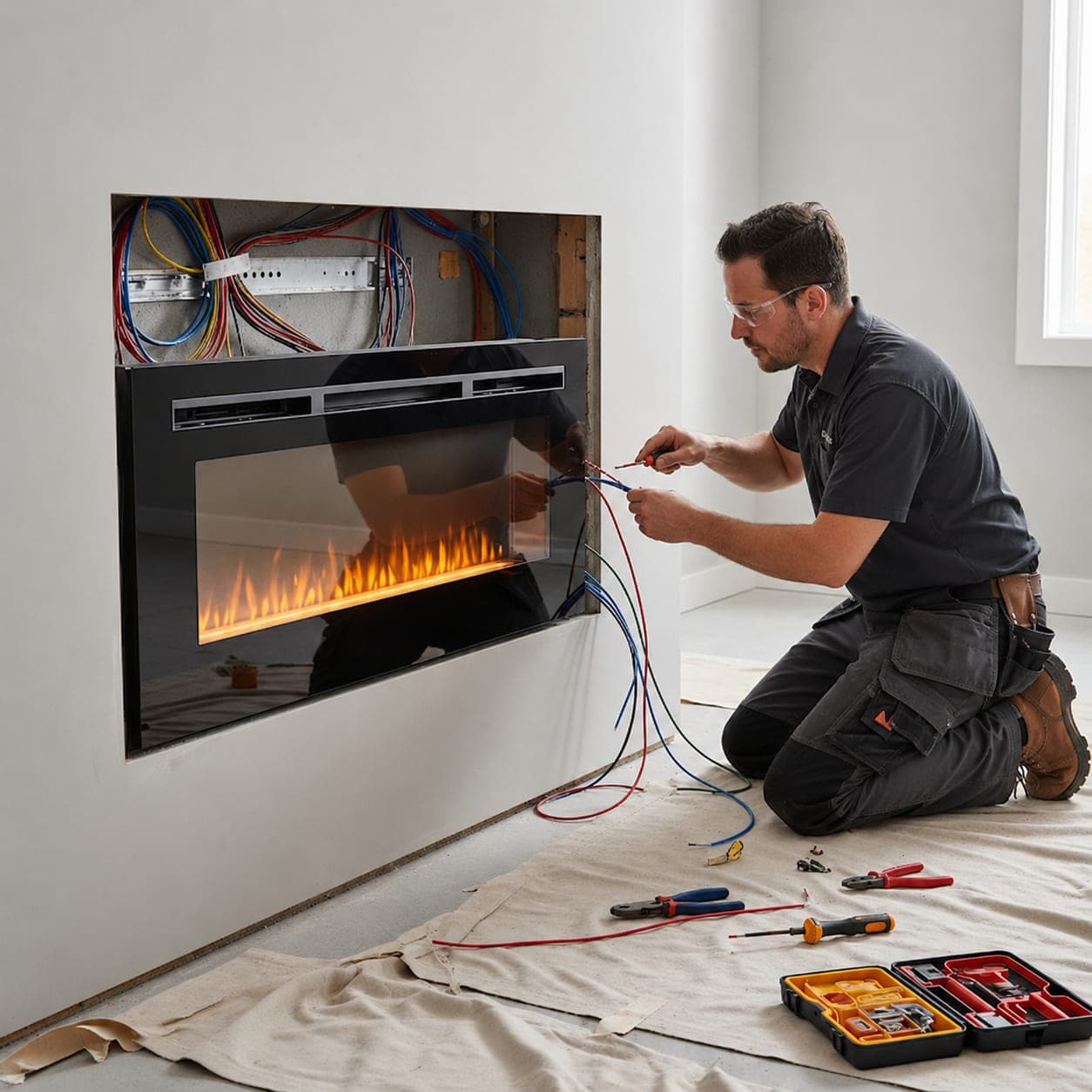
With power off, we remove the access panels and inspect the wiring, connectors, and components. We then test the parts that match the symptom.
Explain the findings and options
You hear what failed, why it likely failed, and whether repair, a broader restoration, or replacement makes the most sense. The estimate is free.
Repair and test
Once you approve, we replace or fix the failed part, clean the airways, reassemble the unit, and run both heat and flame modes to confirm normal operation.
What gets checked and serviced
Electric fireplace repair checklist
- Outlet condition, plug and cord for heat damage or wear
- Circuit sharing and breaker behavior under heater load
- Internal fuse and thermal cutoff (overheat switch)
- Heating element continuity and condition
- Blower motor, fan blade and bearings
- Intake and discharge vents cleared of dust and lint
- Flame motor, reflector rod and LED or bulb array
- Thermostat, switches and control board connections
- Remote, receiver and wall controls
- Glass or front panel secure and undamaged
- Clearance around the unit and nothing blocking the heat outlet
To understand how the heater, fan, and flame sections fit together, see our guide to fireplace anatomy.
Repair options and what decides between them
| Feature | Targeted repair | Restoration or replacement |
|---|---|---|
| Best when | One part has failed and the rest of the unit is sound | Several parts are failing, or there is heat or physical damage |
| Typical work | New element, fan, LEDs, flame motor, receiver or board | Refurbishing multiple systems, or swapping in a new unit |
| Main deciding factor | Whether the correct part is still available | How much of the unit is worn, and your plans for the space |
Best when
- Targeted repair
- One part has failed and the rest of the unit is sound
- Restoration or replacement
- Several parts are failing, or there is heat or physical damage
Typical work
- Targeted repair
- New element, fan, LEDs, flame motor, receiver or board
- Restoration or replacement
- Refurbishing multiple systems, or swapping in a new unit
Main deciding factor
- Targeted repair
- Whether the correct part is still available
- Restoration or replacement
- How much of the unit is worn, and your plans for the space
Part availability matters most. Some older or discontinued models no longer have their boards or flame assemblies in stock, and that can rule out a simple repair. If the unit looks tired overall but still works, electric fireplace restoration may be worth a look before you replace it.
Superior and other manufacturer units
Searches for Superior electric fireplace repair are common, and the same applies to other manufacturers. Before you get in touch, find the model and serial number. It is usually on a label behind the front panel or on the back. With that, we can check what parts exist for your unit before anything is ordered. If you still have the owner's manual, keep it out for the visit.
Electric fireplace installation repair
Some problems trace back to the original setup rather than a worn part. Common examples are a unit plugged into an overloaded circuit, an insert pushed in tight against its intake vents, a wall unit mounted where heat collects, or a hardwired connection that was never fully secured. Fixing these can mean refitting or remounting the unit, clearing airflow paths, or correcting how it connects to power. If the problem is in the home's own wiring or electrical panel, we will tell you so. That work belongs with an electrician.
What affects the scope of the work
- Which component failed, and whether more than one is involved
- Whether the part is in stock or has to be ordered
- How the unit is installed: freestanding, wall-mounted, built-in or insert
- How easy the unit is to reach and remove from its surround
- Signs of heat damage that widen the repair
- Whether the cause is the unit itself or its power supply
Electric fireplace repair in East and West Hartford
Homeowners also search for electric fireplace repair in East Hartford and West Hartford. The diagnosis and repair process is the same as described above. Get in touch with your address and we will confirm scheduling.
How to prepare for the visit
- Write down the model and serial number, and when the problem started
- Clear a few feet of space around the unit and remove decor from the mantel or top
- Leave the unit off and unplugged so it is cool when we arrive
- Have the remote ready and know which breaker feeds the unit
- Keep pets and children out of the work area
Safety notes for electric fireplaces
Everyday habits that prevent repairs
Plug the unit directly into a wall outlet, never into an extension cord or power strip. Keep furniture, curtains, and blankets away from the heat outlet. Vacuum the intake and outlet grilles regularly so the fan is not pulling in lint. Our fireplace safety guide covers more, and our piece on getting the most heat from a fireplace explains settings and placement.