On this page
What brick restoration takes on
A chimney rises above the roofline with all four faces exposed to rain, wind and sun, so its masonry ages faster than the walls of the house below it. Restoration deals with that wear as a whole instead of patching the one crack someone noticed from the driveway. Typical work includes:
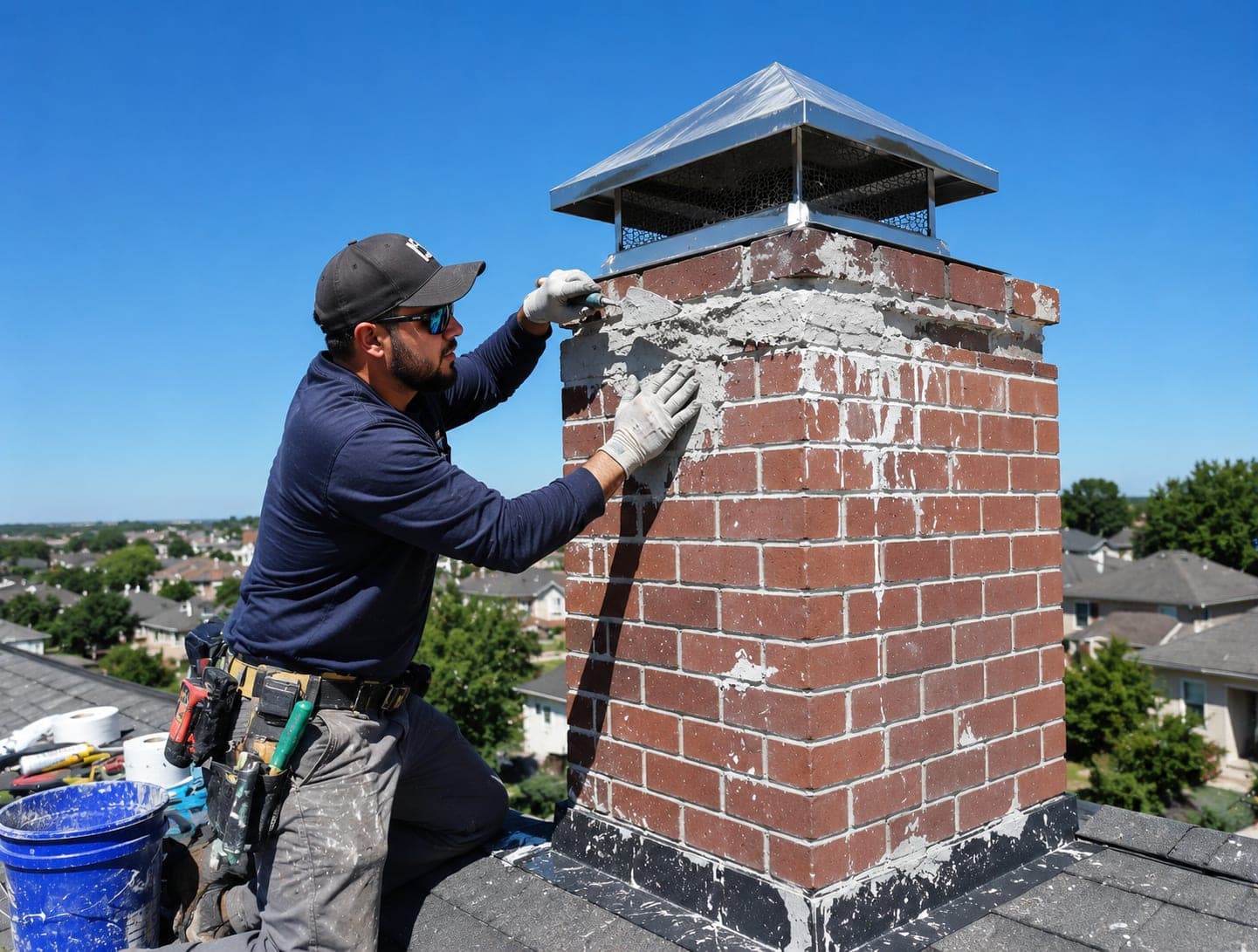
- Spalled brick: faces that have popped off after water froze inside them. Damaged units are cut out and replaced.
- Eroded mortar joints: sandy, recessed or missing mortar that lets water into the stack.
- White staining (efflorescence): a sign that water is moving through the masonry and carrying salts out with it.
- Loose top courses and a cracked crown: the area that takes the most weather and often fails first.
If the problems extend past the bricks into flashing, the damper or the firebox, our chimney and fireplace repair work handles those once the masonry restoration is done.
How the visit works
Spalling brick is a sign water is freezing or soaking inside the masonry. Mortar harder than the brick can make the brick itself crack.
Assess the masonry
Joints, brick faces, the crown and the stack's alignment are checked.
Match the materials
Mortar is chosen to suit the existing brick, so the repair doesn't cause new cracks.
Repair
Failed joints are cut out and repointed; damaged brick is replaced; the crown is sealed or rebuilt.
Finish
The work is cleaned up and you're shown what was done.
Stay off the roof
Looking from the ground or with binoculars is safe. Climbing a steep or wet roof to inspect a chimney is not — leave that to someone with the right equipment.
What gets checked
- Mortar joint depth and condition
- Crown cracks and overhang
- Brick faces for spalling
- Efflorescence and water staining
- Flashing where masonry meets the roof
- Stack alignment and loose courses
When to book chimney brick restoration
- A leaning or cracked stack
- White efflorescence staining on the chimney
- A crown with cracks or missing pieces
- Mortar that is sandy, recessed or falling out of the joints
- Loose bricks at the top of the chimney
Getting ready for the visit
- Make sure the technician can reach the roof or attic access if it's needed.
- Move rugs, photos and anything fragile away from the work area.
- Let the fireplace or stove cool completely — ideally no fire for 24 hours before the visit.
- Clear a few feet of space in front of the hearth or appliance.
Brick chimney mortar restoration
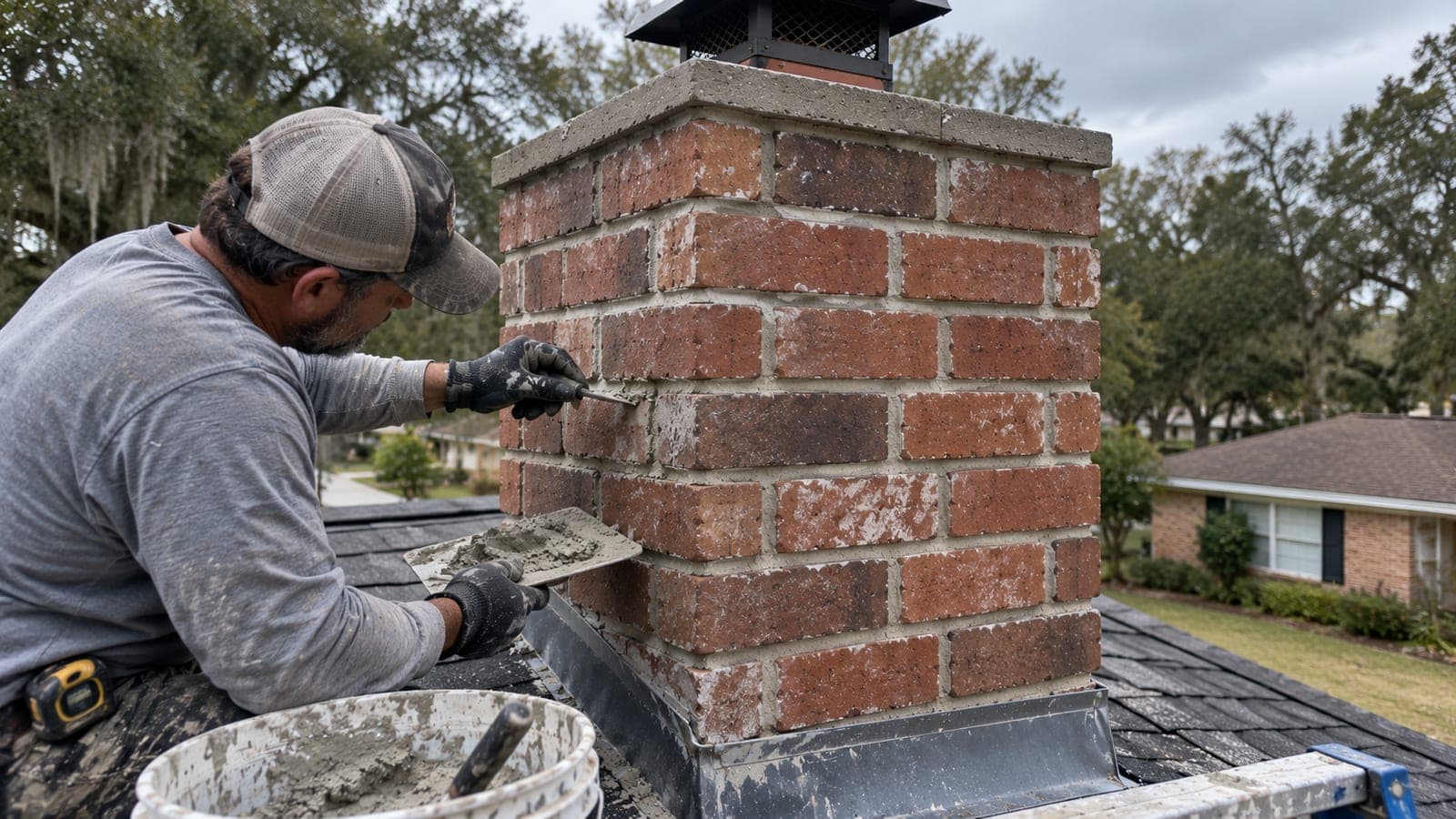
Mortar is meant to be the sacrificial part of a brick wall. It is softer than the brick, so when moisture and movement stress the chimney, the joints wear first and can be renewed. Brick chimney mortar restoration, usually called tuckpointing, means grinding out deteriorated mortar to a sound depth, packing fresh mortar back in, and tooling the joints so they shed water.
The mix matters. Hard, cement-rich mortar packed against older, softer brick pushes the stress into the brick, and that is when faces start breaking off. We choose a mortar suited to the brick on your chimney and aim to match the color and joint profile of what is already there. Weathered brick rarely matches perfectly, and we will tell you that up front.
When we provide brick chimney mortar restoration, and when a rebuild is the better call
Repointing makes sense when the bricks are mostly sound and the chimney stands straight. New mortar won't hold a chimney together if the stack leans, if bricks come loose by hand, or if the top has separated. In those cases the damaged section is taken down and rebuilt. See what building a new brick chimney involves for that side of the work.
Outside repairs, inside problems
New joints on the exterior don't fix a cracked clay flue inside. If smoke, odor or debris suggest liner damage, our guide to understanding chimney liners explains what that means.
Mortar restoration for Connecticut homes
We take brick chimney mortar restoration calls from homeowners in Hartford and across Connecticut. Estimates are free, and same-day visits happen when the schedule allows. If a storm knocks bricks loose or opens a joint you're worried about, our Sunday–Friday 24-hour chimney line takes that call too.