On this page
What goes wrong with chimney caps
Caps sit at the most exposed point of the house, so damage tends to come from weather, age and the fire below. The most common problems are:
- Wind damage: lids bent flat against the screen or torn partly loose in a storm
- Rust: galvanized steel caps corroding until the lid or mesh breaks through
- Clogged mesh: soot and creosote building up on the screen and choking the draft
- Torn screens: openings big enough for birds, squirrels or raccoons to get in (see torn or damaged animal screens)
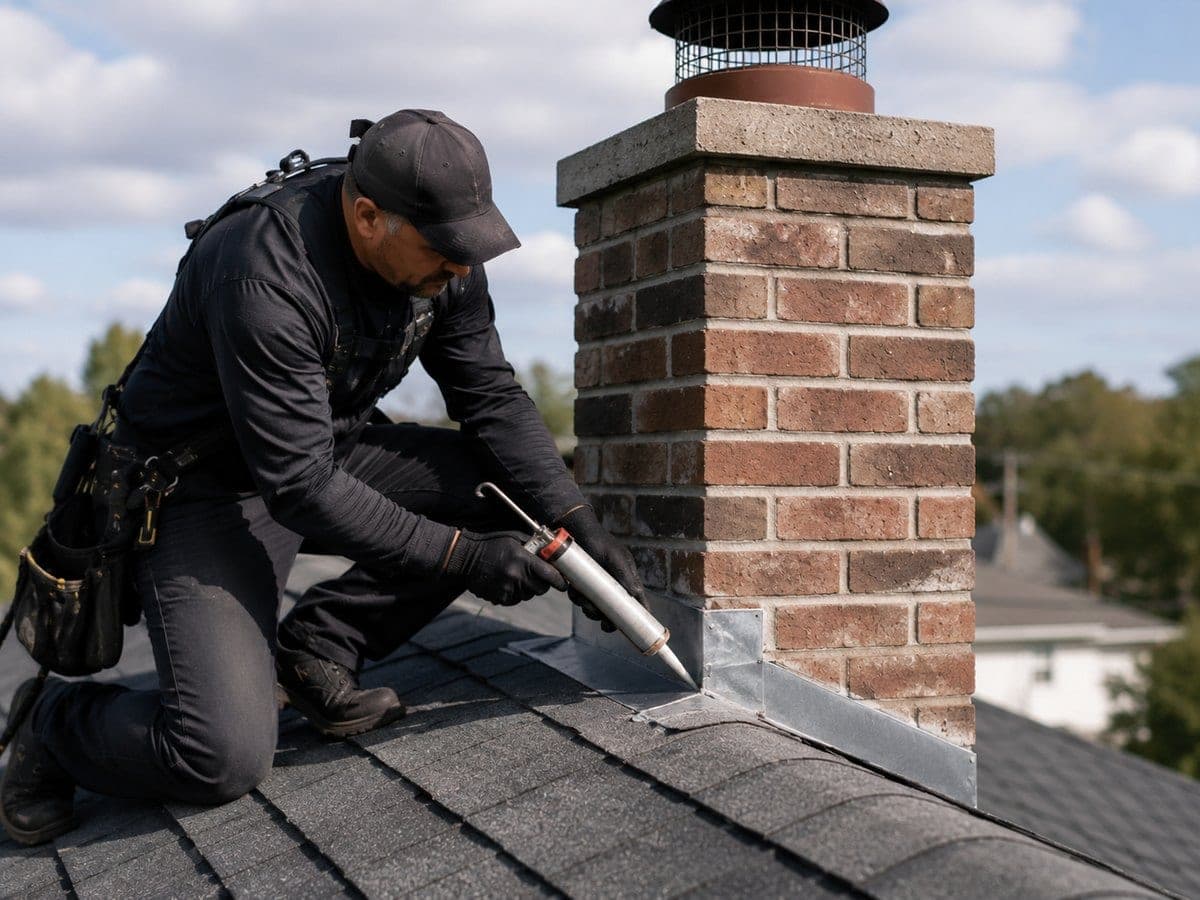
- Loose mounting: fasteners backing out so the cap shifts or sits crooked on the flue
How cap work is done
A cap that's loose, bent or rusted can blow off in a storm or let animals in around its edges. Without a cap, rain runs straight into the flue and the damper, and rusts or soaks what's below.
Measure the flue
Flue size, how far the tile sticks up, and whether a single-flue or a full-width cap suits the chimney.
Check the top
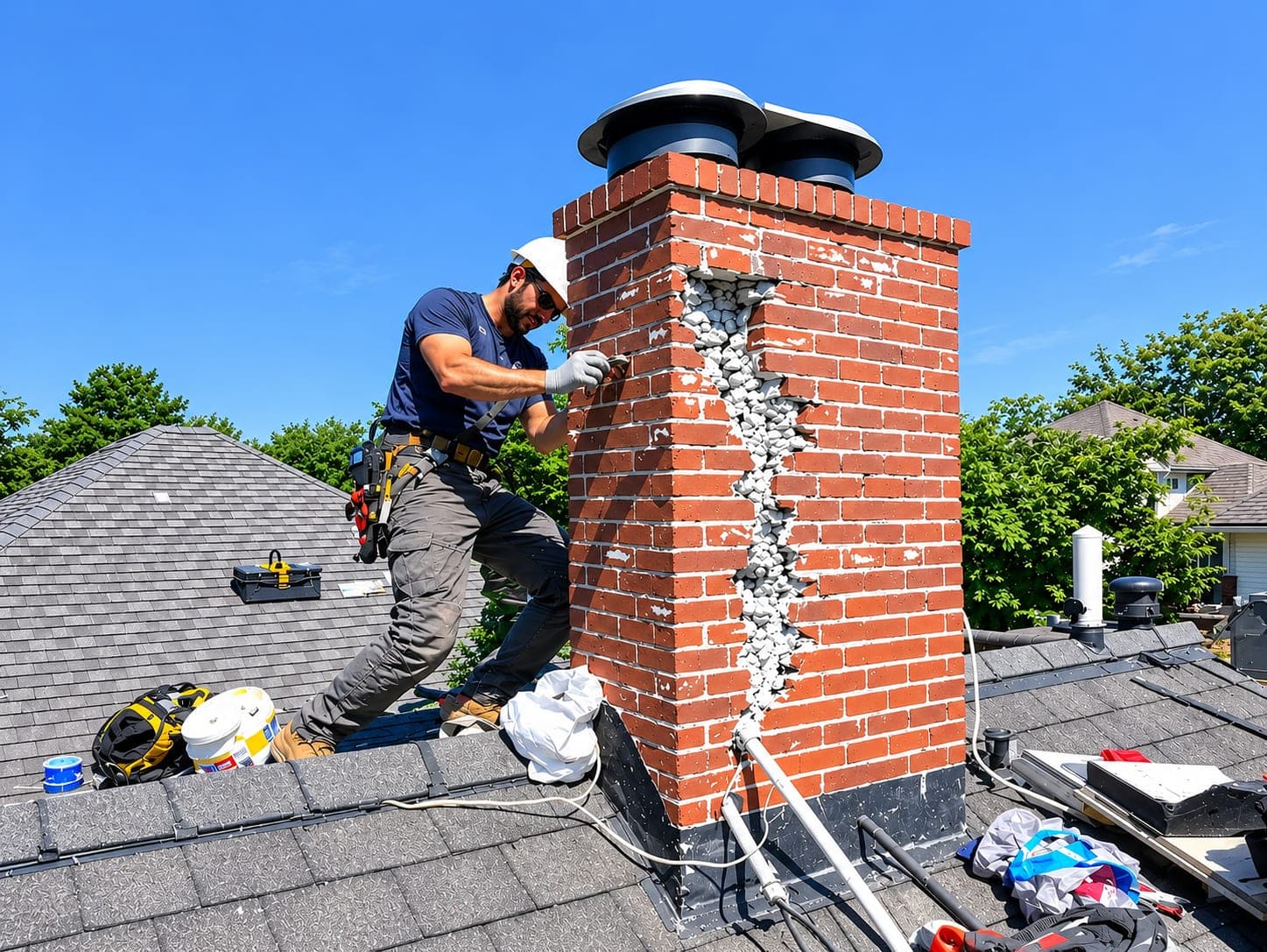
The crown and flue tile the cap mounts to, and any damage from water or animals.
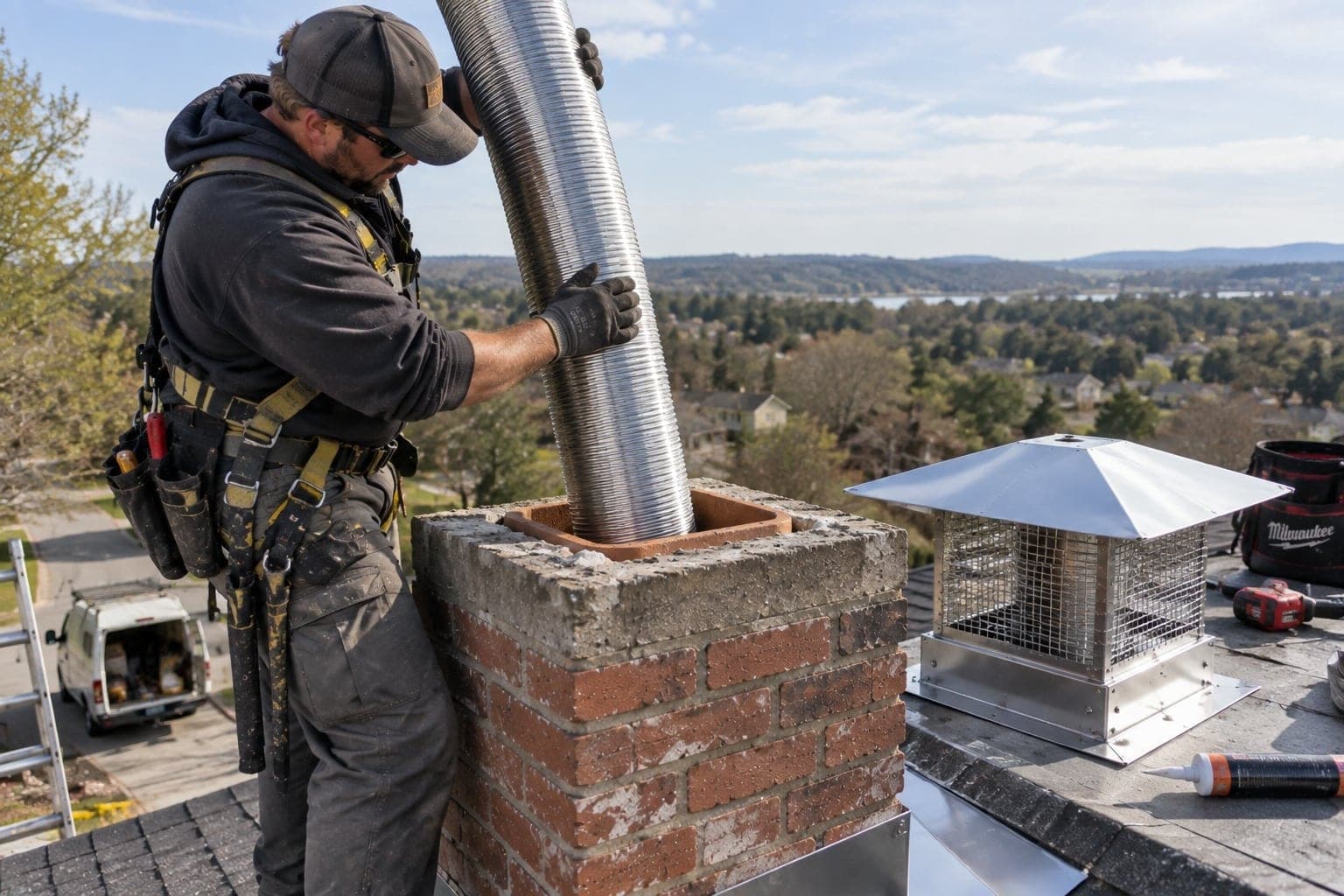
Fit and fasten
The cap and mesh are secured to the flue or crown so wind can't lift them.
Confirm
Draft is checked and you see what was installed.
Stay off the roof
Looking from the ground or with binoculars is safe. Climbing a steep or wet roof to reach a chimney is not — leave that to someone with the right equipment.
What we look at
- Rust or corrosion
- Clearance between the hood and the flue
- Flue size and tile condition
- Mesh size and condition
- Crown under the cap
- Fasteners and mounting
Getting ready for the visit
- Note any animal sounds or debris in the firebox.
- Keep the fireplace unused the day of the visit.
- Make sure the roof can be reached from the driveway or yard.
When to book chimney cap repair
- Rust stains running down the chimney
- Mesh that's torn, rusted through or clogged with creosote
- A cap that's missing, bent, rusted or leaning
- Rain dripping into the firebox
- Animals or nesting material in the flue
Repair the cap or replace it?
| Feature | Repair | Replace |
|---|---|---|
| Bent lid | Solid metal that can be straightened and re-secured | Lid cracked, torn or rusted through |
| Screen | Clogged mesh that cleans up, or a small torn section | Mesh corroded or torn on several sides |
| Mounting | Loose fasteners or brackets on a sound flue | Cap doesn't fit the flue size or shape |
| Cap missing | Not applicable | A new cap is installed |
Bent lid
- Repair
- Solid metal that can be straightened and re-secured
- Replace
- Lid cracked, torn or rusted through
Screen
- Repair
- Clogged mesh that cleans up, or a small torn section
- Replace
- Mesh corroded or torn on several sides
Mounting
- Repair
- Loose fasteners or brackets on a sound flue
- Replace
- Cap doesn't fit the flue size or shape
Cap missing
- Repair
- Not applicable
- Replace
- A new cap is installed
When a repair isn't worth it, cap replacement, cap installation, animal screens and spark arrestors are all part of the work offered. If your flue has a stainless steel liner, the cap often attaches to the top of the liner rather than the flue tile; our guide to how chimney liners are built explains why that matters.
What to look for in chimney cap repair
Many homeowners search for rated chimney cap repair, and reviews are one useful signal. The work itself tells you more. Whoever repairs your chimney cap should also be paying attention to what's around and beneath it.
Questions worth asking any contractor
- Will you check the crown and flue tile the cap sits on?
- Will you look down the flue for nests or debris before closing it up?
- Is the cap sized to my flue, and does it cover every flue on the chimney?
- Can you show me photos of the damage and the finished repair?
Cracked crowns, failed flashing or loose masonry found during a cap visit can be handled through chimney and fireplace repair work. If a storm leaves a cap hanging or rain pouring into the firebox, after-hours chimney service is available around the clock, Sunday through Friday, and estimates are free.