On this page
Prefab metal chimney construction, explained
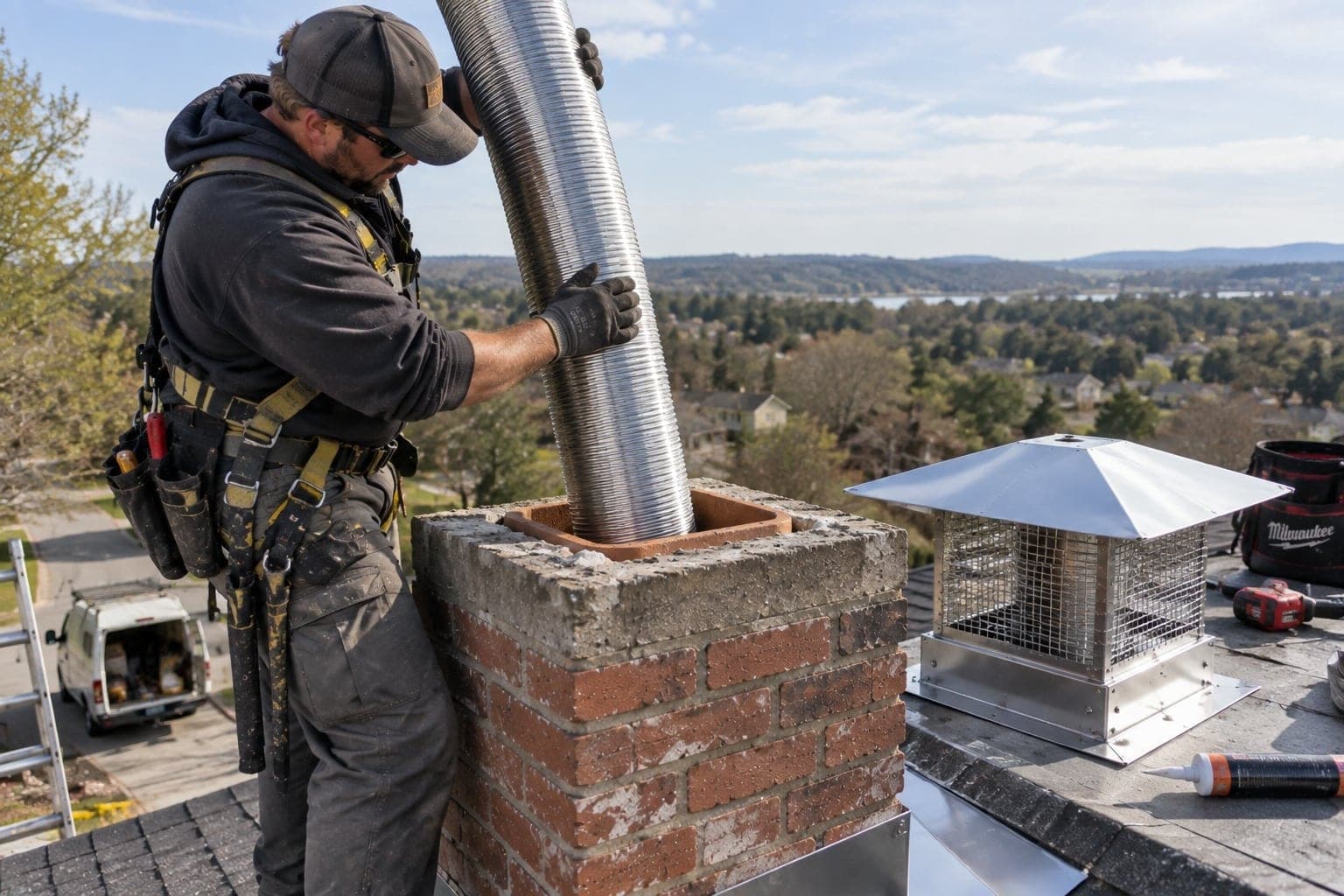
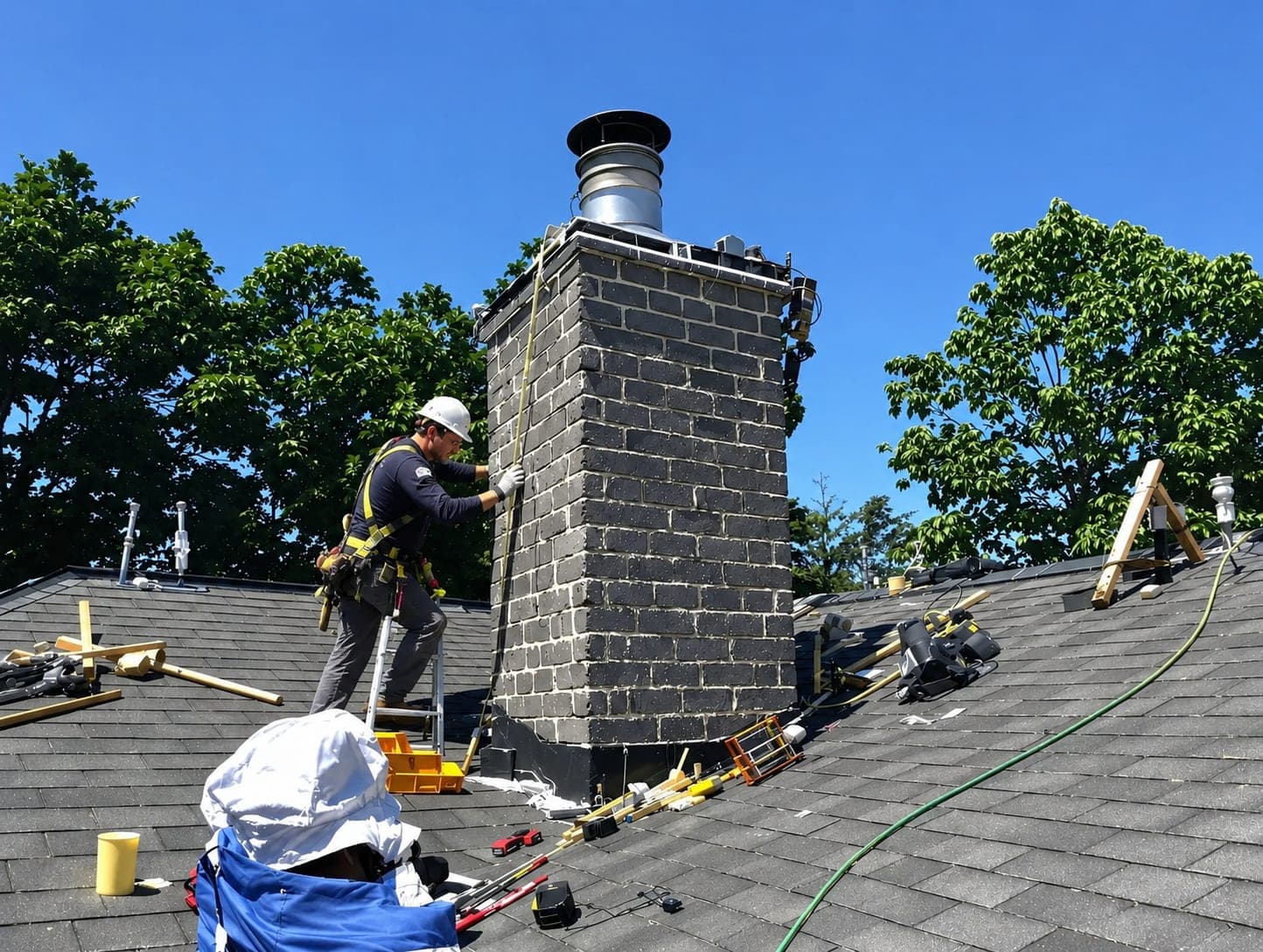
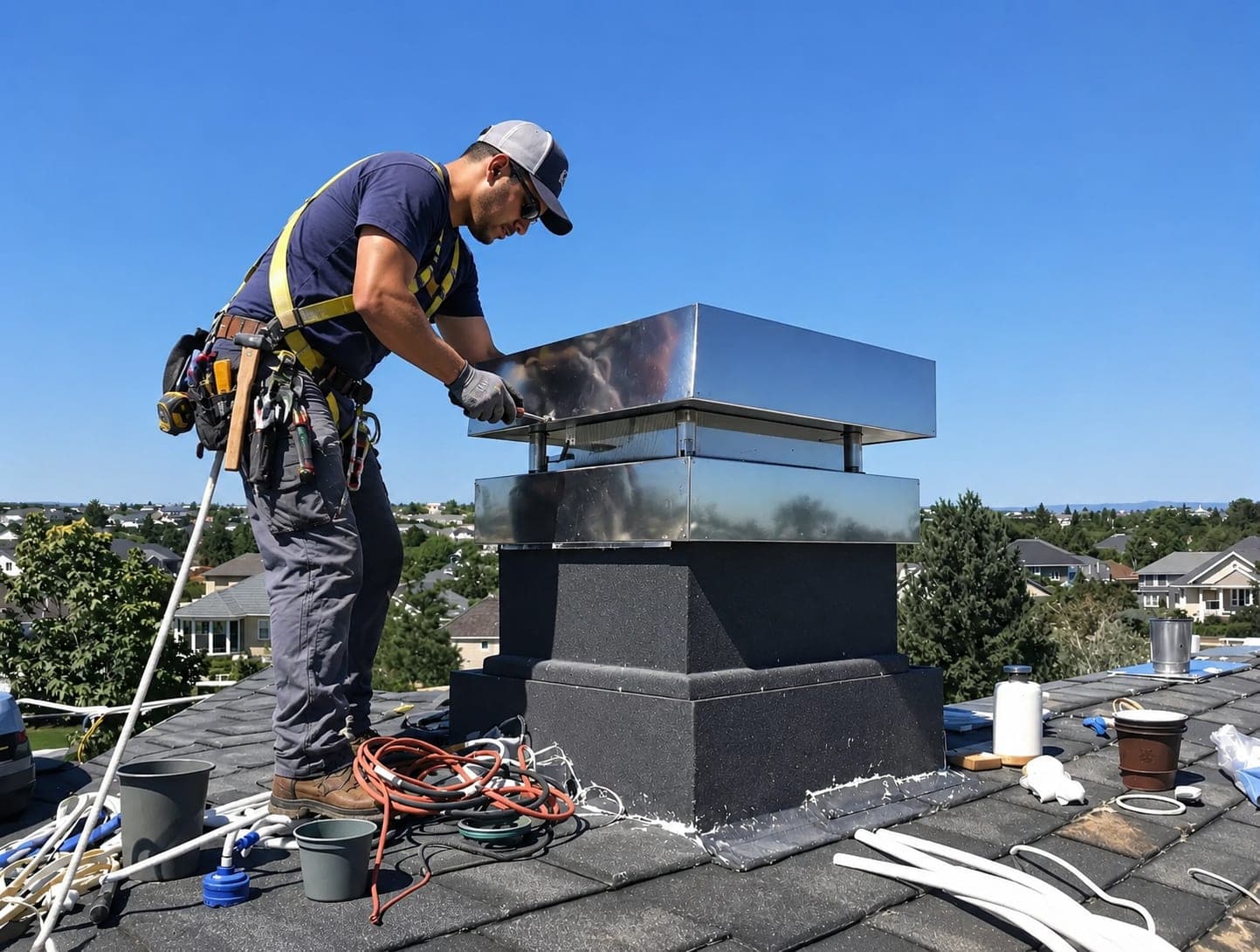
A factory-built chimney is a stack of manufactured sections. Each has an inner flue, an outer casing, and either insulation or an air space between them. The sections lock together and pass through ceiling supports and firestops. They end in flashing or a framed chase with a cover and termination cap on top. The manufacturer tests and lists every part as one system, so components from different brands can't be mixed.
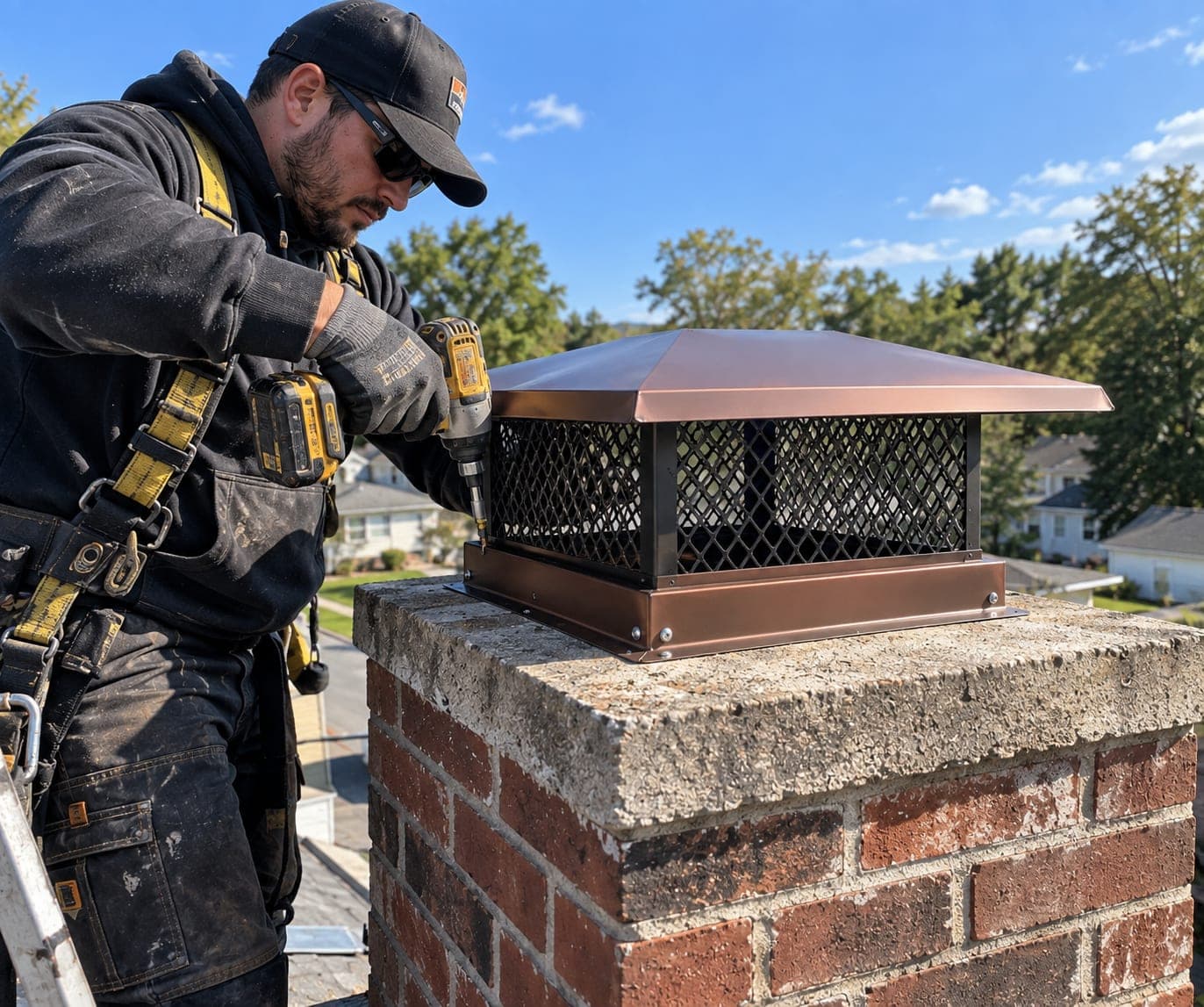
Double-wall metal chimney installation
Insulated double-wall chimney pipe is the usual choice for wood stoves and many fireplaces. The insulation keeps the outer wall cooler and the flue gases warmer, which helps draft. Single-wall stovepipe is only a connector between the stove and the chimney. It should never pass through a ceiling, wall or roof as the chimney itself.
Metal prefab chimney installation with a fireplace
A prefab fireplace is listed together with a specific chimney. When the firebox is replaced, the chimney often has to change too. We install the chimney system the fireplace calls for, including the chase cover and cap.
Metal chimney flues compared
| Flue type | Typical use | Good to know |
|---|---|---|
| Insulated double-wall chimney | Wood stoves and many fireplaces | Must be rated for the appliance it serves |
| Air-cooled multi-wall chimney | Factory-built fireplaces listed for it | Only with the fireplace it was tested with |
| Stainless liner in masonry | Relining an existing brick chimney | See how chimney liners are chosen |
| Gas vent pipe | Certain gas appliances | Never for wood or other solid fuel |
| Single-wall stovepipe | Connector only | Not a chimney |
Some homeowners weigh a metal system against masonry. If that's you, the masonry route is a different project with its own trade-offs. Our overview of installation work on existing chimneys covers caps, liners and rebuilds.
Fixing blocked metal chimneys
Metal flues block up in predictable ways: nests and leaves under a missing or damaged cap, creosote glazed onto the cap screen, debris after a storm, or a section that has separated. Signs include smoke spilling into the room, a fire that won't stay lit, or a strong odor when the weather turns damp. We clear the blockage, then deal with the cause, whether that's a new cap, a screen or a rusted chase cover. Emergency calls are accepted 24 hours a day, Sunday through Friday.
What the visit covers
A damper that seals properly stops warm air escaping when the fireplace isn't in use. A missing or rusted cap lets rain, leaves and animals into the flue.
Measure
The flue and the top of the chimney are measured so the part fits properly.
Choose the part
Material and type are matched to the chimney and the appliance — stainless steel, copper or a liner kit.
Install
The part is secured to the crown, flue tile or chase and sealed where needed.
Check
Draft and fit are checked and you're shown what was installed.
What we look at
- Chase top and cover fit on prefab chimneys
- Liner sizing for the appliance
- Crown condition where a cap mounts
- Corrosion on metal parts
- Flue size and shape
- Screen mesh and spark arrestor
When to book chimney cap installation
- Animals or nesting material in the flue
- A cap or chase cover that is rusted, loose or missing
- Cracked or missing flue tiles
- Rain dripping into the firebox
- A damper that sticks, won't close or lets cold air in
Getting ready for the visit
- Make sure the technician can reach the roof or attic access if it's needed.
- Keep pets in another room while the work area is open.
- Write down what you've noticed and when it happens — smells, smoke, sounds or stains.
- Move rugs, photos and anything fragile away from the work area.
Stay off the roof
Looking from the ground or with binoculars is safe. Climbing a steep or wet roof to inspect a chimney is not — leave that to someone with the right equipment.