On this page
What professional chimney installation covers
Most people looking for chimney installation already have a chimney. What they need is a part that is missing, worn out or wrong for the appliance it serves. From the top of the stack down into the flue:
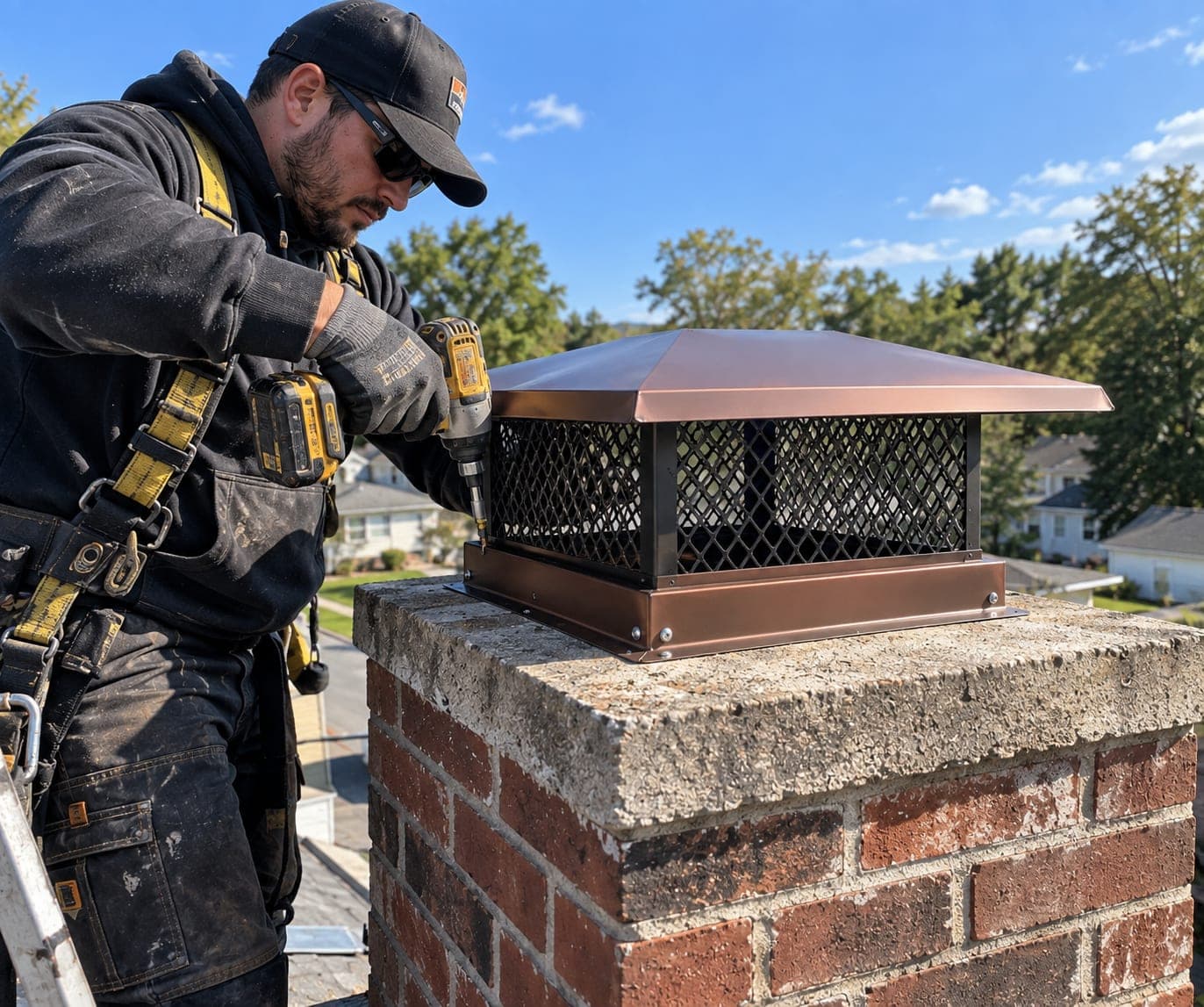
- Chimney caps keep rain, leaves and nesting animals out of the flue. If cold air also drops through your fireplace all winter, see how a cap with a built-in damper seals the top of the flue.
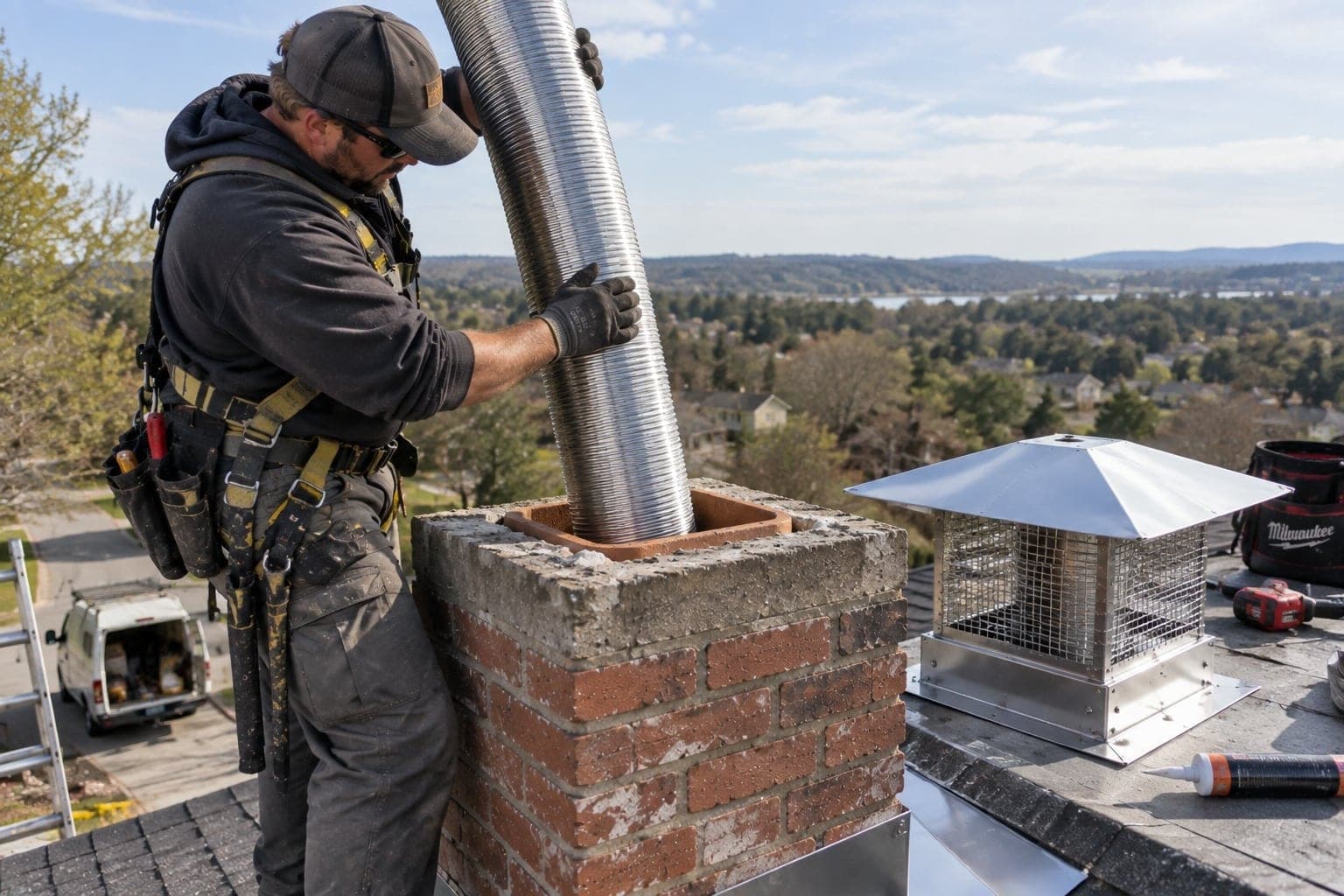
- Chimney liners protect the surrounding masonry from heat and corrosive exhaust, and a correctly sized liner helps an appliance draft. Our chimney liner installation service covers relining for fireplaces, stoves and inserts.
- Spark arrestors and animal screens sit at the flue opening to stop embers from landing on the roof and to keep birds and squirrels out.
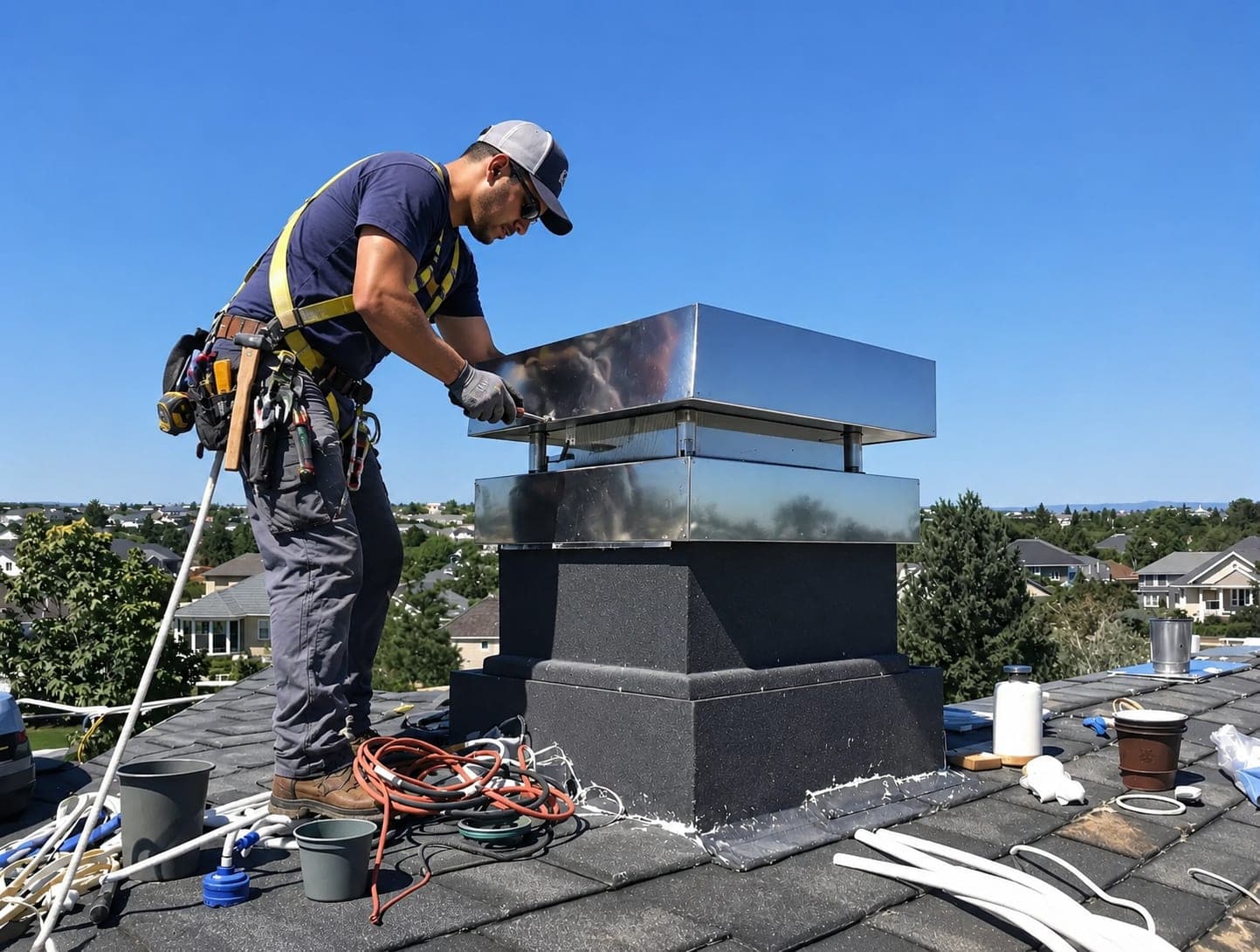
- Chase covers cap prefab chimneys enclosed in a framed chase, where a rusted or flat cover can send water straight into the structure.
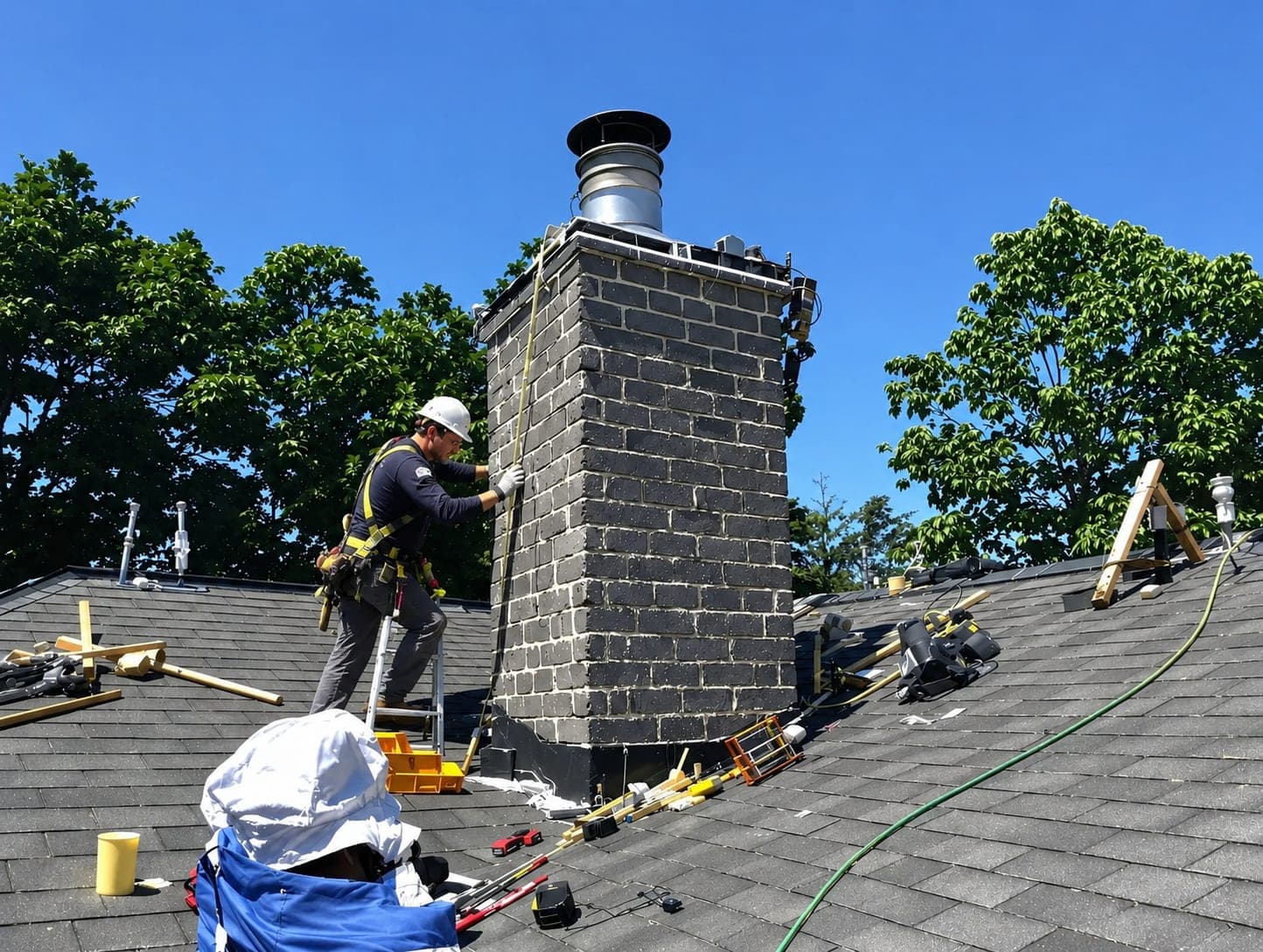
- Chimney rebuilds are for masonry above the roofline that is too far gone to patch. You can read about rebuilding a chimney in brick on its own page.
Why fit matters more than the part itself
Many chimney complaints trace back to a component that was installed but never matched to the chimney. If the cap is too short over a tall flue tile, wind can push smoke back down. A liner the wrong diameter for a wood stove can draft poorly and collect creosote faster. If the screen mesh is too fine, it can clog and choke the fire. These problems often look like something else, such as a smoky room, a stain on the ceiling or a stove that won't burn hot.
| Installation | Typical reason it's needed | Matched to |
|---|---|---|
| Chimney cap | Water, debris or animals in the flue | Flue size and number of flues on the crown |
| Flue liner | Cracked tile, unlined chimney or a new stove or insert | Appliance type and its required flue size |
| Spark arrestor | Wood burning near roofing or trees | Fuel type and mesh opening |
| Chase cover | Rust streaks or leaks on a prefab chase | Chase dimensions and flue collar |
| Rebuild | Loose brick, failed crown, leaning stack | Existing footprint and flue layout |
The installation you never see
A liner runs the full height of the chimney inside the flue, so homeowners rarely think about it until a cleaning or inspection turns up gaps or cracked tiles. If you want to understand the options before you call, our primer on how chimney liners work explains clay, metal and cast-in-place liners in plain terms.
Free estimates, scheduled around you
Estimates are free. Same-day visits are possible when the schedule allows, and we take calls 24 hours a day, Sunday through Friday, including emergencies.
What happens during the visit
A missing or rusted cap lets rain, leaves and animals into the flue. A damper that seals properly stops warm air escaping when the fireplace isn't in use.
Measure
The flue and the top of the chimney are measured so the part fits properly.
Choose the part
Material and type are matched to the chimney and the appliance — stainless steel, copper or a liner kit.
Install
The part is secured to the crown, flue tile or chase and sealed where needed.
Check
Draft and fit are checked and you're shown what was installed.
Signs it's time for chimney cap installation
- A damper that sticks, won't close or lets cold air in
- Animals or nesting material in the flue
- A new insert or stove that needs a matched liner
- A cap or chase cover that is rusted, loose or missing
What the technician checks
- Flue size and shape
- Damper seal and operation
- Chase top and cover fit on prefab chimneys
- Crown condition where a cap mounts
- Liner sizing for the appliance
- Corrosion on metal parts
- Screen mesh and spark arrestor
Stay off the roof
Looking from the ground or with binoculars is safe. Climbing a steep or wet roof to inspect a chimney is not — leave that to someone with the right equipment.
How to prepare
- Let the fireplace or stove cool completely — ideally no fire for 24 hours before the visit.
- Write down what you've noticed and when it happens — smells, smoke, sounds or stains.
- Clear a few feet of space in front of the hearth or appliance.
- Move rugs, photos and anything fragile away from the work area.