On this page
- What a chimney liner does and who needs one
- What a bad chimney liner looks like
- Flue and liner assessment before installation
- What the installation visit involves
- Liner options and what decides between them
- Factors affecting chimney liner installation costs
- Factors affecting chimney liner lifespan
- Chimney liner installation services across Connecticut
- How to prepare for your appointment
What a chimney liner does and who needs one
A chimney liner is the inner channel that carries smoke and exhaust from your fireplace, wood stove, insert or furnace up and out of the house. Brick and mortar alone are porous. Heat, moisture and acidic byproducts wear them down, and gaps can let heat reach nearby wood or let gases seep into the home. The liner is the barrier that prevents this.
Homeowners usually need a new liner in a few situations: the existing clay tiles are cracked or shifted, the chimney was built without a liner, a new appliance needs a differently sized flue, or a chimney fire has damaged the old one. For background on materials and how flues work, see our guide to understanding chimney liners.
What a bad chimney liner looks like
Most liner damage is hidden inside the flue, so warning signs often show up elsewhere first. A bad chimney liner may cause one or more of these:
- Pieces of clay tile, flaky shards or crumbled mortar collecting at the bottom of the firebox or smoke shelf
- Smoke rolling into the room, or a fire that is hard to start and keep drafting
- Stains, dampness or white mineral deposits on interior walls near the chimney
- Strong smoky or sour odors, especially in humid weather
- Visible cracks, open joints or gaps between tile sections when the flue is viewed from above or by camera
- Rusted, crushed or separated sections in an older metal liner
- Damage found after a chimney fire, even if the fire went out on its own
Stop using the appliance if you suspect liner damage
A cracked or missing liner can let heat reach combustible materials and let carbon monoxide escape into the home. If you see tile debris, smell exhaust indoors or had a recent chimney fire, stop using the fireplace or stove until the flue is checked. Working carbon monoxide and smoke detectors are worth confirming now. We accept emergency calls and are available 24 hours, Sunday through Friday.
Flue and liner assessment before installation
Every job starts with a flue and liner assessment. A camera inspection lets us see the full height of the flue, not just the top and bottom, and confirm whether repair or full relining makes sense. Sometimes a section can be addressed with chimney liner repair; often the damage is widespread enough that a new liner is the better path.
What we check and measure
- Condition of existing tiles, joints and any metal sections along the full flue
- Inside dimensions of the flue and any offsets or bends
- Total chimney height from appliance connection to the top
- Type of appliance and its flue outlet size and fuel
- Draft behavior and signs of smoke or condensation problems
- Smoke chamber, damper area and firebox condition
- Crown, cap and flashing at the top of the chimney
- Creosote buildup that needs removal before relining
What the installation visit involves
How a liner installation typically goes
Estimate and plan
We review the assessment findings with you, explain the liner options that fit your chimney and appliance, and provide a free estimate.
Prepare the work area
Floors and the area around the fireplace or stove are covered, and the flue is cleaned so the new liner goes into a clear channel.
Clear obstructions
Damaged tile, loose debris or old liner sections are removed where needed so the new liner can pass through the full height.
Install the liner
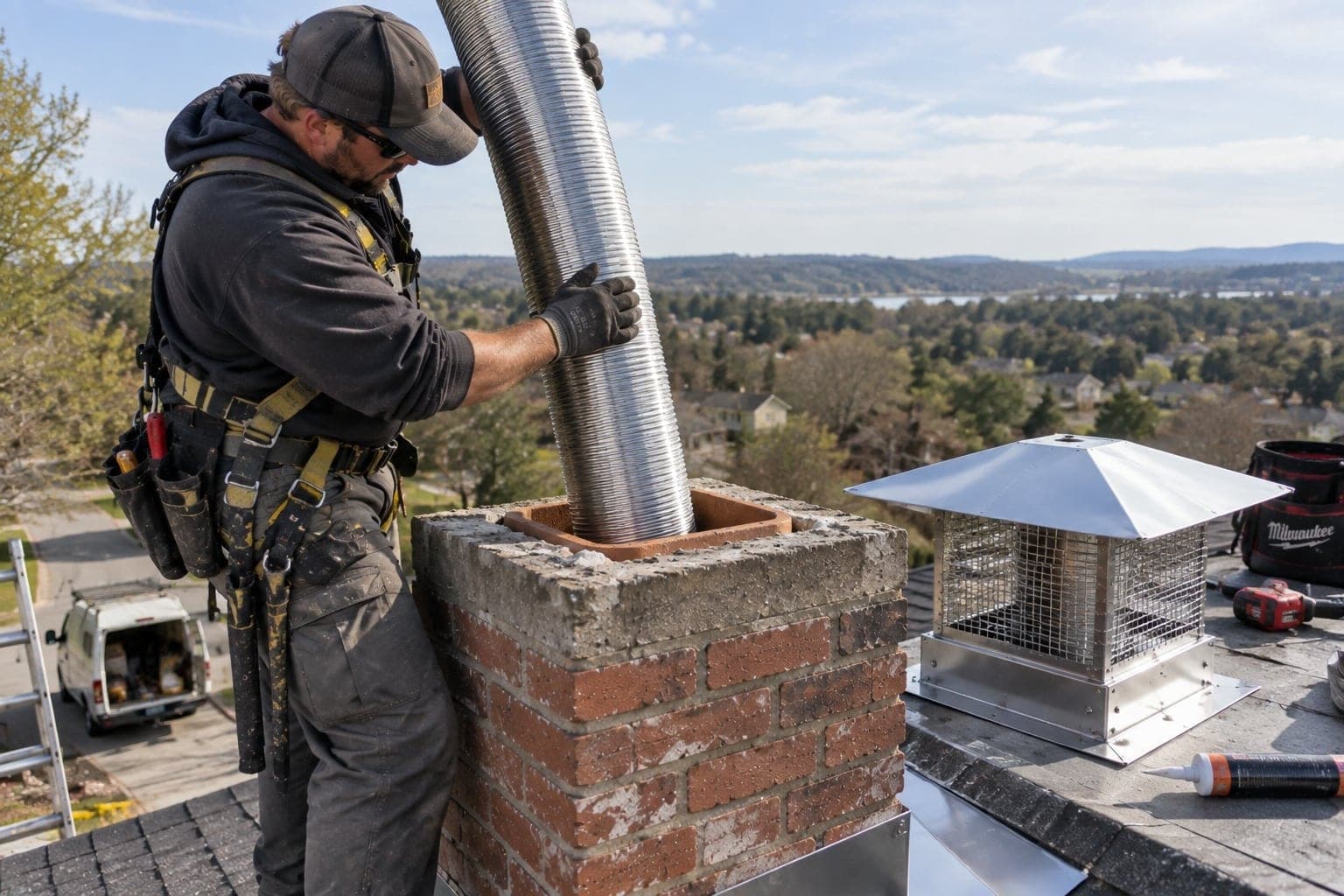
The liner is lowered from the top or assembled in sections, then connected to the appliance or smoke chamber at the bottom.
Insulate and seal
Where the design calls for it, insulation is added around the liner, and the top is sealed with a top plate or termination.
Cap and final check
A cap is fitted to keep out rain and animals, connections are checked, and draft is verified before we hand the system back to you.
Liner options and what decides between them
There is no single best liner. The right choice depends on what you burn, the shape of the chimney and the condition of the masonry.
| Feature | Stainless steel | Cast-in-place |
|---|---|---|
| How it works | Flexible or rigid metal pipe run down the existing flue | A mortar-like mix poured or formed around an inflatable form inside the flue |
| Best suited to | Wood stoves, inserts, and gas or oil appliances; flues with bends often take flexible liner | Older chimneys with irregular flues or where added structural support is useful |
| Flue size | Sized to the appliance outlet, often reducing an oversized flue | Can create a smooth flue sized to the appliance within the existing chimney |
| Considerations | Must match fuel type; insulation may be needed for proper draft and clearances | Requires a chimney sound enough to hold the poured material |
How it works
- Stainless steel
- Flexible or rigid metal pipe run down the existing flue
- Cast-in-place
- A mortar-like mix poured or formed around an inflatable form inside the flue
Best suited to
- Stainless steel
- Wood stoves, inserts, and gas or oil appliances; flues with bends often take flexible liner
- Cast-in-place
- Older chimneys with irregular flues or where added structural support is useful
Flue size
- Stainless steel
- Sized to the appliance outlet, often reducing an oversized flue
- Cast-in-place
- Can create a smooth flue sized to the appliance within the existing chimney
Considerations
- Stainless steel
- Must match fuel type; insulation may be needed for proper draft and clearances
- Cast-in-place
- Requires a chimney sound enough to hold the poured material
Replacing clay tile is another option in some chimneys, though it often means opening the masonry. If your chimney needs more than a liner, it helps to understand how chimney installation works for new or rebuilt systems.
Sizing a liner to the appliance: the 6-inch flex liner example
Many wood stoves and inserts have a 6-inch flue collar, so a 6-inch flexible stainless liner is a common match. The liner should follow the appliance manufacturer's specifications. Too large a flue lets exhaust cool and slow down, which can mean poor draft and faster creosote buildup. Too small restricts flow. Matching the liner to the appliance flue, rather than to the old masonry opening, is one of the most important parts of the job.
Factors affecting chimney liner installation costs
We don't publish average chimney liner installation costs, because the scope varies a lot from one chimney to the next. These are the main factors that affect chimney liner installation costs:
- Chimney height and access: taller chimneys and steep or hard-to-reach roofs take more material and setup
- Liner type and material: stainless grade, flexible versus rigid, or cast-in-place
- Flue diameter and offsets: bends and narrow spots can require removing old tile or using flexible liner
- Insulation: whether the system calls for an insulation wrap or poured insulation
- Condition of the existing flue: debris removal, broken tiles or heavy creosote add work
- Related repairs: crown, cap, flashing, smoke chamber or masonry work found during assessment
- Number of flues: some chimneys serve more than one appliance
Your free estimate will spell out which of these apply to your home, so you know the scope before any work starts.
Factors affecting chimney liner lifespan
How long a liner lasts depends on how it is used and cared for:
- Matching the liner material to the fuel; some liners are rated for wood, others for gas or oil
- Burning dry, seasoned wood to limit creosote and condensation
- Regular sweeping and inspection so buildup and damage are caught early
- A cap and crown that keep rain and animals out of the flue
- Correct sizing so exhaust stays warm and moves quickly
- Avoiding chimney fires, which can crack tiles and warp metal
A well-fitted top also matters. Learn about chimney cap and damper installation as a way to keep moisture off a new liner.
Chimney liner installation services across Connecticut
We install liners for homeowners in Hartford and across Connecticut, for wood-burning fireplaces, stoves, inserts and gas appliances. Estimates are free, same-day service is offered where the schedule allows, and we're available 24 hours, Sunday through Friday for urgent chimney problems.
How to prepare for your appointment
- Stop using the fireplace or stove at least a day ahead so the flue and ashes are cool
- Clear furniture, rugs and decor from around the hearth
- Note the make and model of your stove, insert or gas appliance if you know it
- Make sure there is a clear path to the area where a ladder will be set up
- Keep pets and children away from the work area during the visit
- Share any history you know: past chimney fires, leaks or earlier repairs
Want more detail before you call? Read up on understanding chimney liners, then request an estimate and we'll start with a full look at your flue.