When an inspection makes more sense than going straight to cleaning
Most clogs are simply lint, and a cleaning takes care of them. An inspection earns its place when the problem isn't that simple:
- The vent was cleaned recently, yet drying times are already climbing again
- The duct runs inside walls, ceilings or a finished basement where you can't see it
- The vent exits through the roof or a long way from the laundry room
- You manage a rental and want to know each unit's vent condition before a new tenant moves in
- There was a burning smell or the dryer overheated, and you want to know why
What happens during the visit
Lint is highly flammable and collects in long or crushed vent runs. Birds and debris can block the outside hood completely.
Measure airflow
Airflow at the outside hood is checked with the dryer running, if it's safe to run.
Look along the run
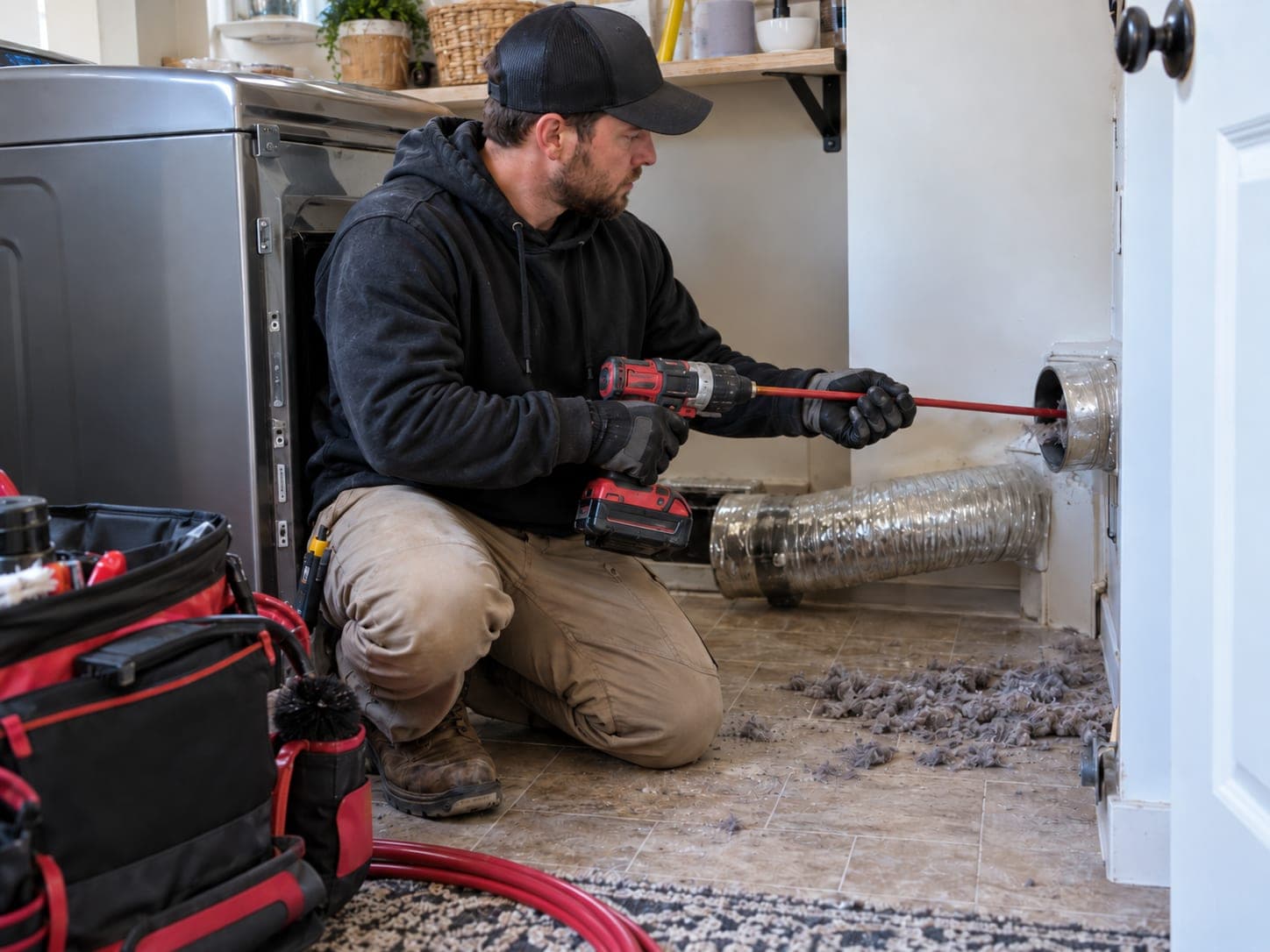
The connector, the duct and its joints, and the outside hood and flap, with a camera where the duct is hidden.
Check the layout
Length, bends and duct material against the dryer maker's limits.
Explain
What was found and whether cleaning, repair or rerouting is needed.
Burning smell?
If you smell burning while the dryer runs, turn it off and unplug it until the vent is checked.
What gets checked
- Outside hood, flap and screen
- Joints and foil tape
- Crushed or kinked sections
- Airflow at the outside hood
- Connector behind the dryer
- Vent length and number of bends
Signs to watch for
- Clothes take two cycles to dry
- The outside flap barely opens when the dryer is on
- The dryer or laundry room gets very hot
- Lint around the outside vent hood or behind the dryer
- A burning smell when the dryer runs
What gets checked during a clogged dryer vent inspection
From the dryer to the outside
Transition hose
The connector behind the dryer is checked for crushing, kinks and tears, and its material is noted.
Visible duct and joints
Accessible sections are examined for sagging, separations and screws poking into the duct, which snag lint.
Exit point
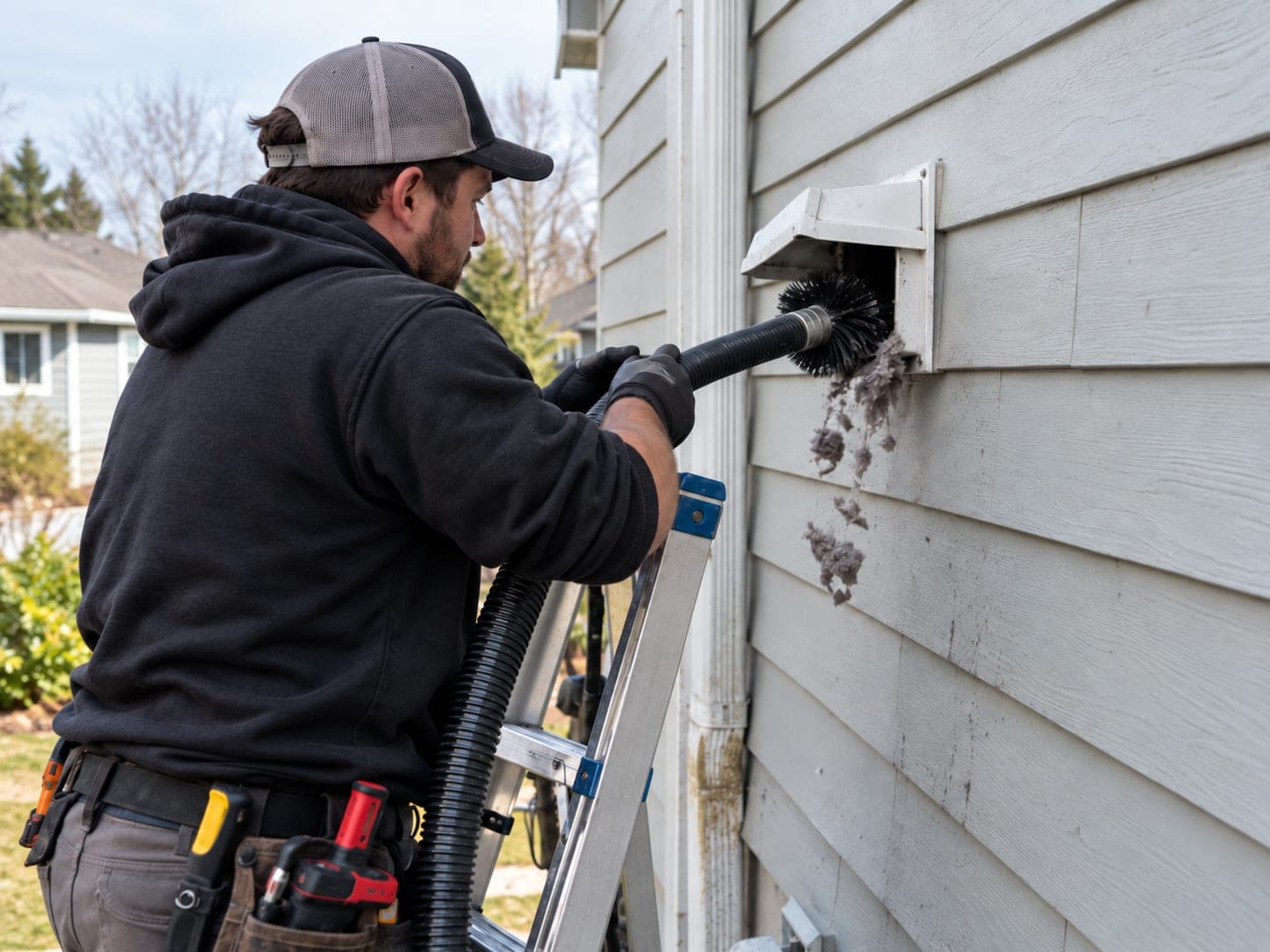
The wall hood or roof termination is checked for lint buildup, nests, screens and a damper flap that sticks.
Airflow testing
With the dryer running, airflow is measured at the exit and at accessible points along the run to narrow down where it drops.
For more detail, see how the dryer vent inspection and airflow test works.
Clogged dryer vent inspection in Connecticut
Homeowners, landlords and property managers in Hartford and throughout the state can request an inspection on its own or as the first part of a cleaning visit. Estimates are free, and same-day appointments are offered when the schedule allows. Emergency calls are accepted 24 hours a day, Sunday through Friday. Afterward, you get a plain explanation of what was found and what it would take to fix it.
| Finding | Usual next step |
|---|---|
| Lint packed along the run | Cleaning the full vent |
| Crushed or torn duct | Repairing or replacing the damaged section |
| Run too long or too many turns | Rerouting or relocating the vent |
| Stuck flap or screened hood | Replacing the vent cover |
| Nest or debris in the duct | Removing the blockage, then cleaning |
When lint turns out to be the main problem, what a clogged vent cleaning includes explains the next visit. If you're not yet sure your symptoms point to a blockage at all, start with the warning signs of a clogged dryer vent.