Signs of a clogged dryer vent you can check yourself
| What you notice | What it usually means |
|---|---|
| Clothes still damp after a normal cycle | Moist air can't leave fast enough, so it stays in the drum |
| The top or sides of the dryer feel very hot | Heat is backing up instead of exhausting outside |
| The outside flap barely lifts while the dryer runs | Lint or debris is restricting the duct or the hood |
| Lint on the floor behind the dryer | A loose or damaged connection is leaking |
| Musty smell or dampness in the laundry room | Humid exhaust isn't reaching the outdoors |
| Burning or scorching smell | Lint is getting too close to heat, so stop using the dryer |
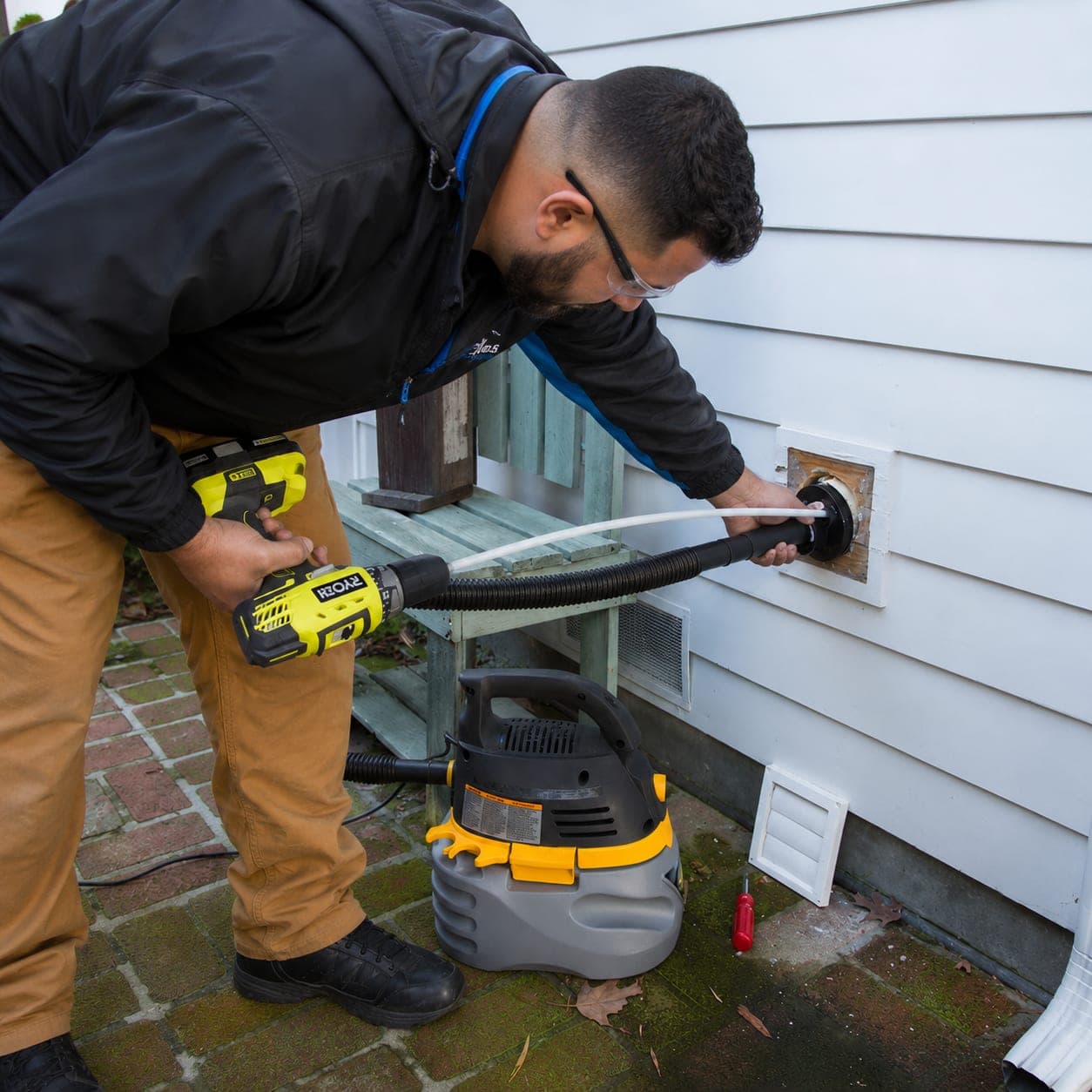
For a quick test, run the dryer on a heated setting for a few minutes. Skip this if the dryer smells of burning or gets very hot — turn it off instead. Then go outside and hold your hand near the vent hood. You should feel a strong, warm, steady stream of air. A weak puff, or nothing at all, means something between the dryer and that hood is in the way.
How the visit works
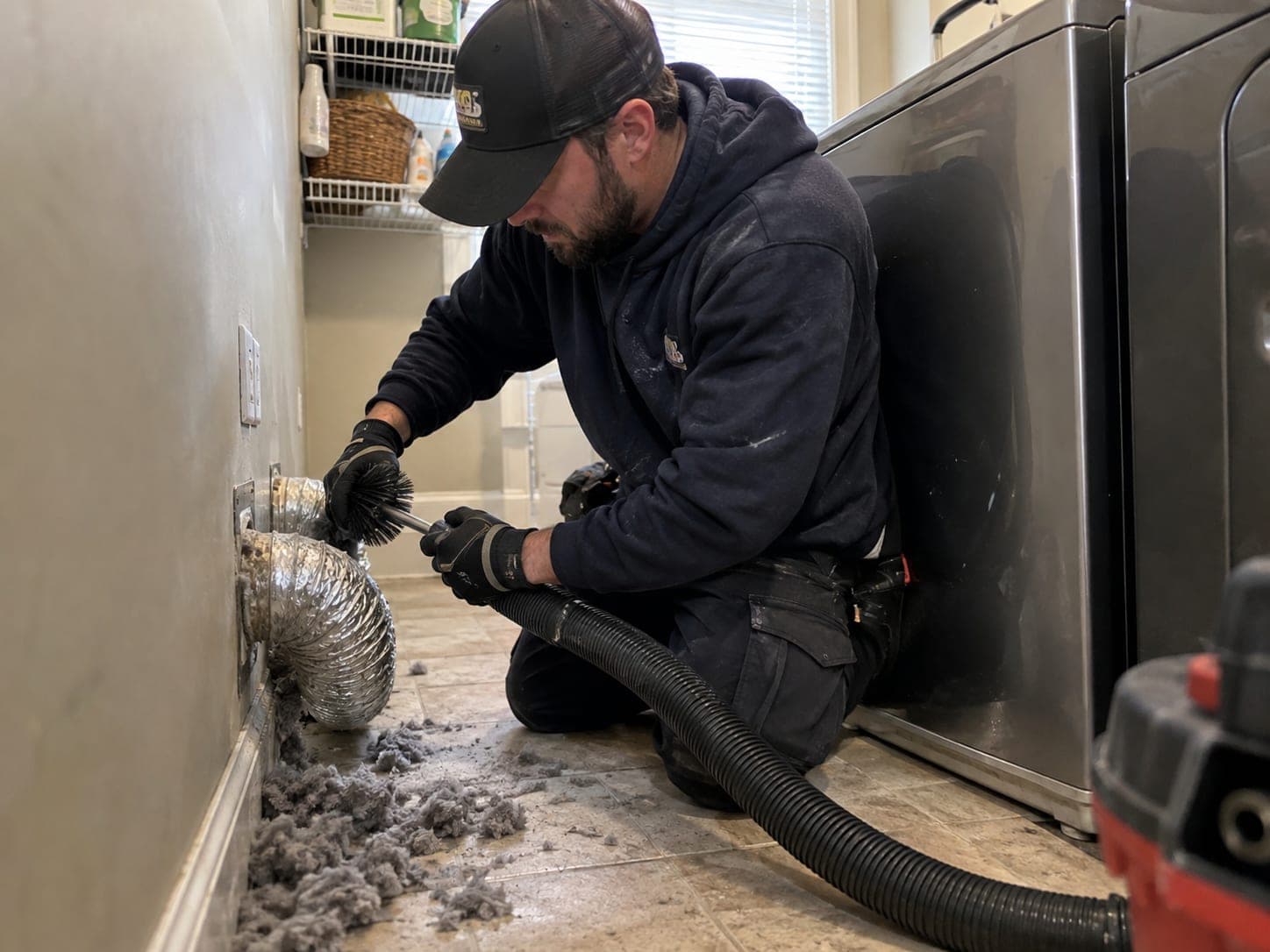
Lint is highly flammable and collects in long or crushed vent runs. A restricted vent makes the dryer run longer and wear out sooner.
Check the run
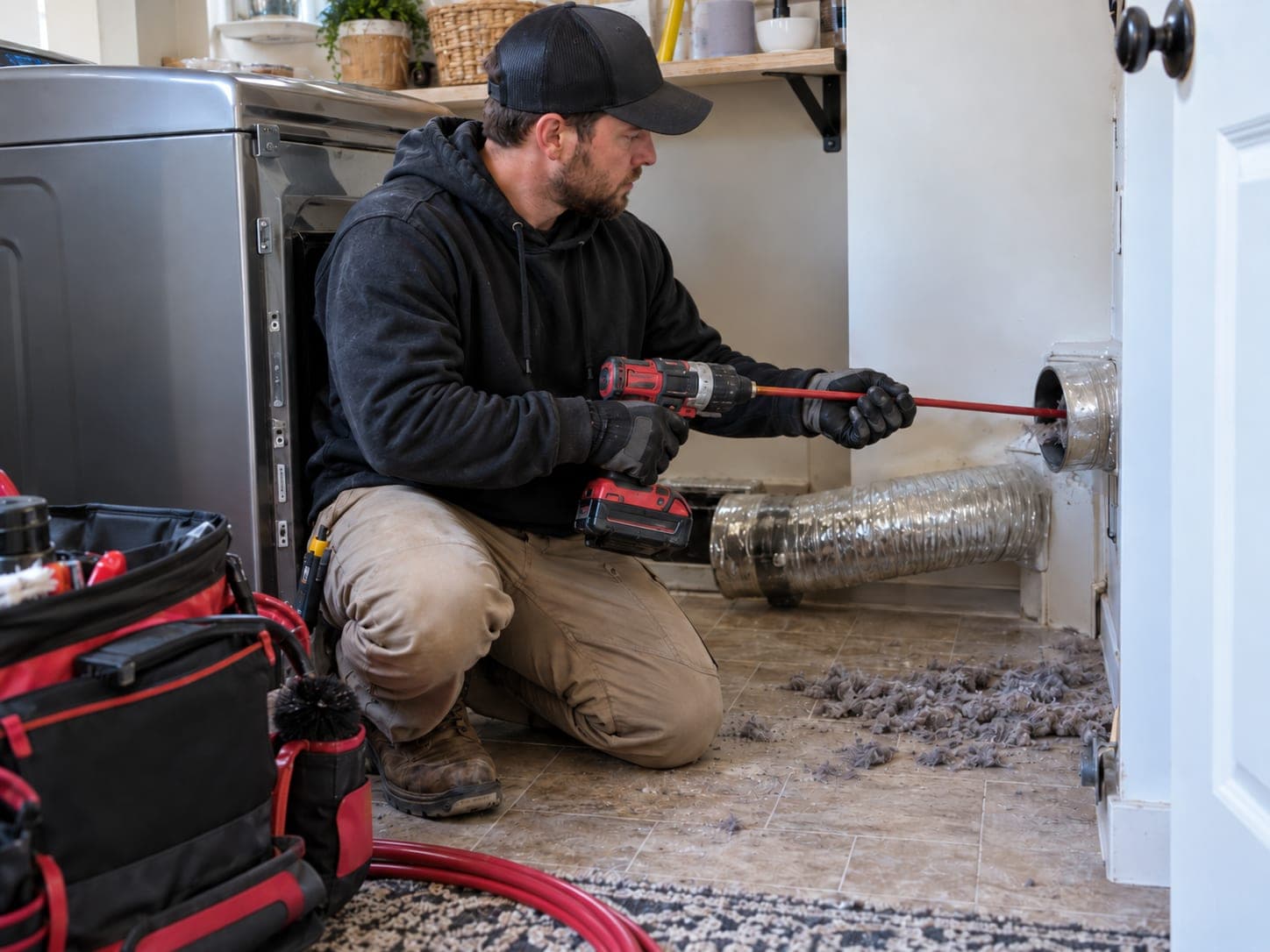
The connector, wall duct and outside hood are looked at, and airflow is checked.
Clean
Rotary brushes and air move lint out of the whole run.
Clear the hood
The outside termination is cleaned and its flap checked.
Re-test
Airflow is checked again and the dryer is reconnected.
Burning smell?
If you smell burning while the dryer runs, turn it off and unplug it until the vent is checked.
What the technician checks
- Airflow at the outside hood
- Connector behind the dryer
- Crushed or kinked sections
- Outside hood, flap and screen
- Vent length and number of bends
Signs to watch for
- Clothes take two cycles to dry
- Lint around the outside vent hood or behind the dryer
- The dryer or laundry room gets very hot
- A burning smell when the dryer runs
- The outside flap barely opens when the dryer is on
Why clogged dryer vents happen
The lint screen catches a lot, but not everything. Fine lint passes through and settles wherever the air slows down. These are common reasons it builds up faster than it should:
- Long vent runs with several elbows, where air loses speed at every turn
- Flexible foil or plastic duct that sags or gets crushed when the dryer is pushed back
- Exterior hoods with screens or stuck dampers that catch lint at the exit
- Birds or rodents nesting in the duct or hood
- Vents that pass through cold spaces, where condensation makes lint stick to the walls
- Roof terminations, where lint collects under the cap out of sight
Clearing lint without fixing these causes usually means the vent refills. That's why a full clogged dryer vent cleaning also looks at the hose, joints and hood. A blockage that's hard to find may call for a dedicated clogged vent inspection.
What to do in the meantime
- Clean the lint screen before every load.
- Avoid running the dryer while no one is home or overnight.
- Check that the hose behind the dryer isn't kinked or flattened against the wall.
- Stop using the dryer entirely if you smell burning.
Same-day service is offered when the schedule allows, and calls are taken 24 hours a day, Sunday through Friday. Landlords with several units can look at vent cleaning for apartments and rental buildings.