What a professional sweep actually removes
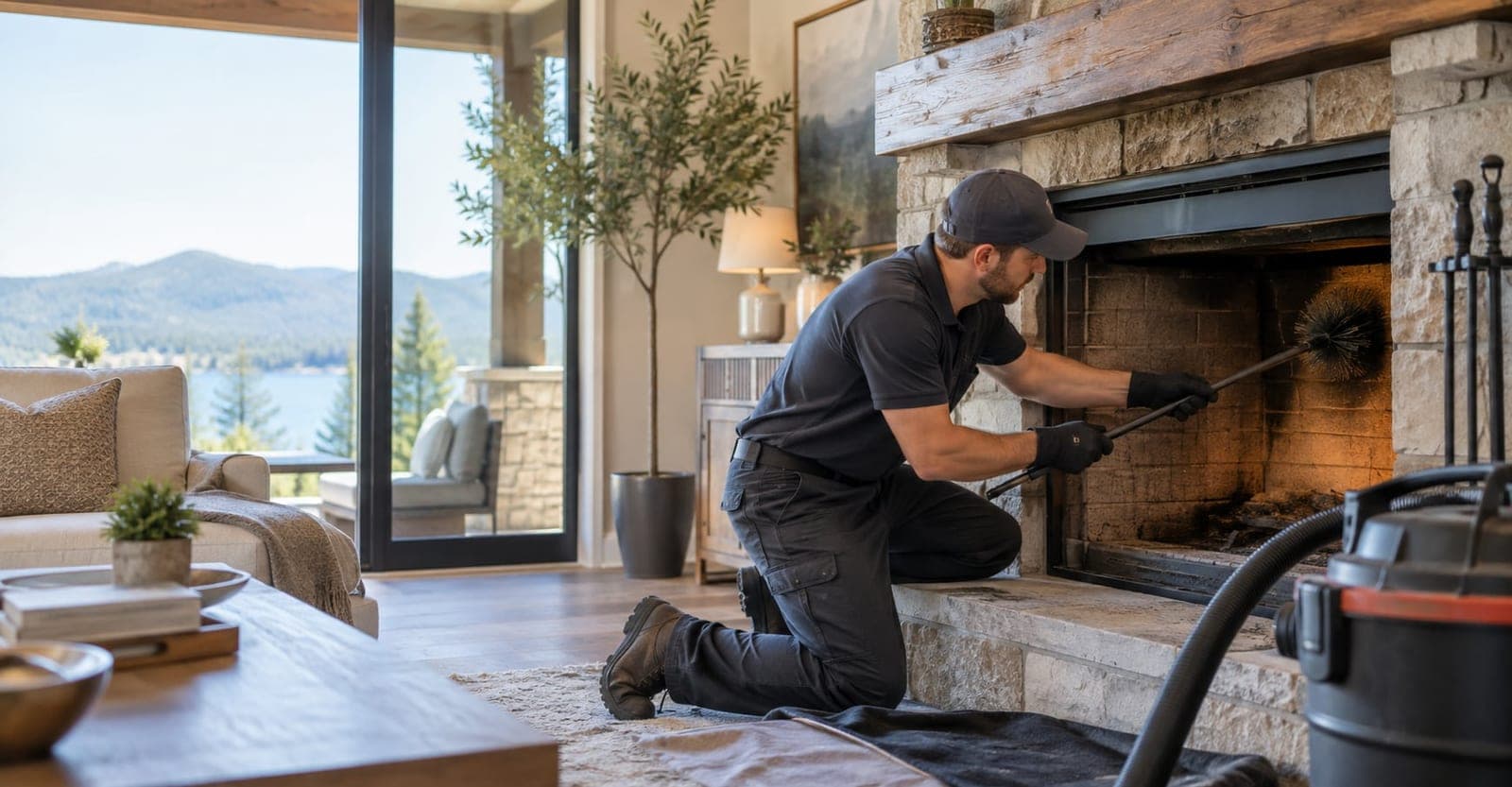
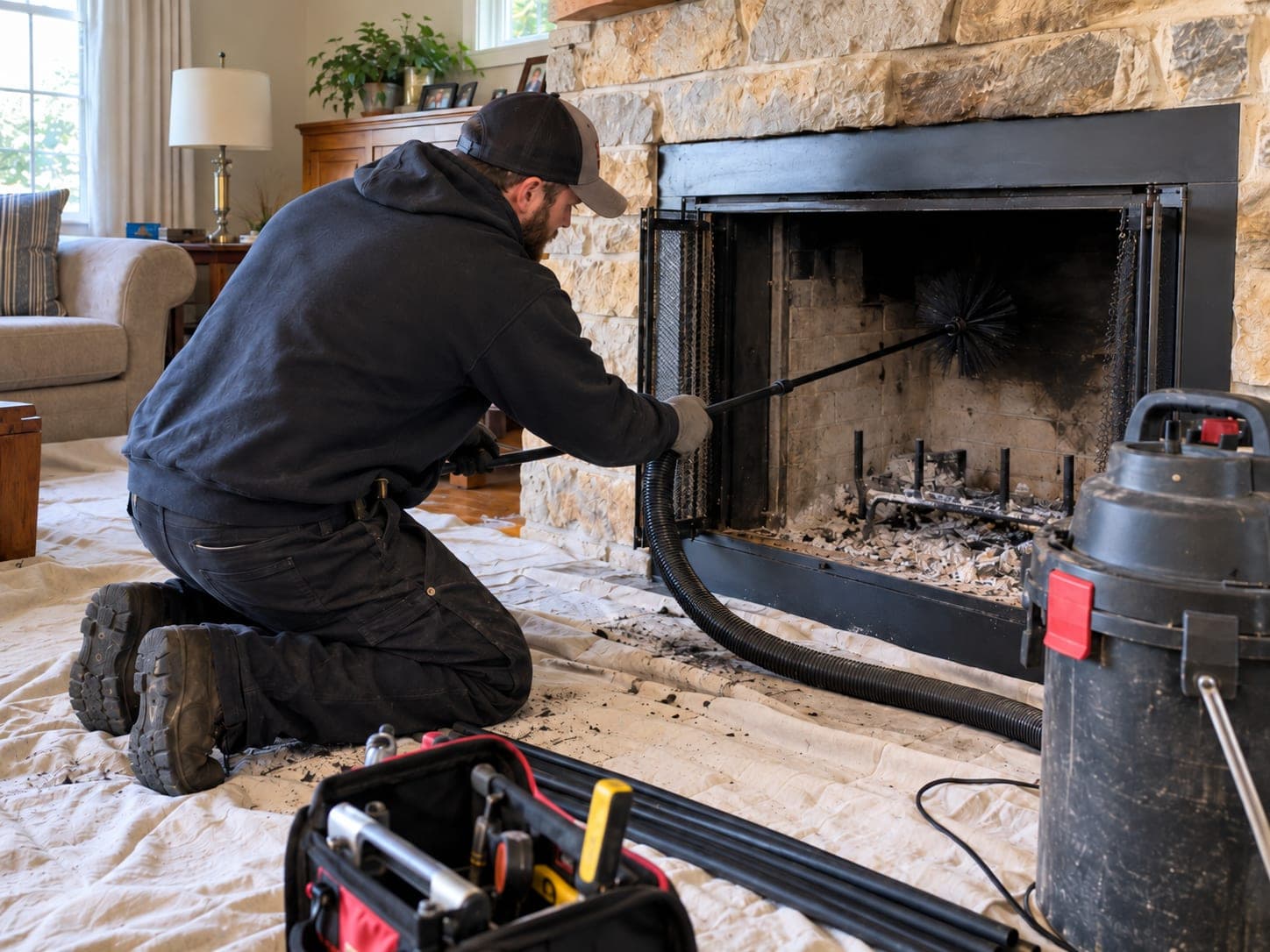
Sweeping is the mechanical cleaning of the flue. Brushes sized to the liner run the full length from the firebox to the top, and the loosened material is collected rather than blown into the room. What comes out says a lot about how the fireplace has been used.
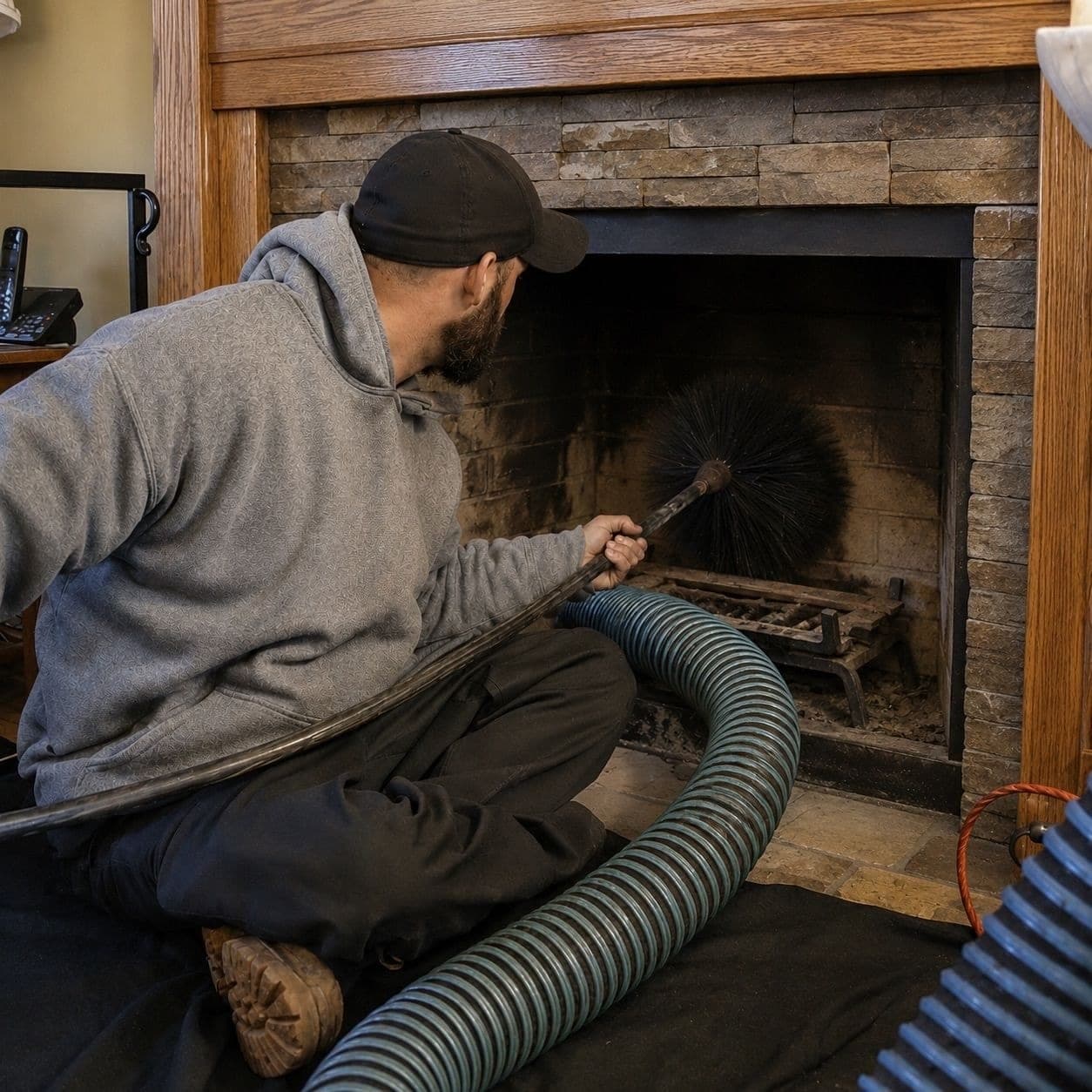
Most of it is soot and first-stage creosote, a dry, flaky deposit that brushes off easily. Fires burned with damp wood or a choked-down air supply leave a heavier, crunchy second stage. The third stage is a shiny, tar-like glaze that bonds to the liner. A standard brush won't lift it, and it calls for dedicated creosote removal instead. A sweep who tells you which kind you have is giving you useful feedback on your burning habits, not just a clean flue.
- Soot and flaky creosote from the flue walls
- Debris that settles on the smoke shelf behind the damper
- Leaves, twigs and loose mortar that have fallen in from above
- Ash and buildup in the firebox, insert or stove tied to the flue
Choosing a sweep company you'll call again
Searching for a sweep near you turns up plenty of names. A few direct questions sort them out quickly.
Worth asking before you book
- Does the company do the sweeping itself, or pass the job to someone else?
- Will they explain what they found, including anything that needs attention beyond cleaning?
- Can they handle your setup, whether it's an open fireplace, an insert, a wood stove or a factory-built unit?
- If repairs come up, is there a free estimate before anything is done?
That last point matters. A sweep sometimes uncovers a cracked flue tile, a damper that won't close or worn firebox brick. Those are separate jobs, and you should decide on them with an estimate in hand, not on the spot. If the fireplace itself needs work, see our page on fireplace repair in Glastonbury.
Sweeping for Glastonbury homes
Glastonbury is home to 35,503 people according to 2025 Census estimates, and it sits about eight miles from Hartford. We schedule professional sweeping throughout town, offer same-day visits when the schedule allows, and accept emergency calls 24 hours a day, Sunday through Friday. See the full range of chimney and fireplace service in Glastonbury, or read how sweep works from start to finish.
We also handle sweep for homes in East Hartford and sweep in Newington, each with its own local page.
What happens during the visit
Creosote is flammable: a thick layer is the usual fuel for a chimney fire. Buildup narrows the flue, so smoke drafts poorly and can spill into the room.
Set up
The hearth area is covered and a vacuum keeps dust under control while the flue is open.
Check the system
The damper, firebox walls and the visible flue liner are looked at before any brushing.
Clear the deposits
Soot and creosote are removed from the liner, smoke shelf and smoke chamber.
Finish and report
The area is cleaned up and you get a plain summary of the chimney's condition.
Signs to watch for
- Scratching or chirping sounds, or debris falling into the firebox
- Smoke rolling into the room instead of drawing up
- Black, flaky or shiny glazed deposits inside the firebox or flue
- A full burning season since the last cleaning
- A campfire or tar smell from the fireplace, especially on warm or damp days
Checked on every visit
- Firebox brick or panels and mortar joints
- Draft — how readily smoke moves up the flue
- Creosote level and type in the flue
- Smoke shelf and smoke chamber
- Signs of animals or nesting material
- Damper opening, closing and seal
- Visible liner sections for cracks or gaps
How to prepare
- Keep pets in another room while the work area is open.
- Clear a few feet of space in front of the hearth or appliance.
- Let the fireplace or stove cool completely — ideally no fire for 24 hours before the visit.
- Note the make and model of any insert, stove or gas unit if you have it.
Sources (2)
Every Glastonbury figure above, with its source.