On this page
Signs your chimney is a candidate for a stainless liner
Nobody hopes to hear that their chimney needs relining, so it helps to know the situations where a liner is the practical answer:
- Cracked or shifted clay tiles: gaps let heat and gases reach the masonry and the house framing.
- An unlined chimney: some older chimneys were built without any liner.
- A new wood stove or fireplace insert: the appliance needs a flue sized to its outlet, not a large fireplace flue.
- A change in heating equipment: newer gas or oil equipment can produce cooler exhaust that condenses in an oversized flue.
To compare clay, cast-in-place and metal options before you decide, read our guide to understanding chimney liners. Damage limited to a few joints can sometimes be handled through chimney and fireplace repair instead of a full reline. A camera inspection shows which approach fits your chimney.
Choosing the right stainless steel chimney liner
Two decisions shape most liner jobs: whether the pipe is rigid or flexible, and which grade of stainless steel it is made from.
| Feature | Rigid | Flexible |
|---|---|---|
| Best for | Straight chimneys with no offsets | Chimneys with bends or offsets |
| Interior surface | Smooth and easy to sweep | Corrugated or smooth-wall, depending on type |
| Installation | Joined in sections from the top | Fed down as one continuous run |
Best for
- Rigid
- Straight chimneys with no offsets
- Flexible
- Chimneys with bends or offsets
Interior surface
- Rigid
- Smooth and easy to sweep
- Flexible
- Corrugated or smooth-wall, depending on type
Installation
- Rigid
- Joined in sections from the top
- Flexible
- Fed down as one continuous run
The grade depends on the fuel. 316-grade alloys, often 316Ti, are used for wood, gas and oil because they resist the acidic condensate those fuels can leave behind. 304-grade has narrower uses and is not suited to oil. The liner manufacturer's listing for your fuel settles the choice, and we match the grade to your appliance.
Size and insulation
In a liner that is too large for the appliance, gases slow down and cool, which leaves more creosote or condensation behind. A liner that is too small can spill smoke into the room. Sizing follows the appliance maker's requirements. Many installations also call for insulation around the liner. It keeps flue gases warmer for a better draft and may be needed for clearance from combustible materials.
A finished liner should be topped with a cap made to fit it. See our stainless steel chimney cap options. During a chimney fire, get everyone out and call 911 first. If a chimney fire has just cracked your old tiles, stop using the fireplace and call our chimney line that answers at any hour.
What happens during the visit
A chimney fire or years of acidic gas exhaust can crack and erode tile liners. An appliance needs a liner sized to its outlet to draft properly and limit buildup.
Scan the flue
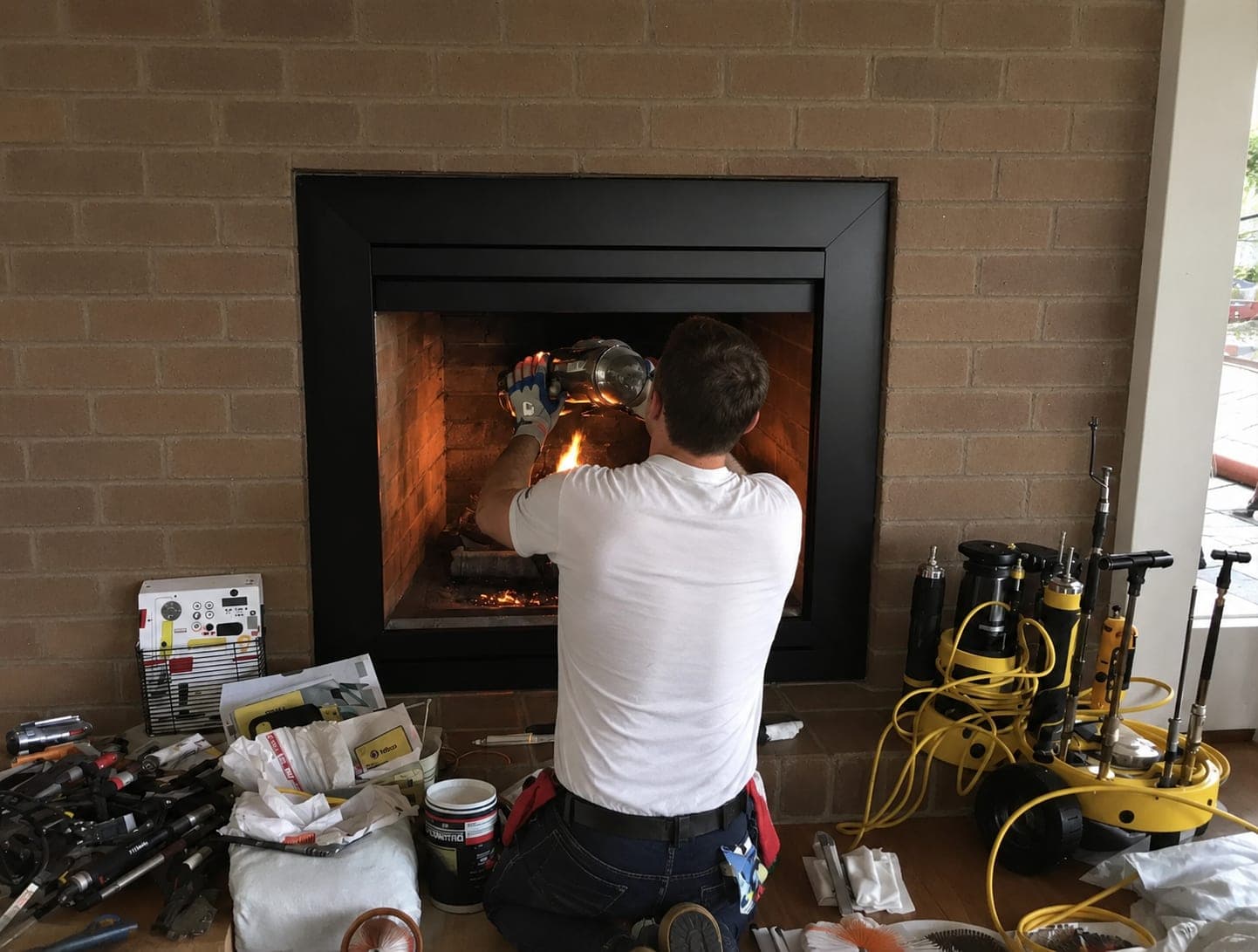
A camera shows cracks, gaps and missing sections along the full length.
Size the liner
The appliance and the flue decide the liner type and diameter.
Install
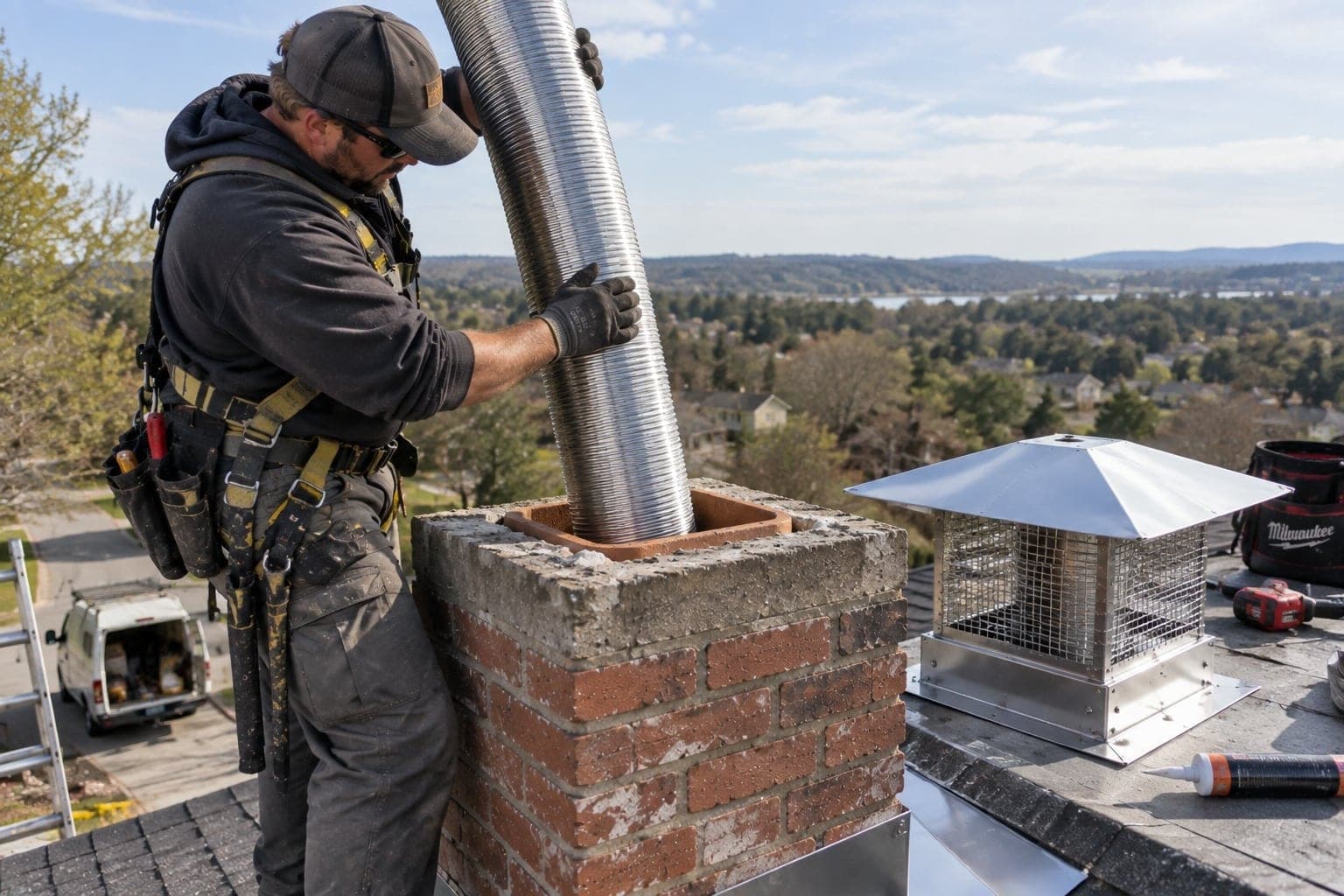
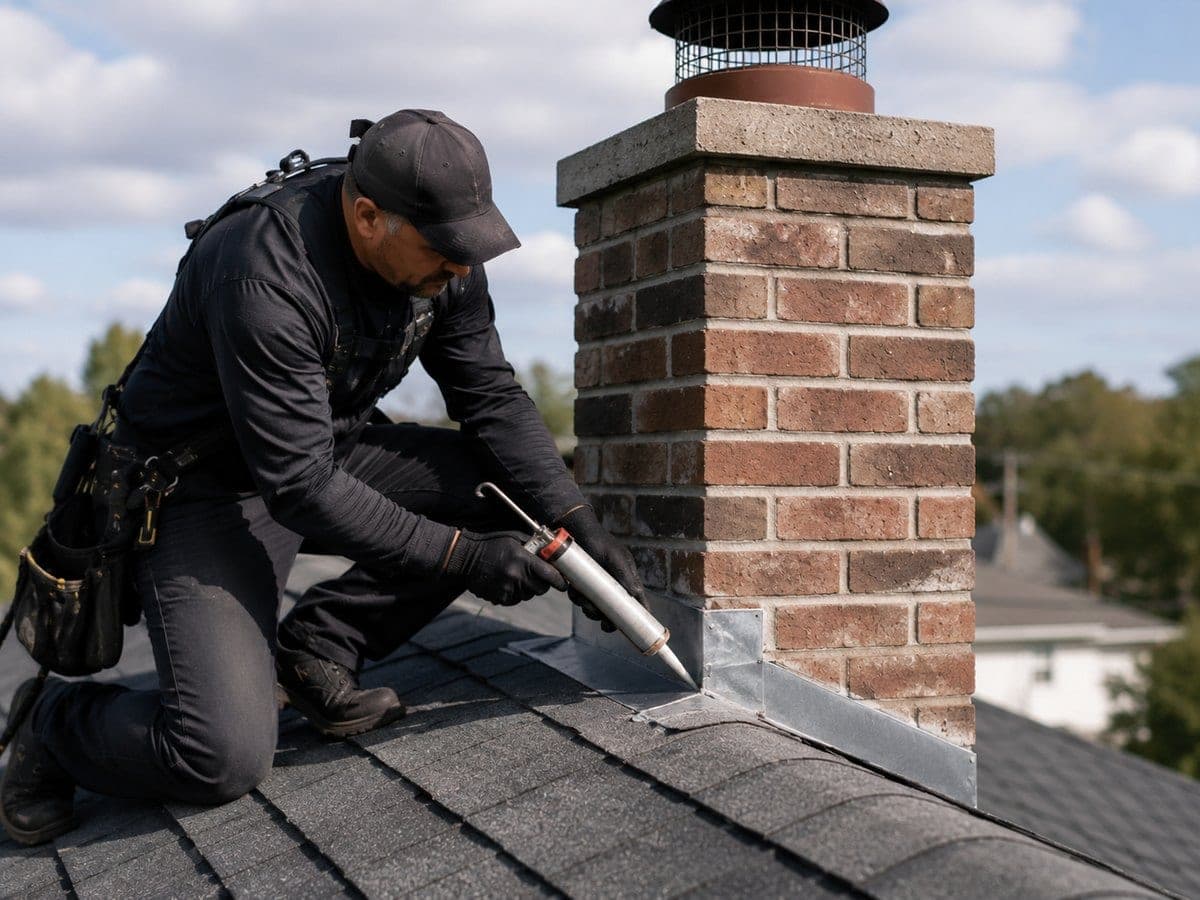
The liner is fed from the top, connected at the bottom, and capped and sealed at the top.
Confirm
Draft is checked and you're shown the scan and the finished work.
Stop using it until it's checked
Pieces of flue tile in the firebox or a known crack mean the liner can't be trusted to contain heat and exhaust. Don't use the fireplace or stove until it has been inspected.
What the technician checks
- Signs of a past chimney fire
- Tile cracks and joint gaps
- Connection at the appliance or smoke chamber
- Liner size against the appliance
- Missing or displaced sections
How to prepare
- Clear access to the fireplace and to the roof or attic.
- Let the fireplace or stove cool completely — no fire the day before.
- Have the appliance's make and model handy.
Signs to watch for
- Smoke or a smell in rooms next to the chimney
- A new insert or stove that needs a matched liner
- Pieces of clay tile in the firebox or at the bottom of the flue
- Cracks or open joints seen in a camera scan
- A chimney fire in the past