On this page
When a full chimney rebuild makes sense
Rebuilding is a bigger job than repair, so it should be justified by what the masonry shows. These signs usually point toward rebuilding rather than patching:
- The stack leans or has pulled away from the house
- Bricks are loose enough to move or lift out by hand
- Mortar has failed through the full depth of the joints, not just at the surface
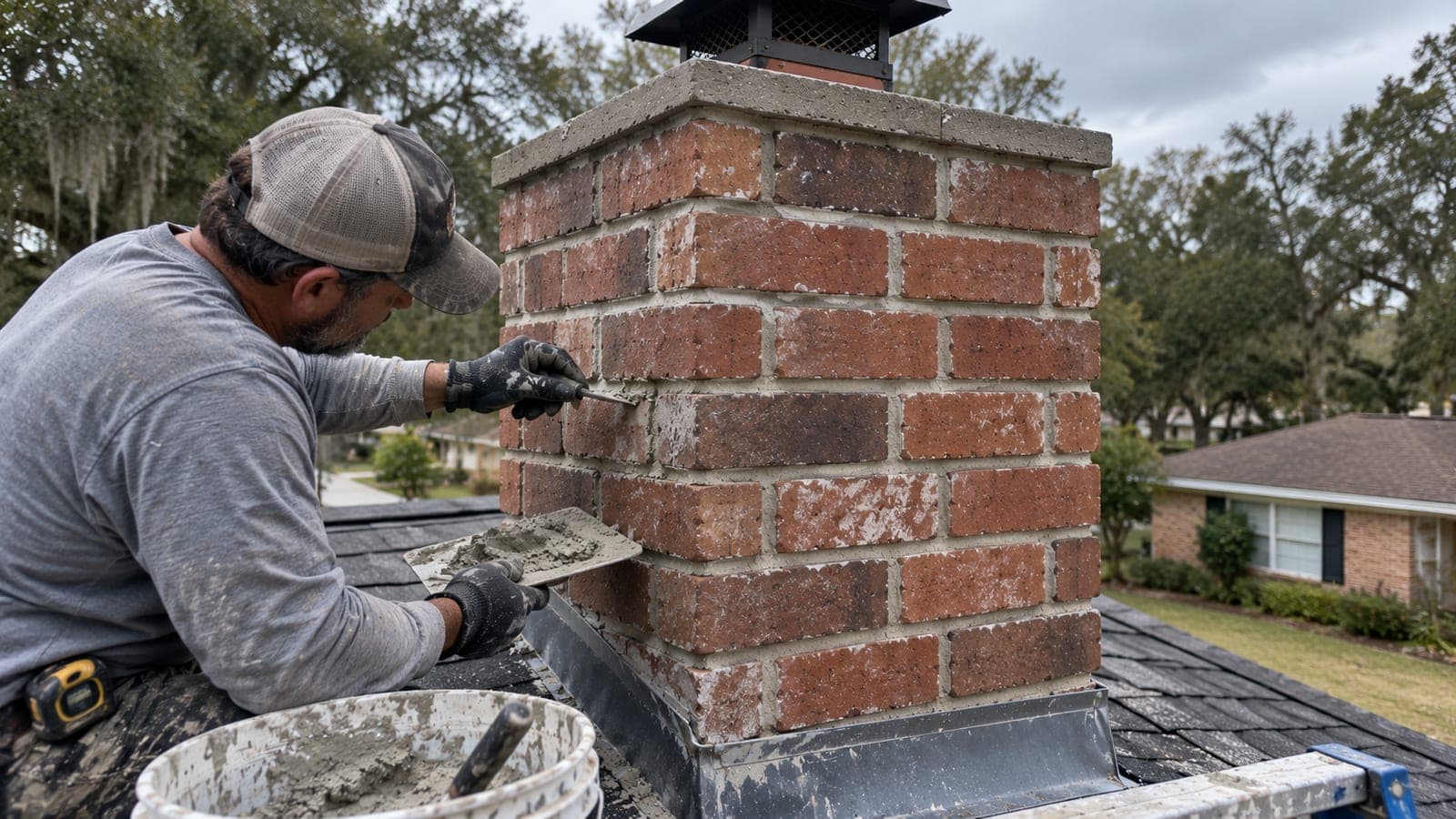
- Many bricks are spalled or cracked, so replacing them one at a time no longer makes sense
- Earlier patches keep failing in the same areas
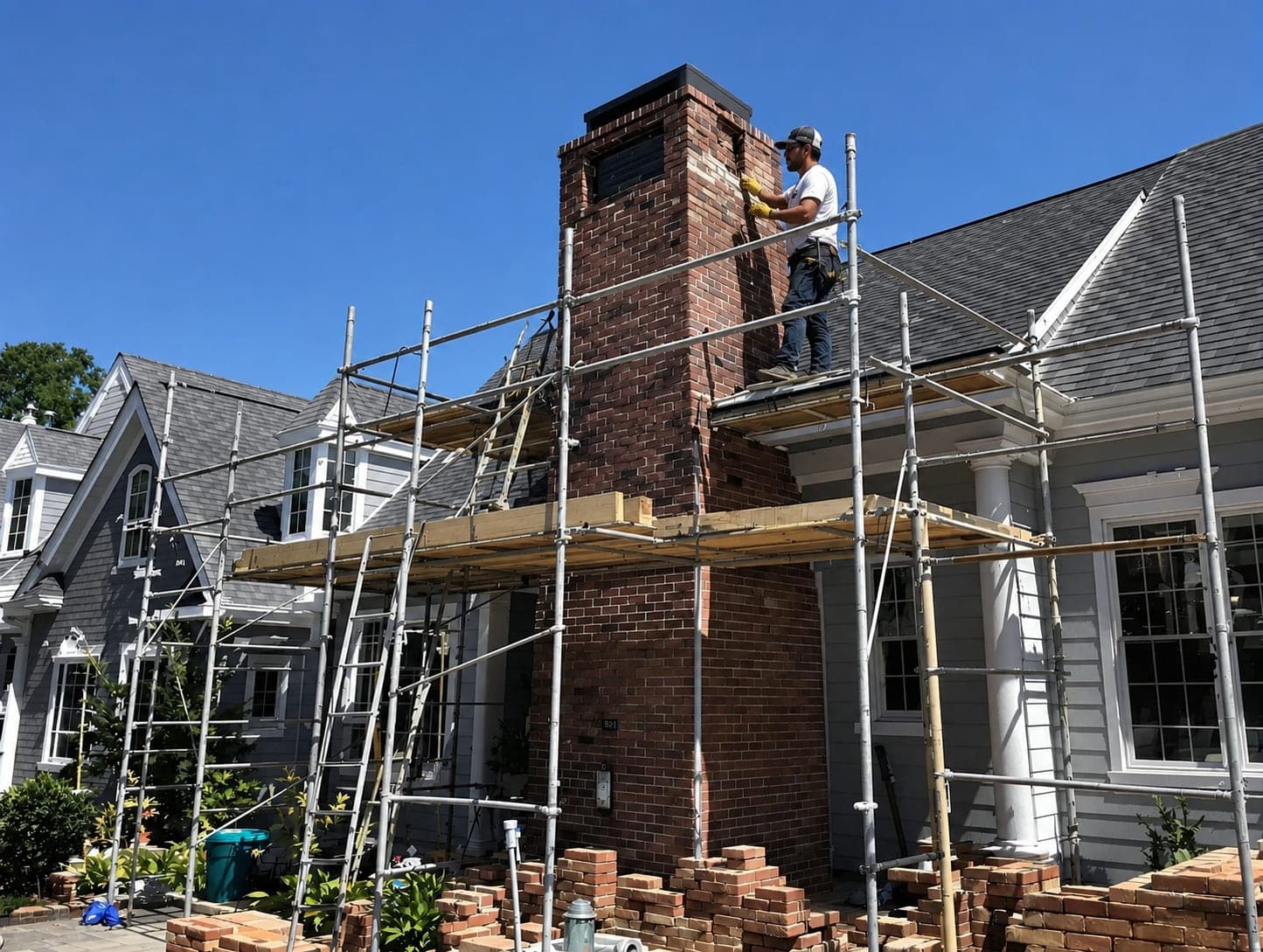
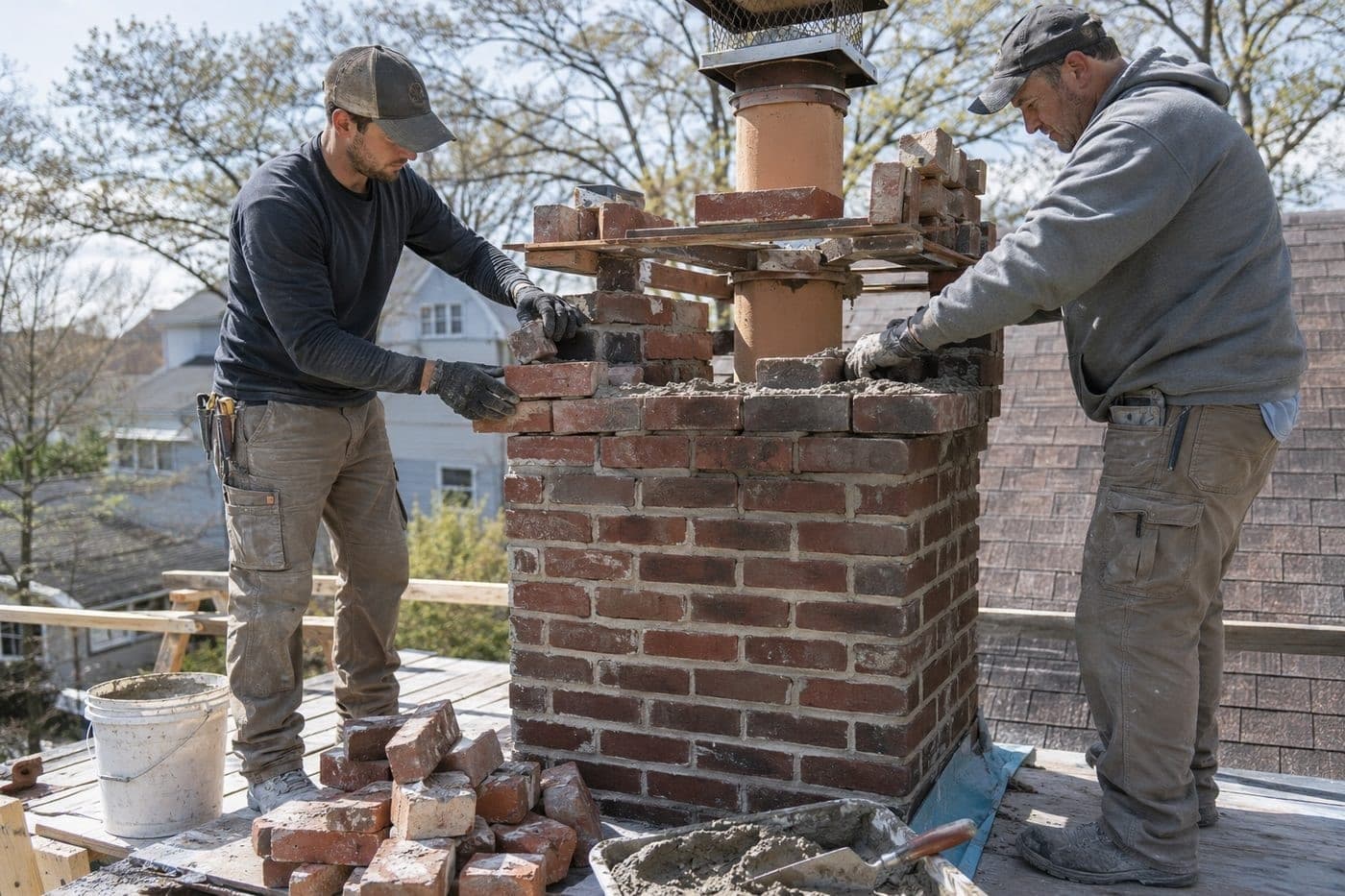
A rebuild isn't always all-or-nothing. A partial rebuild takes the chimney down to where the brick is sound, often around the roofline, and builds it back up. Full chimney rebuilds go further down when the damage does too.
Full chimney rebuild and brick resurfacing: which one you need
| Feature | Rebuild | Surface repair (repointing, brick replacement) |
|---|---|---|
| What it addresses | Structural failure, leaning, loose courses | Worn joints and damaged brick faces |
| When it fits | Masonry is unsound through its depth | Brick is solid and damage is limited |
| What stays | Only sound masonry below the rebuild line | Most of the existing chimney |
What it addresses
- Rebuild
- Structural failure, leaning, loose courses
- Surface repair (repointing, brick replacement)
- Worn joints and damaged brick faces
When it fits
- Rebuild
- Masonry is unsound through its depth
- Surface repair (repointing, brick replacement)
- Brick is solid and damage is limited
What stays
- Rebuild
- Only sound masonry below the rebuild line
- Surface repair (repointing, brick replacement)
- Most of the existing chimney
Surface work can make a chimney look new without fixing what's wrong inside. If the core is failing, that only delays the rebuild.
Comparing chimney rebuild options
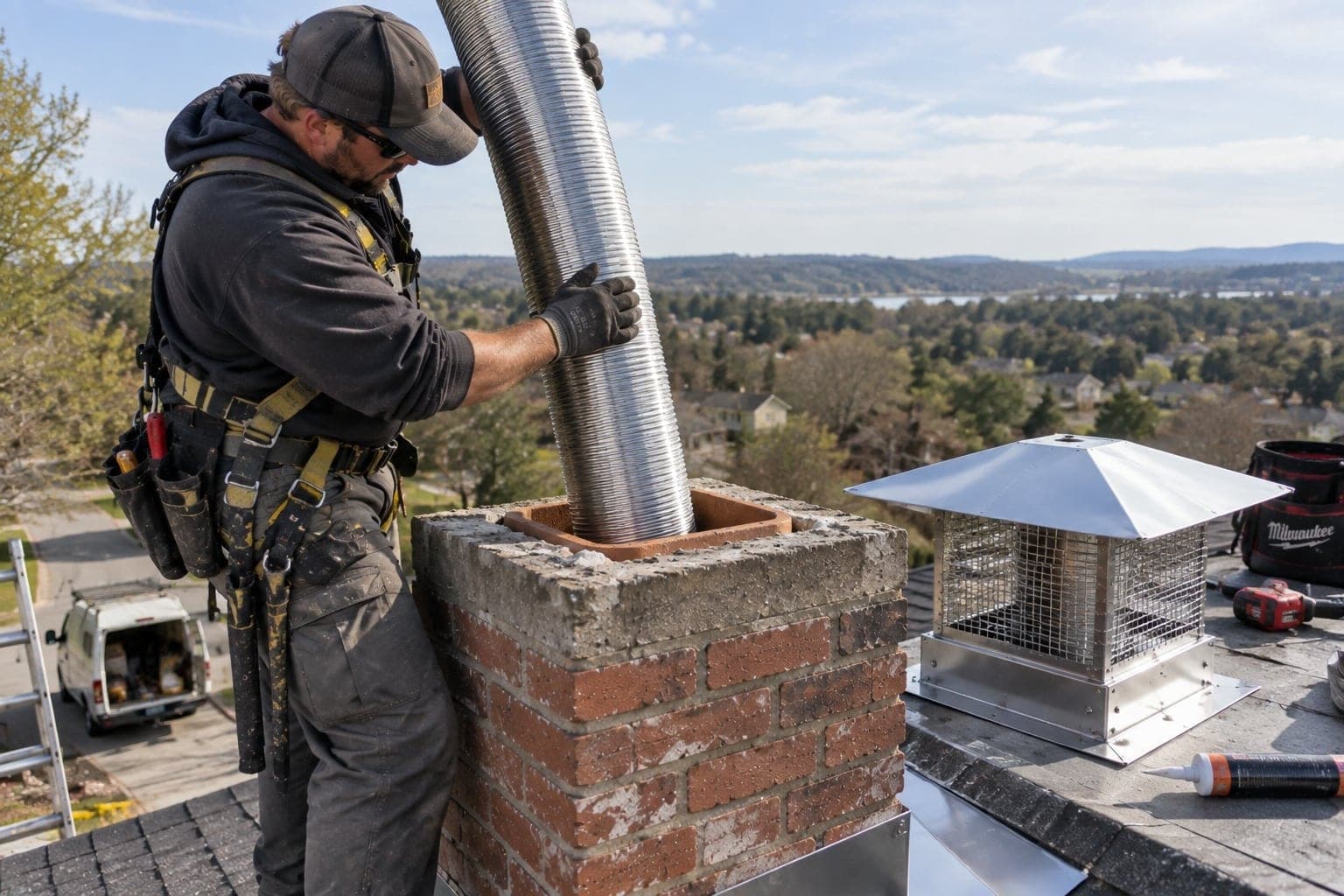
If you're comparing rebuild quotes, compare the scope rather than just the total: how far down each contractor will go, the crown design, the flashing plan, and what happens to the flue. A rebuild is a natural time to address the liner, as explained in this background on how chimney liners work. If the fireplace is also deteriorated, a firebox rebuild can sometimes be scheduled alongside it.
Calling a chimney rebuild specialist
When you get in touch, it helps to have photos of the chimney if you can take them safely from the ground, a rough idea of when you first noticed the problem, and what kind of fireplace or stove the chimney serves. Mention any recent storm, chimney fire or roof work too.
Falling brick or a stack that has visibly shifted is an emergency, and we accept those calls 24 hours a day, Sunday through Friday through our after-hours chimney service. Smaller problems that turn up during the visit can be handled with general chimney and fireplace repair.
How a chimney build or rebuild runs
The crown, cap and flashing decide how long the new masonry stays dry and sound. A chimney has to be sized and lined for the appliance it serves, or it won't draw properly.
Assess
What has to come down, or where the new chimney will run, and what it will serve.
Plan
Brick or stone, the liner size, the height above the roof and permits are settled first.
Build
The masonry goes up course by course with a matched liner, then the crown, flashing and cap.
Finish
The roof line is sealed, the site cleaned up and the draw checked.
How to prepare
- Clear a few feet of space in front of the hearth or appliance.
- Keep pets in another room while the work area is open.
- Make sure the technician can reach the roof or attic access if it's needed.
- Note the make and model of any insert, stove or gas unit if you have it.
Stay off the roof
Looking from the ground or with binoculars is safe. Climbing a steep or wet roof to inspect a chimney is not — leave that to someone with the right equipment.
Signs it's time for full chimney rebuild
- A chimney with loose, spalling or leaning masonry above the roof
- A new fireplace or stove that needs a chimney
- A crown and top courses too far gone to repair
- Storm or impact damage to the stack
What gets checked
- Flashing at the roof line
- Flue liner size for the appliance
- Footing or sound masonry to build from
- Height above the roof
- Crown and cap
- Permit requirements